
A tax revolution in the name of 'actual residence' is changing the lan…
페이지 정보
작성자 playbbs 작성일 26-06-09 22:11 조회 408 댓글 0본문
A Tax Revolution in the Name of ‘Actual Residence’: Changing the Landscape of the Real Estate Market
Date: June 09, 2026 | Column by IT/Media Current Affairs Critic
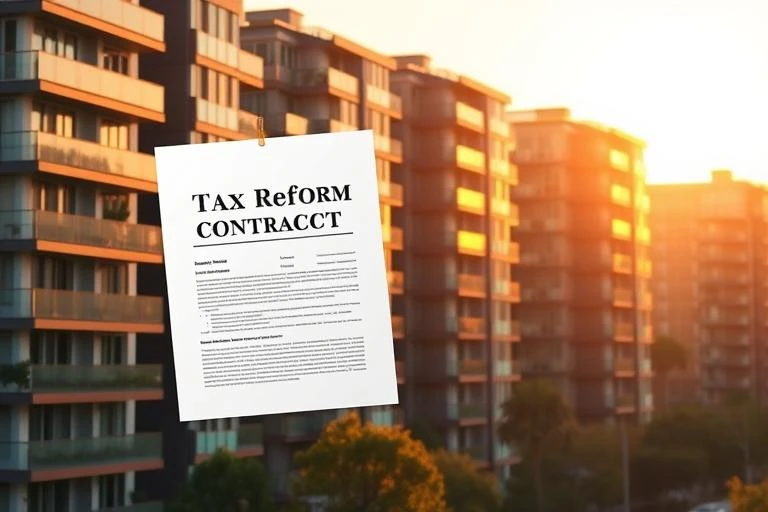
The real estate market has recently been stirred up once again. This is because the government has expressed a strong will to completely redesign the tax system by integrating the entire process of housing from acquisition to ownership and disposal. As President Lee Jae-myung reaffirmed the principle of "actual residence-centered" taxation on the first anniversary of his inauguration, real estate policy, which had previously been limited to piecemeal adjustments, is now facing a fundamental overhaul. This is a reflection of the government's strong policy stance to go beyond simple tax hikes, curb speculative demand, and redefine housing as a "living space" rather than a "means of wealth accumulation." We will take a deep look at the complex calculations and the inner workings of this policy to see if this tax reform can clear market uncertainty and bring about housing stability.
The core of this real estate tax reform is to break away from the existing method of focusing on whether to raise specific tax items. The government intends to redesign the tax system based on "total tax burden" by organically linking acquisition tax paid when buying a home, property tax and comprehensive real estate tax incurred during the ownership period, and capital gains tax imposed when selling a home. For taxpayers, the total tax amount they have to bear is a more practical indicator than the high or low of individual taxes. This approach is interpreted as an intention to enhance tax equity by comprehensively considering multi-home ownership and transaction types. The government is currently conducting research for the rationalization of real estate taxes, and a concrete blueprint is scheduled to be unveiled at the end of this month.
The area where the "actual residence principle" will be applied most sharply is undoubtedly the capital gains tax. The current long-term holding special deduction system for single-home owners provides benefits of up to 40% each for the holding period and the residence period, for a total of up to 80%. However, the government is considering significantly reducing or abolishing the deduction benefits that were previously provided simply for holding a house for a long time. Instead, it plans to significantly strengthen the weight of benefits based on the actual period of residence, ensuring clear tax benefits for actual residents while imposing a high capital gains tax burden on those who hold houses for speculative purposes. This is a strong signal to eliminate the loophole of "speculative long-term holding" and reorganize the housing market around actual users.
In the area of ownership taxes, both National Assembly legislation and government enforcement decrees are being discussed. While legal amendments to subdivide tax base brackets or raise nominal tax rates require the consent of the National Assembly, the adjustment of the "fair market value ratio," which the government can decide independently, is a powerful weapon that can have an immediate effect. Raising this ratio, currently at the 60% level, can increase the effective tax base and achieve the effect of raising ownership taxes without changing the law. Also, a method of adjusting the realization rate of officially assessed prices is on the table. This is a point where the government's will to raise Korea's low effective ownership tax rate to the level of major overseas countries can be read, and the tax burden on multi-home owners is expected to be much greater than before.
Although the broad framework of the policy is taking shape, experts advise that it is essential to prepare an exit strategy to prevent a "lock-in effect" during the tax reform process. It is pointed out that as the burden of ownership increases, the tax burden at the disposal stage must be reasonably adjusted so that multi-home owners can put their houses on the market. If the government persists with punitive tax policies, there is a risk that the shortage of housing supply will worsen because properties will not appear on the market. The government is also aware of these concerns and is contemplating structural alternatives to facilitate the smooth circulation of housing by organically linking the tax burden of the entire process from acquisition to transfer. It is a time when a delicate sense of balance is needed to settle real estate as a residential asset, not a speculative asset.
Meanwhile, on the other side of the real estate market, caution is required as illegal subleasing transactions are rampant in university towns ahead of the vacation season. Subleasing without the landlord's consent can be grounds for contract termination and forced eviction under current law. Since many are conducted verbally without formal contracts, there is a high risk of being in a blind spot of legal protection, such as non-recovery of deposits or utility bill disputes. Accordingly, local governments such as Jeonbuk State have launched special crackdowns on illegal real estate activities in university towns. Along with macroeconomic tax reform, correcting these illegal practices in the leasing market is also a task that must be solved to realize the government's major goal of housing stability.
■ Conclusion and Outlook
The government's real estate tax reform shows a firm will to block speculative demand by centering on the clear value of "actual residence." The "total tax burden" reform plan, which covers the entire process from acquisition to transfer, will be a major turning point in changing the constitution of the real estate market. However, the success of the policy does not end with simply raising taxes, but depends on presenting a reasonable exit strategy that market participants can accept and securing tax equity. We hope that this reform, which is being pushed for the cause of housing stability, will settle in a direction that prevents market lock-in and substantially eases the burden of home ownership for actual users. At the same time, only when policy meticulousness that carefully examines blind spots in the leasing market, such as university towns, is accompanied, will a healthy real estate market order be established.
* This post is an analytical column automatically regenerated in the style of a current affairs critic by analyzing real-time Google Trends popular search terms and related major articles.
댓글목록 0
등록된 댓글이 없습니다.