
First Visit to Pyongyang in 7 Years: Xi Jinping’s Strategic Gamble in …
페이지 정보
작성자 playbbs 작성일 26-06-09 22:36 조회 302 댓글 0본문
A Trip to Pyongyang After 7 Years: Xi Jinping’s Strategic Gambit in the Name of 'Blood Alliance'
Date: June 09, 2026 | Column by IT/Media Affairs Critic
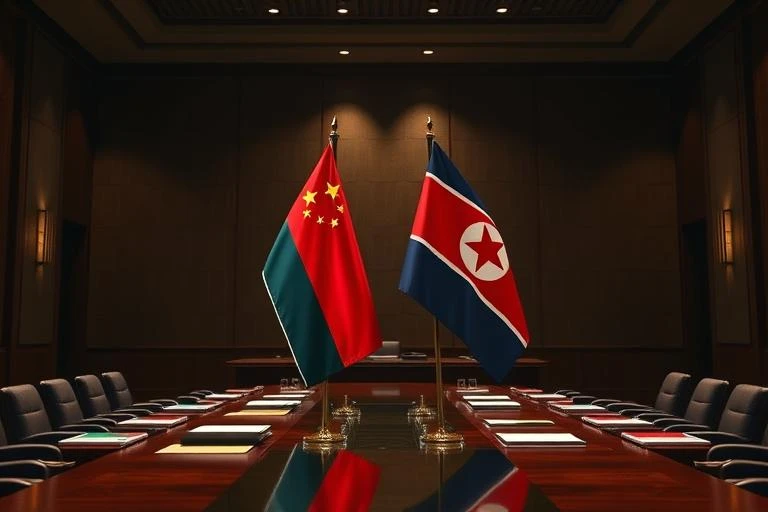
In June 2026, the five-starred red flag waved in the skies of Pyongyang as Chinese President Xi Jinping stepped onto North Korean soil, breaking a long seven-year hiatus. This visit goes beyond mere diplomatic protocol; it is a powerful political message sent by both North Korea and China amidst a rapidly changing international landscape, signaling the dawn of a strategic alignment for survival. Chairman Kim Jong Un’s elaborate reception of President Xi and his mention of a "strategic model" signify the two nations' determination to move beyond simply reminiscing about the past spirit of "Resisting America and Aiding Korea" toward becoming a community of shared destiny with tangible common interests. Here, I will closely analyze the complex geopolitical puzzle and the repercussions hidden behind the spectacular diplomatic stage that unfolded in Pyongyang over these two days.
President Xi’s visit clearly intended to maximize the solidarity between the two countries by modernizing their historical blood alliance. Paying respects at the Friendship Tower at the foot of Moran Hill to summon memories of the Korean War was meant to reaffirm to both domestic and international audiences that the North Korea-China relationship is a special bond forged in blood, not just a relationship between neighboring states. In particular, the act of President Xi and Chairman Kim visiting the Central Cadres Training School of the Workers' Party together and planting a fir tree engraved with the phrase "North Korea-China friendship is forever green" symbolizes a firm commitment to pass this relationship down to future generations. This can be interpreted as a high-level political campaign to solidify China's influence within North Korea and to imprint the importance of bilateral relations upon North Korea's core leadership.
The most notable aspect of this summit is that the two countries have concretized cooperation in practical fields such as the economy and military. President Xi proposed strengthening cooperation in various areas including trade, agriculture, and science and technology, and hinted at the full reopening of border trade zones—a move that effectively signals imminent large-scale economic aid to act as an oxygen mask for the North Korean economy. Furthermore, the mention of strengthening exchanges in diplomacy, law enforcement, and military affairs is interpreted as China’s intention to prevent North Korea’s military isolation and act as its security safety net. Although any mention of denuclearization was strictly excluded from the summit results, this reinforces the analysis that China is willing to effectively tolerate North Korea’s possession of nuclear weapons to keep it tied as a strategic asset.
Among experts, the prevailing view is that China’s visit will indirectly accelerate the modernization of North Korea’s military capabilities. Major foreign media outlets, including the South China Morning Post (SCMP), believe that the normalization of trade between North Korea and China will dramatically improve the conditions for procuring parts and funding necessary for North Korea’s warship construction and nuclear submarine development. The current triangular structure—receiving technical support from Russia while enjoying diplomatic and economic protection from China—creates a highly favorable environment for North Korea. Ultimately, it appears that China has calculated a complex strategy to utilize North Korea to curb the military expansion of the U.S. and Japan, while maintaining its own hegemony within Northeast Asia.
The internal reaction within North Korea was also highly strategic and organized. North Korean media, including Korean Central Television, produced and repeatedly broadcast a 35-minute video covering everything from President Xi’s arrival to the welcoming banquet and performances, extensively promoting the significance of the visit to its citizens. The fact that Chinese songs like "I Love China" echoed through the Pyongyang Indoor Stadium, and Chairman Kim’s response that he would "make North Korea-China relations the nation’s No. 1 strategic project," shows that North Korea intends to use this restoration of ties to secure both regime stability and an economic breakthrough. This is evaluated as a high-level survival strategy to maximize diplomatic flexibility by securing China as a larger economic ally while maintaining its close ties with Russia.
Another point of interest in this visit is North Korea’s firm support for the "One China" principle amidst the massive waves of U.S.-China conflict. Chairman Kim Jong Un expressed his will to safeguard China’s core interests regardless of changes in the international situation, which was the political guarantee China most wanted to hear. In response, President Xi also emphasized unwavering support for North Korea’s socialist cause, effectively forming an alliance where both countries promise to guarantee each other’s regimes. This solidarity signals that China’s influence will become even stronger in the future process of resolving Korean Peninsula issues, posing new diplomatic challenges for South Korea and surrounding nations.
■ Conclusion and Outlook
President Xi Jinping’s visit to North Korea after seven years shows that North Korea-China relations have moved past a cooling period to restore the old framework of an "invincible blood alliance," preparing for a new strategic leap. This meeting, solidified by the three pillars of economic support, a military umbrella, and political solidarity, is a significant turning point that could fundamentally shake the geopolitical landscape of Northeast Asia. Their "strategic transaction"—where China uses North Korea to keep the U.S. in check, and North Korea uses China to pursue regime safety and modernization—will have significant repercussions on the situation on the Korean Peninsula. The world is watching closely to see whether this restoration of the blood alliance will contribute to peace in Northeast Asia or become a new spark for tension.
* This post is an analytical column automatically regenerated in the style of a current affairs critic by analyzing real-time Google Trends popular search terms and related major articles.
댓글목록 0
등록된 댓글이 없습니다.