
2026 North and Central America World Cup: The Politics of Conflict and…
페이지 정보
작성자 playbbs 작성일 26-06-10 12:48 조회 247 댓글 0본문
2026 North America World Cup: The Politics of Conflict and the New Challenge for the Taegeuk Warriors
Date: June 10, 2026 | Column by IT/Media Current Affairs Critic
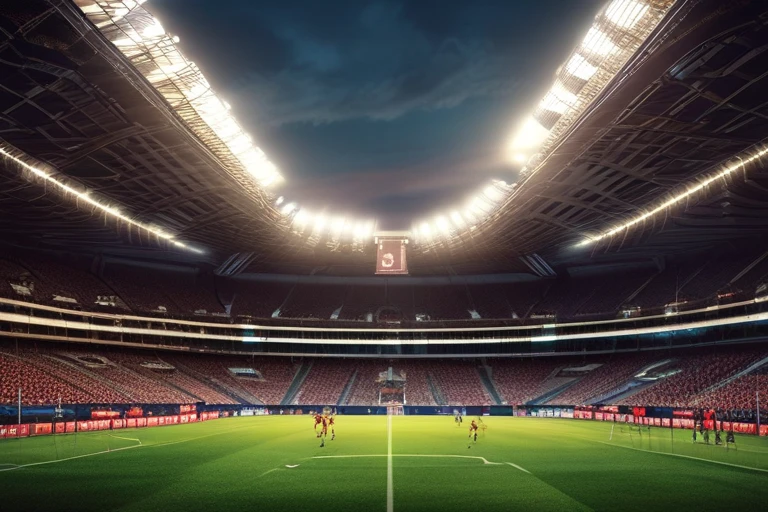
The 2026 North America World Cup, the world's greatest football festival, is finally raising its curtain. While this tournament marks the beginning of a massive journey featuring a record-breaking 48 nations playing 104 matches over 39 days, it is deeply overshadowed by complex international relations and political conflicts that threaten the purity of sports. Ahead of the opening, a mix of fan anticipation, entry denial incidents in the U.S., skyrocketing ticket prices, and tactical concerns surrounding Hong Myung-bo's squad has sparked hotter debates than ever before. The world's eyes are fixed on North America, questioning whether this World Cup will become a venue for global harmony or a symbol of division and discrimination.
The South Korean national football team, led by coach Hong Myung-bo, begins its long journey toward the Round of 32 with its first group stage match against the Czech Republic on the 12th. Sports analytics firm Opta has offered a positive outlook, predicting a 42.9% chance of a Korean victory, but foreign media perspectives are more sober and critical. Leading outlets like The Athletic and The Guardian have raised concerns, pointing to a lack of cohesion in the three-back formation that coach Hong abruptly introduced ahead of the finals. While Korea's strength in counterattacks is clear, analysts suggest that tactical changes attempted without perfect player proficiency could prove to be a poison. Nevertheless, the performance of the attacking line, spearheaded by 33-year-old Son Heung-min—who still boasts world-class skills—and Lee Kang-in, is considered a powerful engine that could realistically propel Korea into the knockout stages.
This tournament is exposing the raw reality of international relations to the point of earning the stigma of being the "most political World Cup." In particular, the U.S. authorities' refusal or strict limitation of entry visas for players, referees, and even cheering squads from certain countries is fueling controversy over the tournament's fairness. Notably, the incident where Omar Artan, a Somali referee selected as the African Referee of the Year, was forcibly deported from Miami Airport despite holding a valid visa, shocked the world. As the U.S. tightens entry screening in line with the Trump administration's immigration policy, there are concerns about operational disruptions, such as the Iranian national team having to modify their travel routes and stay in the U.S. only on match days. Such exclusionary actions are difficult to defend against criticism that they undermine the fundamental spirit of the World Cup, which is to unite the world through football.
Another factor threatening the success of the tournament is the high price of tickets and the resulting uncertainty in spectator turnout. The newly introduced dynamic pricing system has pushed final match ticket prices up to the 50 million won range, significantly reducing accessibility for average fans. As FIFA President Infantino continues his close association with President Trump, inviting political controversy, negative forecasts are pouring in that the high-ticket policy will lead to empty seats in stadiums and a box-office failure. Furthermore, with the expansion to 48 countries, many unproven, weaker teams have joined the finals, and with top teams being dispersed, there is criticism that the tension of the group stage has dropped significantly compared to the past. The prevailing analysis is that true competition and exciting drama can only be expected from the Round of 16 onwards.
Amidst this chaotic atmosphere, a fervent passion for the World Cup is blooming once again within South Korea. The Seoul Metropolitan Government has set up large LED screens at the 'Hangang Ple-Ple' in Ttukseom Hangang Park, creating a space for citizens to cheer for the national team together. Megabox is also making efforts to bring the stadium's heat to theaters by live-streaming matches at 14 locations nationwide. Notably, attempts to elevate the World Cup into a festival are evident through various citizen participation programs, such as photo zones recreating player locker rooms, football keychain making, and match prediction events, rather than just watching the games. Although issues of political conflict and discrimination persist locally, a mature cheering culture where citizens unite to support the Taegeuk Warriors is ready to blossom once again domestically.
Meanwhile, the armed conflict between Iran and Israel, often called the powder keg of the Middle East, is expected to be the biggest variable throughout the World Cup. Although President Trump has been busy working to finalize a peace agreement with Iran before the tournament begins, the negotiations have reached a precarious state as hostile sentiments between the two countries have exploded. If a situation arises where the U.S. and Iran face each other in the Round of 32 depending on group stage results, the stadium could very well become a "battlefield without gunfire." This highlights that sports cannot be completely separated from politics. Ultimately, the 2026 North America World Cup appears to be a tournament where diplomatic, political, and economic issues surrounding it will be the decisive yardstick for its success or failure, rather than the matches themselves.
■ Conclusion and Analysis Outlook
The 2026 North America World Cup begins with the flashy title of the largest tournament in history, but it is burdened with heavy tasks such as political conflict, discrimination, and high-cost policies. Whether the Hong Myung-bo squad can overcome this external noise and unstable environment to maximize individual player capabilities and team cohesion to achieve the goal of reaching the Round of 16 is the primary concern of our citizens. Sports inherently possess the noble value of transcending borders and ideologies to test human limits and promote harmony. I hope this tournament will not be buried in political interests, but will be remembered as a festival where only the fighting spirit and passion of the players sweating on the pitch shine through. Wishing the Taegeuk Warriors success, I hope the new history they create will provide a small but meaningful resonance to a divided world.
* This post is an analysis column automatically regenerated in the style of a current affairs critic by analyzing real-time Google Trends search terms and related major articles.
댓글목록 0
등록된 댓글이 없습니다.