
The Great Defense Transformation Triggered by the Demographic Cliff: T…
페이지 정보
작성자 playbbs 작성일 26-06-10 13:38 조회 229 댓글 0본문
A Major Defense Transformation Triggered by the Demographic Cliff: The Exit of the 'Private' and Reorganization into an AI-Driven Elite Force
Date: June 10, 2026 | Column by IT/Media Current Affairs Critic
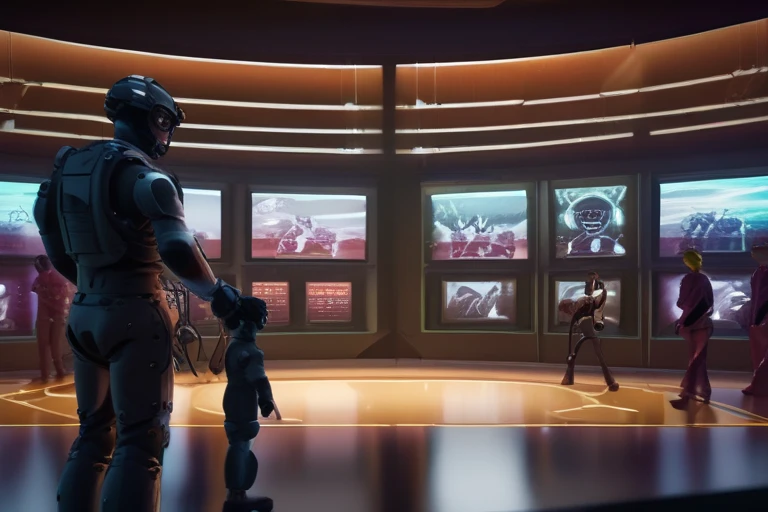
The four-tier enlisted rank system, which has been a symbol of the Republic of Korea Army for over 60 years since 1962, is on the verge of disappearing into history. The cliff in military service resources caused by a rapid population decline is posing a powerful demand of the times, going beyond simply reducing the size of the military to fundamentally changing its very constitution. The 2040 Defense Reform blueprint recently announced by the Ministry of National Defense embodies the will to move away from a soldier-centered quantitative structure and be reborn as a technology-intensive, officer-centered elite force. The South Korean military has now begun a massive voyage toward a new security paradigm, breaking the old mold of filling ranks with 'people' and donning the high-tech attire of AI and unmanned systems.
The biggest change in defense reform is the simplification of the active-duty rank system and the reorganization of the officer-centered personnel structure. The current four-tier structure (Private, Private First Class, Corporal, Sergeant) has been criticized for its lack of operational efficiency in the modern military environment where service periods have been shortened to 18 months. Consequently, the Ministry of National Defense is strongly considering a plan to abolish the rank of Private and reduce the system to three tiers. Conversely, the non-commissioned officer (NCO) system will be subdivided from the current four tiers to five to resolve promotion bottlenecks for long-term service members and strengthen the role of NCOs as the backbone of the military. These measures are interpreted as a strategic choice to maximize the professionalism of career soldiers, promote stable unit operations, and establish a structure where experienced officers lead the units.
The qualitative change in the force structure is also notable; the plan to significantly increase the proportion of officers from the current 40% to 63% by 2040 is highly unconventional. While the ratio of soldiers will decrease from 60% to 37%, tasks are being redesigned to allow active-duty soldiers to focus solely on combat missions by actively deploying civilian personnel, such as military employees and public service workers, to non-combat fields. As a result, the total defense workforce is expected to be adjusted from the current 560,000 to around 500,000. However, the plan is to actually strengthen overall combat power by expanding the standing reserve forces to 50,000 and reinforcing the equipment of mobilization units to the level of standing divisions. This is a pragmatic approach to responding to future security threats through elite human resources rather than quantitative expansion.
The core of future warfare is undoubtedly the introduction of Artificial Intelligence (AI) and manned-unmanned teaming (MUM-T) combat systems. The Ministry of National Defense has presented a firm roadmap to fill the combat vacuum caused by troop reductions with technology by increasing unmanned assets—such as drones, reconnaissance UAVs, and unmanned surface and underwater vehicles—to 30 times the current level by 2040. In particular, efforts are underway to transition guard operations at frontline GPs, GOPs, and major military facilities to AI-based systems, reducing human dependency and increasing the precision of surveillance. Along with this, the goal is to complete a future-oriented military structure where technology and humans harmonize by training '500,000 drone warriors' to ensure all soldiers have the ability to operate high-tech equipment.
The military service system is also seeking flexible changes in line with the times. While maintaining the framework of the universal conscription system, attempts will be made to secure expertise by combining it with a selective volunteer system for units requiring advanced scientific technology or specific professional skills. This is interpreted not as a transition to a full volunteer system, but as a hybrid supplementary measure to meet the complexity and technical requirements of modern warfare. Furthermore, there is a clear intention to increase the efficiency of military resource management and more strategically adjust the operational scope of conscripts through measures such as the phased reduction or abolition of the supplementary service system.
Meanwhile, the perspective of popular culture toward the military is also diversifying in line with these changes. Recent content such as the TVING original 'Becoming a Legend as a Mess Sergeant' moves away from the past, where the military was depicted merely as a space of strict hierarchy, and reinterprets military life from a new perspective by incorporating gaming imagination and B-grade comedy. Such changes show a cultural maturity that allows the public to accept the closed space of the military as a more familiar and understandable domain, while elevating even the trivial daily lives within the military into narratives of growth. Ultimately, the image of the 'elite future military' pursued by defense reform will only be completed when technological advancement is coupled with changes in the perceptions of the soldiers who make up the military and our society's view of the armed forces.
■ Conclusion and Analytical Outlook
The massive wave of the demographic cliff facing the South Korean military is a crisis, but also a turning point to break down old practices and leap forward into a high-tech, powerful force. The reduction of enlisted ranks, the shift toward an officer-centered elite structure, and the introduction of AI-based unmanned systems are not choices, but essential measures for survival. Of course, minimizing trial and error or organizational conflict that may arise during this large-scale reform process is a task left to the government and military authorities. We look forward to the successful settlement of the 2040 defense reform, allowing the military to be reborn as a strong force with an unshakable security posture amidst a changing security environment.
* This post is an analytical column automatically regenerated in the style of a current affairs critic by analyzing real-time Google Trends popular search terms and related major articles.
댓글목록 0
등록된 댓글이 없습니다.