
The fortress in the sky has stopped: Impact and challenges of the U.S.…
페이지 정보
작성자 playbbs 작성일 26-06-16 11:12 조회 186 댓글 0본문
The fortress in the sky has stopped: The impact and challenges of the U.S. strategic bomber B-52 crash disaster
Written on: June 16, 2026 | Column by current affairs critic specializing in IT/media
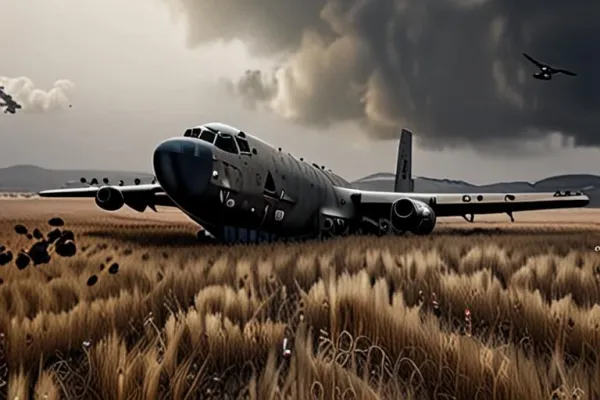
The B-52 Stratofortress, a symbol of the U.S. Air Force that commanded the skies around the world for decades under the nickname 'Flying Fortress', met a tragic end when it crashed onto the cold sands of the Mojave Desert. On the morning of the 15th, a huge aircraft that was taking off for a routine test flight at Edwards Air Force Base in California suddenly disappeared into black smoke, and the precious lives of the eight people at the scene never returned. This accident goes beyond simply the issue of defects in old models and raises fundamental questions about the safety and operational status of key strategic assets operated by the United States. We would like to take a closer look at the full story of this disaster that shook the calm desert morning and the aeronautical engineering and strategic implications hidden behind it.
Edwards Air Force Base, where the accident occurred, is the heart of America's aerospace technology, home to the U.S. Air Force Test Center and NASA's Armstrong Flight Research Center. The aircraft was undergoing test flights as part of a radar modernization program, and is understood to have lost control shortly after takeoff and crashed near the runway. According to the video taken at the scene immediately after the accident and the testimony of eyewitnesses, it was confirmed that the aircraft was shattered beyond recognition and that there was virtually no possibility of any survivors. Military authorities immediately took emergency measures, including closing the base and diverting flights, and are making all-out efforts to recover the incident while relaying the sad news to the bereaved families. It is even more regrettable as it has been revealed that the victims of this accident include not only military personnel, but also government civilian experts and contractor employees.
The B-52 bomber is a legendary model that has played a key role in U.S. military strategy since its deployment in the 1950s, from the Vietnam War to recent military operations in the Middle East. However, more than 60 years after production was discontinued, the aircraft currently in service are barely able to continue flying after going through several life extension projects and parts replacement. The level of difficulty in servicing and maintenance is beyond imagination, to the point that in order to obtain replacement parts, parts from dismantled aircraft must be procured from aircraft graveyards, also known as 'boneyards'. Recently, the U.S. Air Force planned to invest tens of trillions of won in large-scale performance improvement projects, including engine replacement, but this accident served as an opportunity to once again remind us of the technical limitations facing the aging airframe system.
In order to determine the exact cause of this crash, a large-scale investigation including black box analysis and detailed identification of the wreckage is inevitable, and this process is expected to take at least six months. Some are focusing on the fact that the accident occurred immediately after takeoff, raising the possibility of engine failure or a fatal error in the control system. In particular, we cannot rule out the possibility that unexpected variables, such as the aircraft's center of gravity or electrical interference, may have occurred in the process of installing a modernized radar system. As this is the first major casualty accident that occurred about 18 years after the crash that occurred in the sea near Guam in 2008, the U.S. Air Force authorities will be strongly requested to reevaluate the safety of the entire B-52 operating system through this investigation.
Strategic bombers are the last bastion of national security and a symbol of deterrence. Strategic assets such as the B-52 are multipurpose platforms capable of carrying everything from nuclear weapons to precision-guided weapons, and their mere presence has exerted powerful psychological pressure on potential hostile forces. However, this accident proved that even a testing environment with the most sophisticated and skilled personnel cannot be free from risk. Rather than dismissing this disaster as a simple accident, the U.S. government must make a cool-headed decision on how to balance operational efficiency and safety of aging strategic assets. The world is paying attention to what changes this tragedy, which took eight precious lives, will bring about in the U.S. Air Force's future management of strategic assets.
■ Conclusion and analysis outlook
The tragic sacrifices of the heroes who protected the skies painfully teach us the importance of technological progress and risk management. The B-52 was more than just a mechanical device and was America's military pride, but it now stands at a crossroads between safe retirement worthy of its reputation or complete modernization. It will take a lot of time for the results of the accident investigation to come out, but nothing can compensate for the lives already lost and the grief of their families. We hope that the U.S. Air Force will use this disaster as a lesson to conduct more thorough safety inspections and system improvements. We pray for the rest of the soul of the victims and hope that their dedication will not be in vain.
* This post is a commentary by PlayBBS that analyzed real-time Google Trends popular search terms and related major articles.
댓글목록 0
등록된 댓글이 없습니다.