
Physical AI roaming the ground, a new era in robots opened by Hyundai …
페이지 정보
작성자 playbbs 작성일 26-06-08 07:55 조회 519 댓글 0본문
Physical AI roaming the ground, a new era in robots opened by Hyundai Motor Company’s ‘Atlas’
Created date: June 08, 2026 | IT/media specialist current affairs critic column
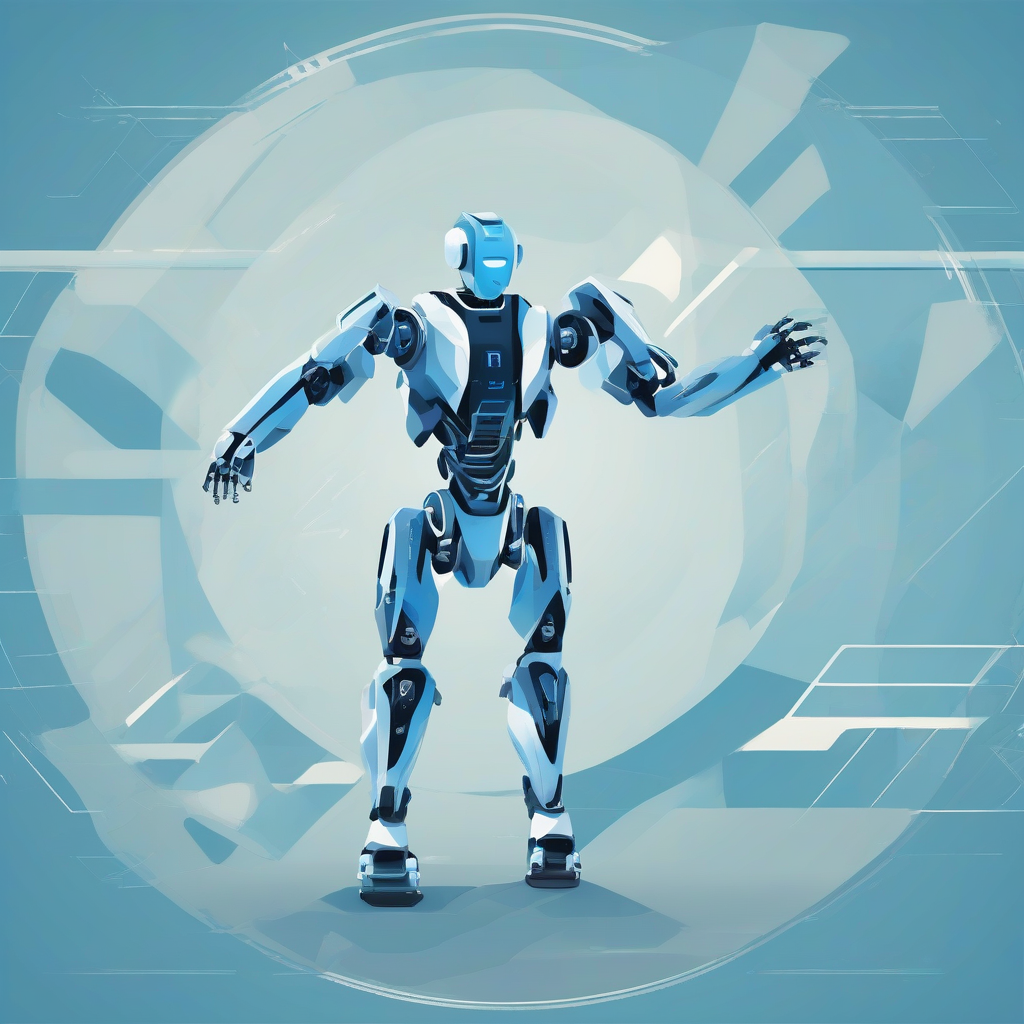
Have you ever imagined a robot kicking a ball on a soccer stadium? It is not a machine that simply moves along a set path, but a humanoid robot that reads the defender's movements and uses advanced techniques such as mixing paint and kicking the ball has appeared before our eyes. The main character is ‘Atlas’, a humanoid robot introduced by Boston Dynamics, a robotics subsidiary of Hyundai Motor Group. Atlas' recently released soccer training video goes beyond a simple technology demonstration and clearly shows how robots are breaking through the limitations of complex body control and physical interaction that were previously considered the domain of humans. Now, robots are going beyond simple labor tools and are rapidly entering the era of ‘physical AI’ where they work together with humans and perform more sophisticated tasks.
The ‘Ghost Labona Kick’ shown by Atlas is a difficult performance that is considered the pinnacle of robotics. This movement is a technique that can only be achieved by organically combining a quick change of direction, jumping, landing, and powerful power transfer at the moment of crossing the feet and kicking the ball. Boston Dynamics researchers selected soccer as the optimal learning environment to implement these complex movements. This is because soccer is a sport that requires balance, timing, coordination between body parts, and the ability to immediately adapt to rapidly changing situations. Through this training, Atlas has dramatically developed his ability to control his center of gravity, optimize the range of motion of his joints, and manage his entire body in an integrated manner.
Behind the implementation of amazing technology, there is a modern learning strategy that combines data and AI. The researchers first precisely collected the actual movements of world-class soccer players using a motion capture system. However, because the human body structure and the robot’s joint system are fundamentally different, the ‘retargeting’ process of converting it to suit the robot’s hardware was essential. Afterwards, reinforcement learning was performed by simultaneously running thousands of virtual environments in a cloud-based GPU simulation environment. Through this process, Atlas experienced in a virtual space the trials and errors that a person would experience in a year in just 24 hours, minimizing errors that could occur in the real physical world and maximizing the stability of operation.
Atlas' improvement in soccer skills is not simply a result of sports entertainment. Boston Dynamics emphasizes that the full-body control skills acquired through soccer training are directly linked to the ability to perform tasks at future logistics and manufacturing sites. In fact, Atlas recently proved its feasibility by successfully lifting a refrigerator weighing 23 kg and placing it in the correct location. The ability to correct in real time the slight change in the center of gravity that occurs in the process of carrying and moving an object and transmit force using the whole body is a core competency gained from learning soccer skills. This presents a blueprint for a future production environment in which robots can precisely handle and move objects in complex industrial sites without human intervention.
These technological advances are leading to a reevaluation of Hyundai Motor Group's corporate value. The market has begun to view Hyundai Motors as a company leading the future physical AI industry, rather than just a car manufacturing company. Securities companies highly evaluate Boston Dynamics' mass production of robots and the possibility of a future initial public offering (IPO), and are paying attention to future growth potential by raising Hyundai Motor Company's target stock price. The fact that Atlas is scheduled to be used in actual fields such as stadium operation support and visitor communication with the 2026 World Cup is expected to serve as a strong marketing momentum for the robot to secure public awareness and advance into the B2B market. Combination with the latest generative AI, such as Gemini AI, is also becoming a key driving force in accelerating the commercialization of humanoids.
However, there are challenges that must be solved separately from technical achievements. In terms of labor-management relations at Hyundai Motors, the introduction of Atlas is linked to the sensitive issue of job security. The union is strongly demanding an agreement between labor and management, concerned about the impact the introduction of new technology will have on the workforce structure and volume transfer at production sites. In order for Boston Dynamics' growth roadmap to operate smoothly, not only technological advancement but also social and organizational agreement on how robots and humans will coexist and share roles at the production site must be established first. How these conflicts are coordinated will be a critical variable that determines the successful IPO of Boston Dynamics and the securing of physical AI leadership for Hyundai Motor Group.
■ Conclusion and analysis outlook
The ghost rabona kick shown by Atlas is a signal that robots have reached the stage of imitating human delicacy and power beyond the wall of physical limitations. Hyundai Motor Group is ready to impress the world with Atlas' capabilities through the grand stage of the World Cup, and this will be a symbolic turning point in which humanoid robots become part of our lives. However, the future brought about by the advancement of robots is not limited to simply improving machine performance. The process of wisely resolving the conflict that arises between the value of labor and the introduction of technology and building an ecosystem where robots and humans coexist is the final hurdle that Hyundai Motor Group must overcome to become a true physical AI company. Now that we expect technological advancement to lead to human progress, Atlas has only just taken its first steps on the ground.
* This post is an analysis column that is automatically recreated in the style of a current affairs critic's commentary by analyzing real-time Google Trends popular search terms and related major articles.
댓글목록 0
등록된 댓글이 없습니다.