
The era of making clothes for robots: technological utopia and the unc…
페이지 정보

본문
The era of making clothes for robots: technological utopia and the uncertain future of labor
Created date: June 08, 2026 | IT/media specialist current affairs critic column
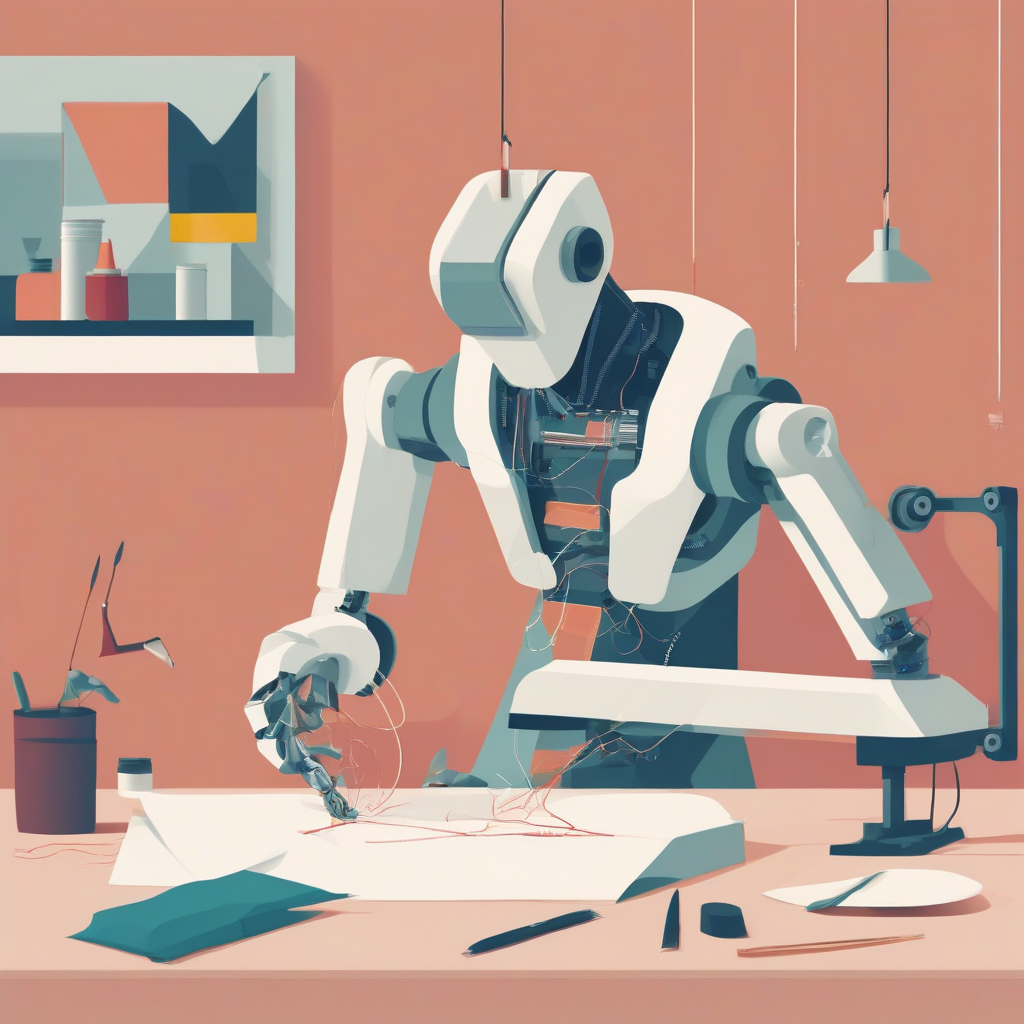
Humanoid robots, which we only see in science fiction movies, are approaching us. It is very interesting to note that while global giants such as NVIDIA and Tesla are betting their lives on the robot industry, the clothing industry has also begun to think about ‘things to wear’ for these unfamiliar beings. The humanoid-specific clothing recently introduced by Hansae goes beyond a simple fashion, and symbolically shows a cross-section of a future society where machines and humans will coexist. However, behind the brilliant technological progress, the cold reality of mass unemployment and employment instability looms like a shadow. Are we ready for an era where robots wear clothes? We shed light on two extreme landscapes: the future designed by technology and the human labor that is alienated within it.
Hansae Industry’s ‘Wear the Future’ project is a good example of how the fashion industry must proactively respond to advances in artificial intelligence and robotics. Rather than simply mimicking the shape of a robot, they designed a garment that perfectly meets the functional requirements of heat dissipation management, joint range of motion, and durability. This is a work that goes beyond the concept of clothes worn by people and redefines clothing as a kind of ‘exoskeleton interface’ that protects the robot’s hardware and allows it to interact with the environment. The process from virtual sampling to actual production by combining digital design capabilities and AI technology represents the advancement of the fashion industry, and even incorporates humanistic concerns to reduce the intimidation that can occur when humanoids are introduced into daily life and to create intimacy.
But apart from the flashy exterior of technology, the employment structure of our society is facing a huge inflection point. As Professor Seo Yong-seok of KAIST pointed out, the rapid development of AI and robots is predicting an inevitable wave of mass unemployment for the majority of young people, excluding certain expert groups. Productivity will be maximized, but if the population that continues to consume through labor income decreases, the market will eventually shrink and companies will also face a threat to their survival. Discussions about how to socially distribute the wealth created by technological innovation have now become a matter of survival rather than choice. This is precisely why the performance-based pay debate should be read as a struggle to alleviate social inequality and establish an institutional framework to share the fruits of technological development, beyond simply internal conflict within companies.
The instability of the job market is being witnessed in real time not only in high-tech industries but also in traditional retail. As in the case of Homeplus, store closures that occur during corporate rehabilitation procedures are forcing numerous workers onto the streets overnight. This goes beyond simple measures to improve the efficiency of corporate management, and causes chain social costs such as the collapse of the local economy and the livelihood crisis of workers at stores. In situations where employment security is unclear, workers lose the drive to plan for their future, which creates a vicious cycle that leads to a consumption cliff. Unlike the bright vision of the future brought about by technological advancement, the current workplace represents the painful reality of having to survive each day amidst the harsh winds of restructuring.
In addition, gender discrimination and human rights issues in the workplace are another reality we must face. According to cases of counseling at the Women's Workers' Association, the barriers faced by workers who quit their jobs due to sexual harassment or bullying in the workplace are excessively high in the process of applying for unemployment benefits. The current administrative procedures that require direct evidence are tantamount to harsh demands on victims to take risks, and this is a blind spot in the system and is seriously infringing on workers' right to labor safety. It is a painful paradox of our society that while technology has become sophisticated enough to worry about robots' clothing, the basic human rights and working environment of the human society that develops and operates the robots are still trapped in the outdated framework of past customs and discrimination.
In the end, what we need to focus on is the social safety net, which must change as quickly as the pace of technological development. There is an urgent need for political imagination to recognize that skilled manpower is a core asset of the industry and to establish a compensation system appropriate for it, as well as to mediate social conflicts that may arise due to the introduction of AI and robots. A society in which skilled technology is not transmitted is bound to lose its future competitiveness, and this truth applies equally to all fields of labor, not just core high-tech industries such as semiconductors. Companies must not stop innovating to pioneer new markets such as robot clothing, but they must also consider their social responsibility of not ignoring the suffering of workers who are marginalized in the process.
■ Conclusion and analysis outlook
The future in which humanoids become commonplace is an unstoppable trend. Hansae's challenge is clearly a meaningful step in that it opens a new horizon for the future clothing market. However, in order for the future in which technology replaces and assists humans to become a true utopia, the major premise is that the technology must not undermine human dignity. Technological innovations that are not accompanied by income redistribution policies that address the fear of mass unemployment, a non-discriminatory working environment, and the establishment of a real safety net for workers pushed to the edge will be nothing more than an empty echo. It is time for us to gather more wisdom in solidifying the social solidarity that supports human life as much as we have the technology to dress robots.
* This post is an analysis column that is automatically recreated in the style of a current affairs critic's commentary by analyzing real-time Google Trends popular search words and related major articles.
- 이전글멈춰 선 믹서트럭, 대한민국 산업 심장부를 겨누다: 레미콘 파업의 명암 26.06.08
- 다음글두 명의 이재현, 그들이 그리는 거대한 ‘K-브랜드’의 미래 26.06.08
댓글목록
등록된 댓글이 없습니다.