
Daedeok Industrial Complex at a standstill: The bitter lesson left by …
페이지 정보
작성자 playbbs 작성일 26-06-08 19:16 조회 540 댓글 0본문
Daedeok Industrial Complex Comes to a Halt: The Bitter Lesson Left by a Simple 'Voltage Drop'
Date: June 08, 2026 | Column by IT/Media Current Affairs Critic
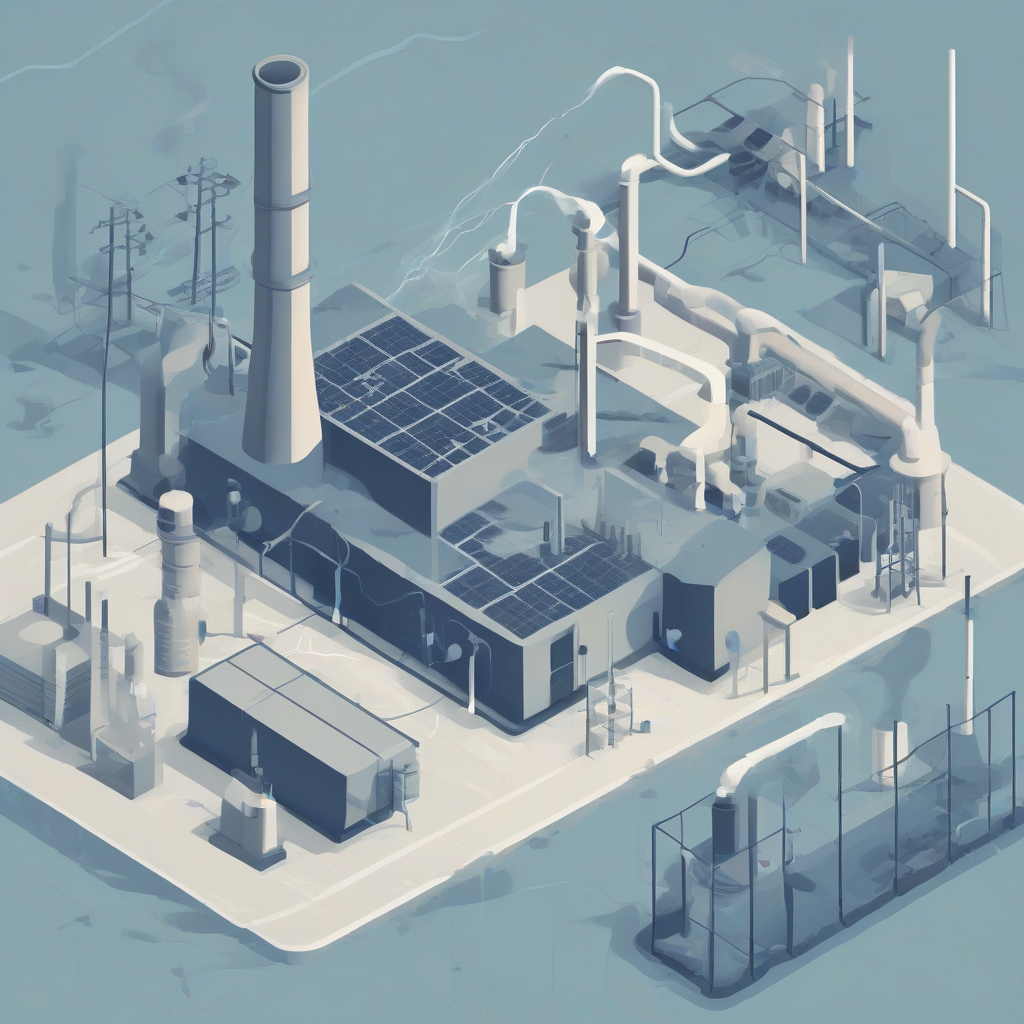
On the afternoon of the 8th, the heart of the Daedeok Industrial Complex in Daejeon came to an unannounced standstill. Factory equipment that usually hums with activity fell silent for over two hours due to a sudden power outage. This incident starkly demonstrated how a minor facility inspection by the Korea Water Resources Corporation (K-water) could lead to the paralysis of a massive industrial site. In today's industrial ecosystem, where a simple technical error is directly linked to production disruptions, this event once again poses two major challenges: stable power grid operation and rigorous safety management.
The root of this power outage was an electrical facility inspection conducted by K-water at the Hyeondo Intake Station in Cheongju, North Chungcheong Province. During the inspection of the Gas Insulated Switchgear (GIS), an unexpected voltage drop occurred, triggering a chain reaction that caused KEPCO’s circuit breakers to trip and cut off the power supply line. The issue lies in the fact that this power grid was partially shared by Hankook Tire and K-water. Consequently, companies within the nearby Daedeok Industrial Complex suffered unintended power outages, resulting in a concentrated blow to businesses using specific power lines rather than the entire industrial complex.
The hardest hit was the Hankook Tire Daejeon plant. The outage, which began around 2:30 PM, was so critical that signs of recovery only appeared after 5:00 PM. Although they attempted to maintain minimal functions in the main building using emergency generators, core production facilities were forced to stop. In particular, due to the nature of the tire manufacturing process, a power cut causes rubber materials to harden or leaves residues in the equipment, necessitating additional processing steps for a restart. Therefore, even after power supply was restored, immediate normal operation was difficult, and it is expected that actual production losses will persist for a considerable period.
Beyond Hankook Tire, major companies within the Daedeok complex, such as Hansol Paper’s Daejeon plant and Hanon Systems, also faced disruptions in equipment operation due to the momentary power loss. Relevant authorities, including the city of Daejeon, KEPCO, and K-water, moved quickly after the outage to determine the exact cause and scope of the damage. Fortunately, no casualties were reported; however, power supply interruptions in industrial settings are serious incidents that go beyond mere inconvenience, potentially damaging corporate credibility and the ability to meet delivery deadlines. Companies are now in a position where they must re-examine their own emergency power systems and strengthen response manuals to prepare for potential power grid cutoffs caused by external factors.
One perspective on this incident is the danger inherent in the interdependence of industrial infrastructure. The structural problem where a public institution's facility inspection leads to the shutdown of private companies clearly exposes the vulnerabilities of modern industrial complexes. While KEPCO drew a line by stating that this incident was not a defect in their own facilities but a problem that occurred during K-water's work, the affected companies ultimately had to bear the brunt of the loopholes in public infrastructure management. Considering the impact of public agency work on private production activities, more sophisticated advance notification systems and technical safeguards to block risks that may arise during work seem urgent.
Meanwhile, separate from this incident, Hankook Tire unveiled a brand film in collaboration with MINI Korea on the same day, emphasizing its technological prowess and racing heritage. The ironic situation—where a company solidifying its position as a high-performance tire brand in the global market had its factory halted due to power issues—represents the reality faced by industrial sites. This is because even flashy technical marketing can only demonstrate its true value when supported by a solid foundation of stable production. The process of cleaning up after the outage and normalizing the production lines will be the first step in restoring the technical credibility that Hankook Tire aims to project.
■ Conclusion and Outlook
The Daedeok Industrial Complex power outage has reminded us once again of how fatal the ripple effect can be when electricity, an "invisible infrastructure," stops. As the impact of public agency work on private production is significant, a closer cooperation system between relevant agencies and the advancement of work guidelines are urgently needed to prevent similar accidents in the future. Furthermore, companies that suffered production setbacks due to this incident must carefully examine potential additional technical defects that may occur during the recovery process and focus all efforts on ensuring safety. I hope this situation will not be forgotten as a mere happening, but rather serve as an opportunity to raise the stability of industrial infrastructure to the next level.
* This post is an analysis column automatically regenerated in the style of a current affairs critic by analyzing real-time Google Trends search terms and related major articles.
- 이전글 ‘도깨비 팀’의 명암, 씨맥 김대호 감독이 이끄는 디플러스 기아의 2026 시즌 중간 결산
- 다음글 ‘엘리트 카르텔’인가 ‘불가피한 전문성’인가: 대한민국 군 조직의 현주소와 미래
댓글목록 0
등록된 댓글이 없습니다.