
The Naked Face of a 'Hurting Classroom' Proven by Death: The Question …
페이지 정보

본문
The Naked Face of an 'Ailing Classroom' Proven by Death: Questions Raised by the Tragedy of a Private Kindergarten Teacher
Date: June 09, 2026 | Column by IT/Media Current Affairs Critic
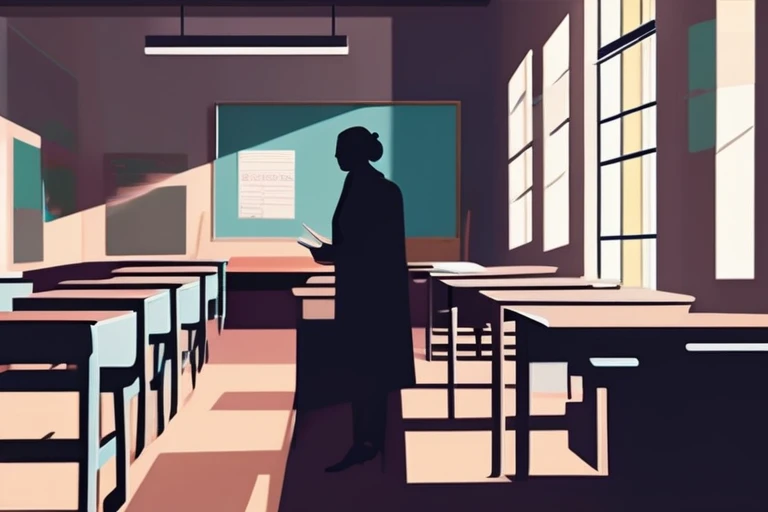
"I am sorry, I will wear a mask and come to work tomorrow." The final message sent to a kindergarten director by a teacher in her 20s, who sensed her own death while suffering from a 39.8°C fever, represents the chilling landscape of our society's educational field. The tragedy of a young teacher who felt compelled to push herself despite being so ill with the flu that she could barely breathe, all to avoid inconveniencing her colleagues and students, is by no means a matter of individual misfortune. 115 days after a private kindergarten teacher in Bucheon passed away last February, the Teachers' Pension Service finally recognized her death as a "work-related disaster." This decision is the first step toward restoring the deceased's honor and serves as a social alarm, bringing to light the uncomfortable truth that our educational field is barely maintained at the cost of teachers' sacrifices.
This recognition of a work-related disaster is significant in that it officially confirms the vulnerability of the labor environment faced by teachers. During her lifetime, the deceased suffered from an excessive workload, including preparing for art festivals and new student orientations. Even after being diagnosed with the flu, she was forced to go to work without taking sick leave due to the reality that there was no substitute staff. According to documents submitted by the bereaved family, the kindergarten was already in a state where many students and teachers were infected with the flu, yet the school maintained an atmosphere that forced normal operations. Teachers were isolated within a structural pressure where they could not rest even when ill, which resulted in threatening not only the individual teacher's right to health but also the safety of children with weak immune systems. Ultimately, the agency recognized a significant causal relationship between the deceased's work and her death, legally admitting that the worker's right to health was not protected in the educational field.
The core issues pointed out by the Korean Teachers and Education Workers Union (KTU) and other teacher unions are the "absence of a substitute staffing system" and the "closed operational structure of private kindergartens." In fact, a survey of private kindergarten teachers revealed that nearly 90% of respondents had experienced going to work while ill. In a structure where class operations are paralyzed the moment a teacher is absent, the practice of "winging it"—where colleagues or the director take on the workload instead of securing substitute teachers—is repeated. This environment has turned the simple act of expressing a desire to take sick leave into something that makes teachers "feel self-conscious," and has solidified a tragic practice that forces them to guard the classroom while wearing masks even during infectious disease outbreaks. While education authorities have neglected efforts to increase the transparency of private kindergartens and strengthen their public nature through incorporation, teachers have been forced to fend for themselves outside the institutional safety net.
Meanwhile, the difficulties in schools are not limited to health issues. Recently, the education sector has been facing another storm: indiscriminate reports of child abuse by some parents. Although the five laws for protecting teachers' rights have been revised and institutional safeguards have been prepared, teachers in the field still live in fear that "no-questions-asked" false reports could halt their educational activities at any time. Cases where teachers are reported for child abuse for refusing requests to change student records, or are framed as perpetrators while trying to stop a student's problematic behavior, are frequent. Such situations not only break teachers' will to teach but also shrink legitimate educational guidance, ultimately acting as a boomerang that paralyzes the educational function of the classroom.
These two trends—the "absence of institutional protection" and the "threat of indiscriminate external complaints"—show that our educational field is facing a serious crisis. Private kindergarten teachers are forced to work beyond their physical limits due to a lack of substitute staff, and elementary and secondary school teachers are exposed to institutional loopholes that make it difficult to defend even legitimate educational activities. Both of these problems stem from the custom of relying on "teacher sacrifice" for education. The reality where an educational field that should be operated by a system is instead sustained by the personal responsibility, dedication, or self-consciousness of teachers is no longer sustainable. This is why education authorities must go beyond merely issuing countermeasures after incidents occur and exercise practical administrative power to improve labor environments and protect teachers' rights.
As urgent as academic discussions on enhancing the professionalism of curricula is the creation of an environment where teachers can work safely. In the field of early childhood education, research on play-based learning and pedagogy is actively underway, but if the body and mind of the teacher practicing that education are collapsing, no educational philosophy can flourish in the field. Establishing institutional foundations such as guaranteed sick leave during infectious disease outbreaks, calculating teacher quotas based on the number of classes, and the mandatory placement of substitute staff are tasks that can no longer be delayed. It is time to stop the practice of packaging teachers' sacrifices as "passion" or "sense of duty" while leaving them neglected. We must make the simple truth that only healthy teachers can raise healthy children the top priority of our policies.
■ Conclusion and Outlook
The recognition of the Bucheon kindergarten teacher's death as a work-related disaster is more than just an individual tragedy; it is a mirror reflecting the naked face of our educational field. Education is only completed when built upon solid systems and institutions, not the sacrifices of teachers. Taking this decision as an opportunity, education authorities must prepare immediate and concrete measures to guarantee teachers' rights to health and education. When the establishment of a substitute staffing system, practical measures to protect teachers from malicious complaints, and legal and institutional improvements to secure the public nature of private kindergartens are carried out in parallel, teachers will no longer have to head to the classroom while ill, and children will be able to receive safer, higher-quality education. So that the teacher's death is not in vain, we must now create an educational environment where the system protects the teacher.
* This post is an analytical column automatically regenerated in the style of a current affairs critic by analyzing real-time Google Trends popular search terms and related major articles.
- 이전글산은 정복의 대상이 아닌 겸손의 공간이다: 지리산 실족 사고가 남긴 경종 26.06.09
- 다음글필드의 승부사와 사회의 조력자: ‘김효주’라는 이름으로 교차하는 두 세계의 기록 26.06.09
댓글목록
등록된 댓글이 없습니다.