
Powder keg in the Strait of Hormuz: Repercussions and uncertainty left…
페이지 정보

본문
Powder keg in the Strait of Hormuz: Repercussions and uncertainty left by the US-Iran ‘limited conflict’
Written on: June 10, 2026 | Column by current affairs critic specializing in IT/media
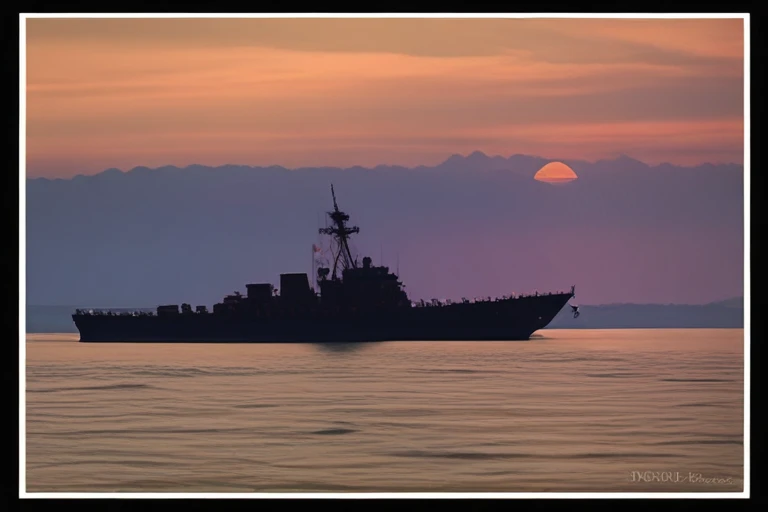
War clouds are once again hovering over the Strait of Hormuz, where the thread of peace has been pulled taut. This is because the precarious ceasefire between the United States and Iran, which had been ongoing since last April, collapsed in an instant when it met the fuse of the shooting down of a U.S. Army Apache helicopter. President Donald Trump's resolute retaliation order and Iran's threat of retaliation have pushed the future of the previous negotiations between the two countries into an unpredictable fog. At this moment, in the heart of the Middle East, a gigantic geopolitical gamble is taking place that goes beyond a simple military response.
This incident began when a U.S. Army Apache helicopter scouting the Strait of Hormuz was shot down by an Iranian drone attack. Fortunately, the two pilots on board were rescued safely with the help of the latest surface drone, but President Trump defined this as a provocation that could never be tolerated. The United States immediately launched a large-scale airstrike against Iran's southern coastal cities of Sirik, Qeshm Island, and Jask under the pretext of exercising its right to self-defense. The U.S. Central Command emphasized that this operation was a 'proportional response' focused on precise strikes against Iran's air defense network, surveillance radar base, and command and control facilities, and appeared to focus on preventing an escalation of war.
The U.S. government has repeatedly claimed that this airstrike was not a simple retaliation but a legitimate measure of defense. In a direct call with the media, President Trump made it clear that the response must be very strong and forceful, emphasizing that this military action was an inevitable choice. Nevertheless, the United States has signaled that it has no intention of completely breaking the current negotiating table with Iran. The series of precision strikes is interpreted as a strategic move with the goal of neutralizing some of Iran's military capabilities and deterring further provocations, while at the same time calculating not to give up the initiative at the negotiating table.
As soon as the US airstrikes began, Iran immediately reacted and retaliated, raising the level of tension to its peak. Iran's state-run media and Revolutionary Guard warned that they would resolutely confront US attacks, and took practical forceful retribution, such as launching drones and missiles targeting the US Navy's 5th Fleet stationed in Bahrain. In the process, damage occurred to communication facilities and water tanks in the Sirik area, and the highest level of alert was issued to US military bases in the region, including Kuwait. Inside Iran, while reporting on the U.S. airstrike, some took a conflicting stance, denying responsibility for shooting down the helicopter, saying there had been no direct aerial operations by the country's military over the past 24 hours.
Concerns in the international community are growing as this conflict implies the possibility that it will not simply end in a local war between the two countries. The United States is trying to manage the situation by declaring the completion of airstrikes, but the embers are still alive as Iran has pledged to take a stronger response if the United States' hostilities continue. In particular, such an armed conflict taking place in a strategically important area called the Strait of Hormuz can have a huge impact on the global economy, including the crude oil supply chain. Although both countries say they prefer diplomatic language, they are simultaneously using a different language, force, making it difficult to predict how the situation will develop in the future.
At this point, the relationship between the United States and Iran is at risk of the temporary ceasefire that began in April becoming virtually meaningless. President Trump insists that the agreement with Iran is still valid, but the battle taking place on the ground is so intense that it makes his words meaningless. Iran's Foreign Minister is pressuring foreign troops around Iranian territory to withdraw, warning that there is a high risk of them being caught up in hostilities. Although precision strikes on military facilities have been completed, there is a constant risk that the situation will escalate into an all-out war out of control if the two countries continue to retaliate against each other's provocations under the name of 'proportional response'.
■ Conclusion and analysis outlook
Ultimately, this incident clearly demonstrated how the deep-rooted distrust between the United States and Iran surrounding the Strait of Hormuz can explode. The U.S. military's retaliation under the name of 'self-defense' and Iran's retaliation against it appear to be a limited conflict on the surface, but behind it is a fierce power struggle between the two countries. Whether future ceasefire negotiations will get back on track or become a prelude to a larger armed conflict will depend on the level of follow-up response shown by both countries. Between diplomatic efforts toward peace and the destructive means of armed conflict, the fate of the Middle East once again stands at a critical crossroads.
* This post is an analysis column that is automatically recreated in the style of a current affairs critic's commentary by analyzing real-time Google Trends popular search terms and related major articles.
- 이전글사라진 증거물과 흔들리는 신뢰: 6·3 지방선거 투표용지 부족 사태의 실체 26.06.10
- 다음글제복의 가치는 무엇인가: 공동체를 지탱하는 헌신과 우리 사회의 응답 26.06.10
댓글목록
등록된 댓글이 없습니다.