
The Flame of Hormuz and the tectonic shift in radiation industry: The …
페이지 정보

본문
The Flame of Hormuz and the tectonic shift in radiation industry: The Apache crash marks the beginning of a new Cold War
Written on: June 11, 2026 | Column by current affairs critic specializing in IT/media
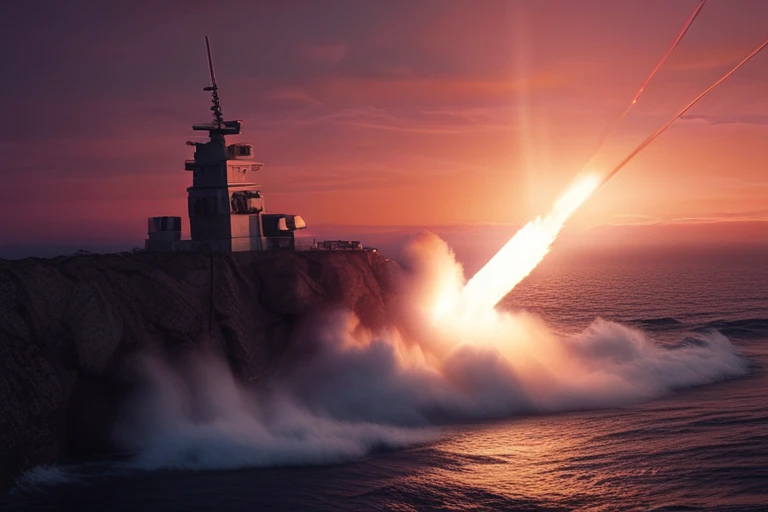
A state-of-the-art combat helicopter patrolling over the peaceful sea suddenly crashed, raising tensions in the Middle East to a critical point. This US military Apache helicopter crash was more than just a matter of mechanical failure or accidental collision, it became a fuse that instantly destroyed the fragile peace regime between the US and Iran. The Trump administration's immediate retaliatory attack and Iran's missile response are once again throwing the entire Middle East into flames. Was this tragedy that occurred over the Strait of Hormuz a simple accident, or the beginning of a predicted military conflict? We would like to delve deeper into the dark side of the weapons system surrounding this incident and the harsh reality of the international situation.
The key issue in this case is determining the cause of the downed Apache helicopter. Some have raised the possibility of a collision with an Iranian drone, but drone technology experts have strong doubts about this hypothesis. The prevailing analysis is that with Iran's current level of drone technology, it is virtually impossible to precisely chase and physically collide with a high-speed helicopter. Rather, experts point out that Iran's shoulder-fired surface-to-air missiles or portable anti-aircraft weapons are likely to be the real culprits in this shootdown. The fact that Iran has not officially claimed responsibility for this incident also supports the possibility that it was carried out independently by dispersed armed forces rather than regular troops.
The armed conflict between the US and Iran is causing huge repercussions in the global defense industry. In particular, as the United States prioritizes deploying its state-of-the-art weapons inventory to conflicts in the Middle East, other conflict zones, such as Ukraine, are experiencing serious disruptions in the supply of weapons. The shortage of American-made Patriot systems has impressed the allies with the harsh reality of putting one's own country first. Accordingly, Ukraine is accelerating the development of its own 'cost-effective' air defense system for its survival. This goes beyond simply creating a single weapon, and suggests that the global security paradigm is shifting from a focus on expensive precision weapons to a practical weapons system that is efficient and capable of mass production.
The new interception system 'Freyja' being developed by Ukraine is a symbolic result of these changes. It is very encouraging that it can intercept ballistic missiles at a low unit price of $700,000, which is one-fifth of the existing Patriot system. Of course, unlike the radar-guided Patriot, it adopts a heat-tracking method, so there is an inherent limitation that it is vulnerable to decoys. Experts evaluate it not as a perfect replacement for the Patriot, but as an effective 'complementary material' to make up for the lack of air defense network. Nevertheless, Ukraine's technological know-how accumulated while experiencing daily Russian attacks that are no different from actual combat is dramatically accelerating the speed of weapons development.
While U.S. military intervention is focused on the Middle East, the global security landscape is becoming more complex. The United States is maintaining a hard-line stance against Iran, which attacked its military facilities and communication towers, citing 'self-defense attacks' as the justification. However, this vicious cycle of retaliation is accelerating the depletion of weapons inventories, and as a result, it is revealing the 'limits of defense production capacity' that makes it difficult for the United States to provide sufficient military support to all conflict zones around the world. In the end, this Apache helicopter crash went beyond the local conflict in the Middle East and became a milestone that warned the world about how vulnerable the security umbrella led by powerful countries can become.
■ Conclusion and analysis outlook
The small explosion that started in the Strait of Hormuz is now shaking up the supply chain and diplomatic strategies of the global defense industry. The crash of the Apache helicopter went beyond the technical controversy over the weapons system and clearly demonstrated where the priorities of the world order that the United States has maintained lie. Each country now faces the urgent task of building its own independent defense industry system for its own survival, like Ukraine, rather than relying on support from other countries. In an era where the aspects of war are changing and the effectiveness of weapons determines survival, we must use this incident to deeply reflect once again on what the sovereignty of security is.
* This post is an analysis column that is automatically recreated in the style of a current affairs critic's commentary by analyzing real-time Google Trends popular search terms and related major articles.
- 이전글‘코리안 존 시나’의 탄생: 할리우드 거물도 매료시킨 김무열의 글로벌 존재감 26.06.11
- 다음글65세의 벼락스타, 정일영이 쏘아 올린 ‘늦깎이 전성기’의 미학 26.06.11
댓글목록
등록된 댓글이 없습니다.