
A strong supporter of the local community, the coexistence of Kori Nuc…
페이지 정보

본문
A strong support for the local community, the coexistence of Kori Nuclear Power Headquarters and the task of decommissioning nuclear power plants
Written on: June 11, 2026 | Column by current affairs critic specializing in IT/media
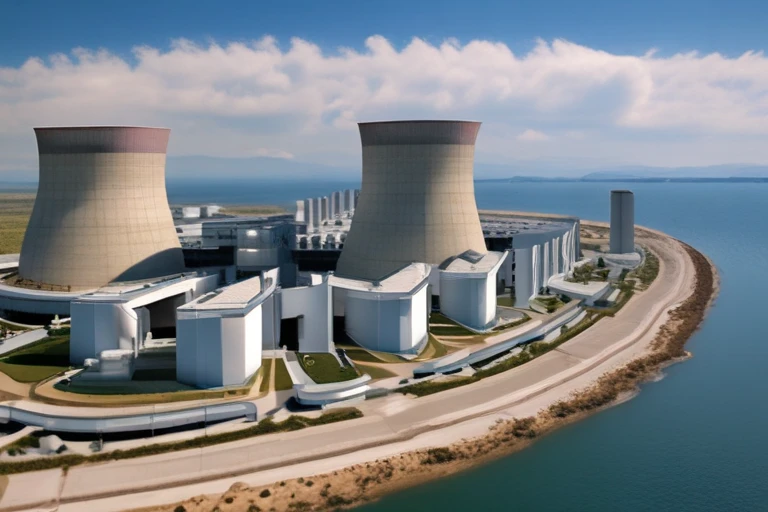
As much as the heat of energy emitted by the huge power plant, the warmth surrounding it is spreading throughout Gijang-gun, Busan. Korea Hydro & Nuclear Power's Gori Nuclear Power Headquarters is more than just an industrial facility that produces electricity, it is personally practicing how to coexist as a member of the local community. The recent actions taken by Kori Headquarters are very broad, ranging from careful consideration for the vulnerable to raising citizen awareness for national energy security. However, behind their brilliant social contribution lies a huge industrial challenge, the dismantlement of Kori Unit 1, and their actions are met with both encouragement and cool-headed analysis.
The 'Fence of Love' project promoted by Kori Nuclear Power Headquarters stands out for its determination to build a safety net for the local community beyond simple one-time financial support. The donation of 22 million won delivered this time will be delivered to 10 local children's centers in Gijang-gun through the Green Umbrella Children's Foundation and will be used to provide children with cultural experiences, emotional stability, and necessary supplies. This served as an opportunity to fill the gap in care that children from low-income families or vulnerable groups may experience, and to reaffirm the community value of raising children together as a community. Kori Headquarters has built emotional bonds with local children through scholarship programs, improved housing environments, and volunteer activities directly participated in by executives and employees, and these sincere actions suggest the desirable direction in which corporate social responsibility (CSR) should move.
In addition to social contribution activities, another axis that Kori Headquarters focuses on is a citizen participation campaign for national energy security. Ahead of the summer season, when electricity demand is concentrated, the labor and management of Gori Headquarters met with citizens in the Sajik Baseball Stadium area and encouraged them to practice energy conservation in their daily lives. Practical measures such as complying with the five-day driving schedule, using public transportation, maintaining appropriate temperatures in air conditioners, and blocking standby power are lifestyle rules that can have a more powerful practical effect than grandiose slogans. This campaign, in which labor and management took to the streets together, is evaluated as strengthening internal solidarity and conveying the message of 'energy security' to citizens in a friendlier and clearer way, urging energy producers and consumers to overcome the crisis together.
However, the management site of the Kori Nuclear Power Headquarters is filled with complex tasks that are at a different level from social coexistence. This is the problem of delays in the large-scale waste disposal service project surrounding the decommissioning of Kori Unit 1, Korea's first commercial nuclear power plant. This project, worth approximately 20 billion won, has received great attention from the industry, being called a 'prelude' to prove the technological prowess of the nuclear power plant decommissioning market, which will be worth hundreds of billions of won in the future. Even though KHNP selected the KEPCO KPS consortium as the preferred negotiating partner, the final contract is being delayed due to errors in submitted data and responsibility disputes within the consortium. This goes beyond simple administrative delays and demonstrates the fierce competition among companies trying to secure leadership in the nuclear power plant decommissioning market, which will begin in earnest in the future, and how rigorous the verification process is.
Nuclear power plant decommissioning is a very sensitive process that requires a high level of expertise and safety as it deals with facilities within a radiation control area. The Kori Unit 1 decommissioning project is a long-term project that will last until the mid-2030s, and a huge amount of budget and technology will be invested in each stage, from system decontamination to waste reduction and site restoration. Therefore, the noise in this waste disposal service is not simply a contract issue, but can be seen as a growing pain experienced in the process of setting standards for the future domestic nuclear power plant decommissioning industry and building technical reliability. As the ordering party, Korea Hydro & Nuclear Power must maintain transparency and undergo thorough verification during the contract signing process, and participating companies must also maintain the basic principles of safety and regulatory compliance prior to the goal of securing technical performance.
■ Conclusion and analysis outlook
In the end, Kori Nuclear Power Headquarters is currently standing on a two-pronged path called ‘inclusion’ and ‘innovation’. A warm hand toward a local children's center and an energy saving campaign with citizens demonstrate the value of inclusiveness that builds strong trust with the local community. On the other hand, the Kori Unit 1 decommissioning project is a test bed for innovation that must be overcome for the domestic nuclear power industry to take a leap forward. If Kori Headquarters uses the trust of the local community gained through social contribution as a driving force to solve the difficult problem of nuclear power plant decommissioning and demonstrates safe and transparent business implementation, the sustainable future of Korea's nuclear energy industry will become brighter. This is because true coexistence is only achieved when the delicacy in caring for the lives of local residents and the determination in resolving national tasks are in harmony.
* This post is an analysis column that is automatically recreated in the style of a current affairs critic's commentary by analyzing real-time Google Trends popular search terms and related major articles.
- 이전글전장의 판도를 바꾸는 K-방산의 두 얼굴: 기술 혁신과 시장의 명암 26.06.11
- 다음글주거 혁명과 시장의 역설: 서울의 고층화 바람과 서민의 주거비 고통 26.06.11
댓글목록
등록된 댓글이 없습니다.