
Why do you have to stop on the highway at night: Implications of the n…
페이지 정보
작성자 playbbs 작성일 26-06-11 09:19 조회 201 댓글 0본문
Highway in the middle of the night, why should you stop: Implications of the nighttime blocking of the Sangju-North Sangju section of the Central Inland Line
Written on: June 11, 2026 | Column by current affairs critic specializing in IT/media
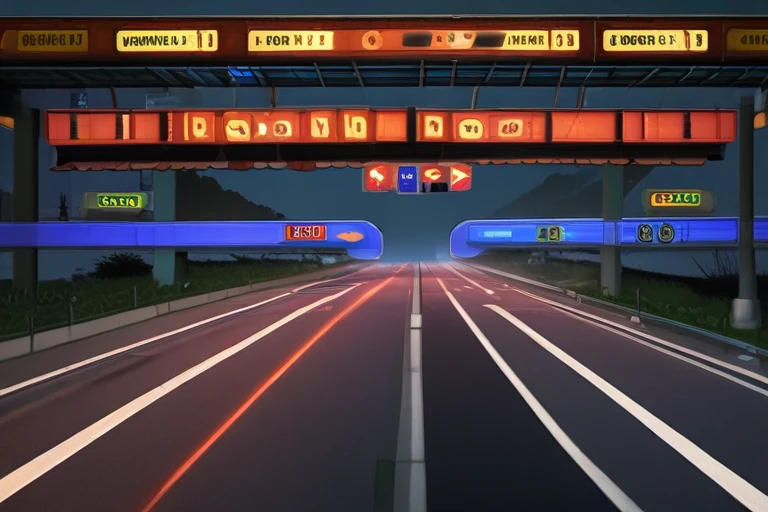
How embarrassing would it be to suddenly encounter a no-entry sign on the highway late at night as you speed toward your destination. The recent announcement of a complete nighttime blockade on the 13.5km section of the Central Inland Expressway from Sangju to North Sangju predicts considerable inconvenience to many drivers. It may be dismissed as a simple road maintenance project, but if you look behind the scenes at why the 'complete night-time blocking' was put in place, you can see how the safety management paradigm in our society is changing. This traffic restriction, which will last for four days from June 15th to 18th, goes beyond simple construction and contains a realistic solution for road management authorities struggling between the two values of efficiency and safety.
The purpose of this maintenance work is to go beyond simply covering the road surface and thoroughly inspect and replace all aged facilities on the highway. Considering the announcements from the Korea Expressway Corporation's Chungbuk headquarters and Daegu headquarters, this work will be carried out intensively every night from 10 p.m. to 8 a.m. the next day, that is, during the nighttime hours when vehicle traffic is relatively low. Drivers trying to use this section cannot enter from Sangju IC, so they must familiarize themselves in advance with the detour route to North Sangju IC using National Routes 25 and 3. These detour measures are commonly applied to all vehicles heading toward Yangpyeong via Sangju IC during the construction period, and will be announced in real time through road electronic signs, navigation, and the Road Plus website to prevent unexpected confusion.
Safety issues directly related to workers' right to life lie behind the road construction company's decision to take the bold approach of 'complete blocking' rather than partial lane control. Drivers may often ask whether it would be okay to block only part of the lane for construction, but the environment in which high-speed vehicles and workers are adjacent to each other can in itself become a fuse for large-scale accidents. The calculation is to secure work space by blocking all lanes and completely isolate the physical distance between workers and drivers to fundamentally prevent the risk of accidents. This can be interpreted as a result of public institutions' strengthened safety management philosophy of ensuring safety at work sites as a top priority, even if it means enduring short-term traffic inconveniences.
Although this measure forces drivers to take a somewhat cumbersome detour route, from a long-term perspective, it is an essential process to extend the life of the road and prevent accidents. Concentrating construction at night is a consideration to avoid interfering with daytime traffic flow, but is also a strategic choice to shorten the construction period and accelerate the resolution of all inconveniences. If construction had been carried out during the day, extreme congestion and risk of accidents would have existed, which would have resulted in greater social costs. The reason why the relevant authorities, including Director Lim Jong-taek, repeatedly ask for the public's understanding is to emphasize that these inconveniences are ultimately an inevitable investment to create a safer and more comfortable road environment.
Road maintenance is like the veins of social infrastructure that are invisible but indispensable for maintaining our quality of life. This maintenance of the Sangju-Buksangju section is not simply an act of removing old pavement, but is a preventive measure to ensure safe movement rights for highway users. Although it is a short period of four days, confusion at the construction site can be minimized only when small steps such as checking information in advance and using detours are gathered together. Now is the time for drivers to develop a mature civic consciousness that accepts these public safety measures not as mere regulations, but as a shared responsibility for the safety of all of us.
■ Conclusion and analysis outlook
In the end, this nighttime blocking of the Central Inland Expressway once again confirms the proposition that ‘there is no compromise on safety.’ The inconvenience will pass in a few days, but the risk of accidents caused by poor roads can never be reversed. Drivers need to closely review the detour routes provided and allow sufficient time in advance when passing through the section during construction. Road management authorities must also complete this construction quickly and completely and return safer roads to drivers after construction. We hope that this case will become a standard model for both safety and efficiency in the future maintenance of our society's aging infrastructure.
* This post is an analysis column that is automatically recreated in the style of a current affairs critic's commentary by analyzing real-time Google Trends popular search terms and related major articles.
댓글목록 0
등록된 댓글이 없습니다.