
The Invisible War in the Pacific: Air-to-Air Missile Hegemony and Kore…
페이지 정보

본문
The Invisible War in the Pacific: Air-to-Air Missile Hegemony and Korea’s Strategic Choices
Written on: June 11, 2026 | Column by current affairs critic specializing in IT/media
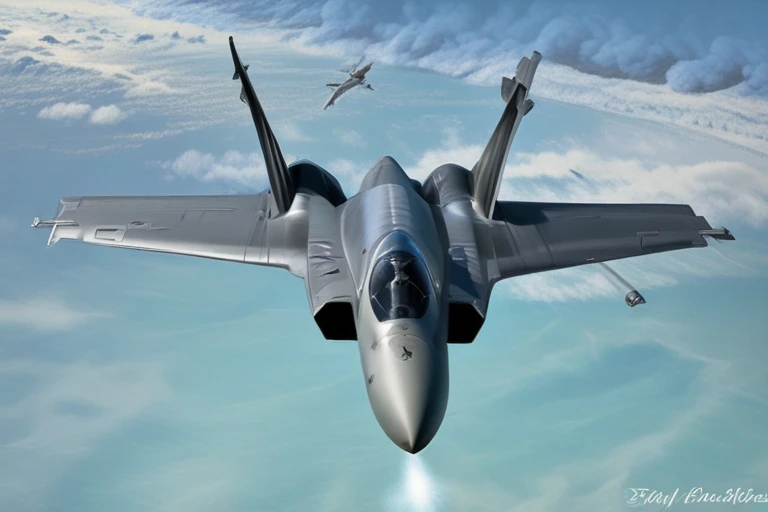
At the center of the invisible battlefield taking place in the sky is the law of survival: who can see farther and shoot first. The United States' recent approval of the sale of 70 intermediate-range air-to-air missiles 'AMRAAM (AIM-120C-8)' to Korea goes beyond the superficial meaning of a simple arms deal, and symbolically demonstrates the rapidly changing security landscape of the Indo-Pacific region and the resulting technological response. The days when America's overwhelming technological superiority was taken for granted are over, and now invisible radar networks and ultra-long-range missiles are completely shaking up the landscape of air combat. What kind of air defense strategy is South Korea building amidst this fierce technological competition and complex international situation? Today we would like to look at the larger military context behind the approval of the sale of a single missile.
The U.S. State Department's approval of the AMRAAM missile sale reflects the realistic tactical needs faced by fighter aircraft such as the F-35A, the core force of the ROK Air Force. The AIM-120C-8 is the U.S. military's main medium-range air-to-air missile, providing precision strike capabilities that can suppress enemy threats from a long distance. South Korea has already introduced the same series of missiles in 2019, and this additional introduction is interpreted as an intention to go beyond simply replenishing inventory and maintain military balance with neighboring countries and maximize interoperability with the U.S. military. In particular, as security instability in the Indo-Pacific region increases, strengthening Korea's air defense capabilities is an important issue that is directly related to U.S. foreign policy. The integration of these weapon systems is considered an essential element in building a solid defense shield that allows the ROK Air Force to respond to uncertain future threats.
But behind this deal lurks a huge challenge: China's rapid advancement in aviation weapons technology. In the past, the United States monopolized air superiority with overwhelming technological prowess, but long-range air-to-air missiles such as the PL-15 developed by China have reached a level that threatens the United States' existing systems. In particular, China's missiles boast a range of over 300 km, and they use sophisticated tactics to strike targets outside the detection range of fighter aircraft radars through an early warning network. In response to this, the United States is busy developing the AIM-260 (JATM) in great secrecy to dramatically increase the engagement distance in aerial combat. This missile range competition taking place in the Pacific sky is more than just a difference in performance; it has become a key security issue that determines who will take the lead on the battlefield first.
Korea's defense industry is also seeking its own survival and leap forward in this whirlwind of technological competition. In particular, the domestic fighter FA-50 has confirmed the integration of AMRAAM missiles into the FA-50PL model, exported to Poland, and is being reborn as a true multi-purpose fighter beyond a simple light attack aircraft. During this process, the integration of American weapons was somewhat delayed, but this suggests that a complex calculation in conjunction with the United States' strategy to protect its domestic weapons systems was at work. Nevertheless, it is an undeniable fact that the FA-50 is proving its competitiveness in the global market, and the Korean Air Force's modernization work is now accelerating, including replacing the aging F-5 fighter through mass production and deployment of 4.5 generation fighters such as the KF-21. This shows Korea's strong will to no longer rely solely on imports, but to protect its own skies through qualitative growth of its own aviation power.
Furthermore, changes in aerial combat combined with drone technology are also something to pay attention to. The fact that the unmanned fighter ‘Fury’, which is being developed by innovative companies such as Anduril, has begun a test flight equipped with an AMRAAM missile foretells that future air combat is transitioning from a focus on manned aircraft to a complex manned and unmanned system. These technological changes mean that, apart from the fact that Europe's Rafale and Gripen fighter jets are proving their practical value through support for Ukraine, the paradigm of air combat itself is becoming more intelligent and automated. The Korean Air Force is also closely watching these changes in the future battlefield and is faced with the task of building a manned and unmanned complex power system centered on the KF-21. In an era where the speed of technology becomes the speed of security, Korea's aviation and defense industry is now at the forefront of global technology competition.
■ Conclusion and analysis outlook
In conclusion, this sale of American air-to-air missiles is not a simple transaction, but a piece of the strategic puzzle chosen by the Republic of Korea to ensure survival and deterrence in a rapidly changing international security environment. China's long-range missile threat, the United States' technological response, and Korea's efforts to develop its own aviation power are all processes to protect the core national security value of 'air superiority.' The security reality we face demands a more complex and sophisticated response, and it has become more important to secure technological independence and tactical flexibility beyond simply introducing weapons. Now that the Korean Air Force is leaving behind veterans like the F-5 and moving toward a future force armed with the KF-21 and AMRAAM, we must continue to make unwavering strategic choices in the rapidly changing Pacific security landscape while increasing our ability to protect our own skies.
* This post is an analysis column that is automatically recreated in the style of a current affairs critic's commentary by analyzing real-time Google Trends popular search terms and related major articles.
- 이전글울릉도에 새겨진 역사의 증언, 방치된 유산에서 미래의 자산으로 26.06.11
- 다음글벼랑 끝에 선 노동의 얼굴들: 도급제의 굴레와 구조적 불안의 서사 26.06.11
댓글목록
등록된 댓글이 없습니다.