
A testimony to the history engraved on Ulleungdo, from a neglected her…
페이지 정보
작성자 playbbs 작성일 26-06-11 11:49 조회 106 댓글 0본문
Testimony of history engraved on Ulleungdo, from neglected heritage to future asset
Written on: June 11, 2026 | Column by current affairs critic specializing in IT/media
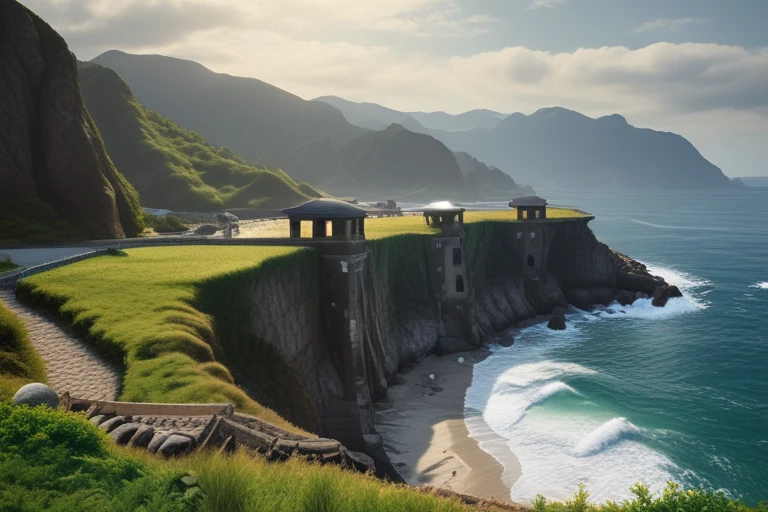
Ulleungdo and Dokdo are not simply dots on a map, but are vivid sites where the territorial sovereignty and history of our people are piled up. A recent field trip conducted by the Northeast Asian History Foundation and the educational community reminded us of the historical weight of these islands, but at the same time revealed the bitter reality we face. Slogans to protect Dokdo's sovereignty are loud, but the historical remains of Ulleungdo, which are the basis for them, are suffering from damage and neglect. Now is the time to go beyond emotional responses and cool-headed reflection on how to systematically preserve Ulleungdo's cultural heritage and historical materials and pass them on to future generations.
Historical materials prove that Ulleungdo and Dokdo have been one living area and Korean territory since the Three Kingdoms Period. In particular, the ‘water land system’ implemented by the Joseon Dynasty government is conclusive evidence showing that Ulleungdo and Dokdo were actually ruled and managed. At the time, the local officials left their names and visitation records in ‘gakseokmun’ on rock walls throughout Ulleungdo, which is valuable administrative data proving that the government regularly patrolled the island. Numerous records, including the Taehari inscription, discovered through recent academic research serve as a powerful logical weapon to refute Japan's distorted claim that ‘Joseon abandoned Ulleungdo and did not recognize Dokdo.’ These historical records clearly show that Dokdo is not an isolated island but has existed within the grand historical context of Ulleungdo.
However, despite this historical value, the actual situation on the ground cannot be avoided. Historic sites with unique styles, such as the Southwest Ancient Tombs of Ulleungdo Island, are neglected, making access difficult for researchers, let alone tourists, as even the access roads are not properly maintained. Modern heritage sites, such as the site of a watchtower installed by Japan during the Russo-Japanese War during the Japanese colonial era and the submarine cable landing point, are also buried in the bush, making it difficult to even guess their size and traces. While historic sites are neglected, hiding behind the excuse of lack of budget, the carved stone gates are being chipped away by wind and rain, erasing evidence of our history one by one. This goes beyond a simple failure to manage cultural assets and is tantamount to giving up objective physical evidence to support our territorial sovereignty.
Meanwhile, the administrative capacity of local governments is also facing a total crisis. The rice farming resumption project, which Ulleung-gun had ambitiously promoted, was carried out in a ‘show for show’ manner without a thorough review of infrastructure and environmental characteristics, and was discontinued after three years with only a huge amount of budget wasted. In addition, Hyeonpo Observatory, which was built with a huge investment of 1.7 billion won, was unable to open more than two years after completion due to poor construction and illegal administration and became the subject of a legal battle. These cases clearly show how short-sighted and irresponsible attempts are to commercialize or preserve local historical resources for tourism. When local communities and administrative authorities focus only on wartime administration without genuine consideration, the damage comes back to the public in the form of taxpayer money and damage to precious cultural heritage.
Even in this situation, the efforts of future generations to protect Dokdo are becoming a spark of hope. The ‘Dokdo Keeper School’, in which 120 schools across the country are participating, is run with the teachers’ dedicated passion, but due to the budget being cut after COVID-19, the students, who are the main characters, are unable to set foot on Dokdo, and ‘half-explorations’ are being repeated. Field teachers are using artificial intelligence and edutech to open a new horizon for Dokdo education, but government support remains stagnant, not even reflecting the inflation rate. The educational reality of teaching students about Dokdo but not being able to actually take them to the field makes us question whether our society is only paying lip service to the value of protecting Dokdo. Now, in addition to expanding practical infrastructure, such as expanding the Dokdo Experience Center, policy capabilities must be focused on creating an environment where future generations can directly encounter historical sites.
■ Conclusion and analysis outlook
Ulleungdo and Dokdo are fertile lands of our history, and how we cultivate them now will determine the amount of territorial sovereignty we will pass on to future generations. The days of simply shouting for Dokdo on an emotional level are over, and now a scientific and systematic approach is needed to precisely investigate and preserve each carved stone gate and each historical site. Administrative authorities must stop reckless civil engineering projects and wartime administration and focus on the essential task of preserving historical heritage, and educational authorities must spare no effort in providing support so that future generations can experience history in the field. When the records of our ancestors engraved on Ulleungdo are preserved intact, Dokdo will be able to solidify its legitimacy in the international community as an unwavering territory of the Republic of Korea.
* This post is an analysis column that is automatically recreated in the style of a current affairs critic's commentary by analyzing real-time Google Trends popular search terms and related major articles.
댓글목록 0
등록된 댓글이 없습니다.