
A frozen ready-mixed concrete mixer truck threatens the lifeblood of t…
페이지 정보

본문
A frozen ready-mixed concrete mixer truck threatens the lifeblood of the Korean economy.
Written on: June 11, 2026 | Column by current affairs critic specializing in IT/media
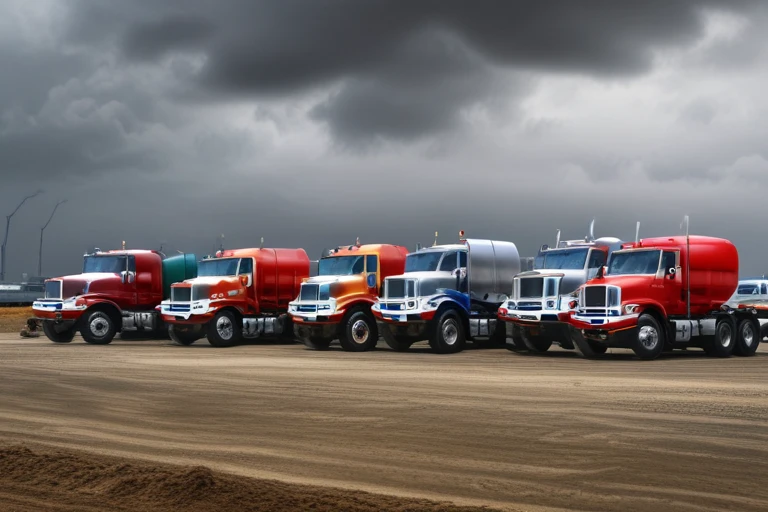
The Korean industry was put on alert as ready-mix concrete, the foundation and core of construction sites, stopped working. The mass shutdown of the National Ready-Mixed Concrete Transportation Workers' Union, which began on the 8th, continues for four days, and even key construction sites that support the national economy, such as Samsung Electronics' Pyeongtaek Campus and SK Hynix's Yongin Semiconductor Cluster, are facing the worst scenario of process disruption. As the provisional agreement reached through government mediation was rejected by union members with overwhelming opposition, the labor-management conflict has returned to square one and the situation is showing signs of prolonging. Now that the sound of the mixer truck's engine that wakes up the construction site in the morning has stopped, we delve into the complex tangle of what is blocking the bloodstream of our industry.
The immediate cause of this strike was the significant difference in views between labor and management regarding the extent of the increase in transportation prices. The union demanded an increase of 8,000 won per unit due to rising prices and the burden of vehicle maintenance costs, but the manufacturer fought back, suggesting a level of 2,500 won, citing the construction recession and cost burden. In the end, the situation seemed to be settled by agreeing to an increase of 4,200 won (approximately 5.5%) through mediation by the Ministry of Land, Infrastructure and Transport, but the union members on site did not accept this. As the result of the vote was 30.6% in favor and 68.3% against, internal dissatisfaction and demands for higher compensation erupted beyond simple unit price negotiations. In particular, the feeling of deprivation that the metropolitan area is receiving insufficient treatment compared to the level of increases in other regions, such as Daejeon, is analyzed as the decisive cause of this rejection.
The essential issue of this situation goes beyond the economic issue of transportation costs, and is expanding into a conflict over the legal status and collective bargaining rights of ready-mix concrete transport drivers. Last February, the Seoul Administrative Court partially recognized the status of transportation drivers as employees under the Labor Union Act, and the Ministry of Employment and Labor issued a national union establishment certificate, further strengthening the union's bargaining power compared to the past. The union goes beyond simply raising transportation costs and is strongly demanding the implementation of collective bargaining to ensure job security and improve unreasonable practices. On the other hand, manufacturers still define drivers as special workers who are self-employed, and are concerned that the union's demand for collective bargaining will lead to direct negotiation pressure on primary construction companies in the future, increasing the burden on the public, such as rising sales prices.
Because ready-mix concrete is a time-sensitive material that must be placed within 90 minutes of production, any disruption in transportation means an immediate shutdown of the construction site. As the strike prolongs, the construction industry is trying hard to fill the supply gap by deploying directly managed vehicles or mobilizing alternative transportation methods, but even this is not easy as the labor union is taking strong measures, such as blocking the entrance to the site. In particular, large-scale projects such as semiconductor factories have tightly woven processes, so a one-day delay can lead to billions of won in losses or a domino collapse in subsequent processes. Related organizations, including the Construction Association of Korea, have begun to come up with self-rescue measures by suggesting to the government that requirements for on-site batch plant installation be relaxed, but this is becoming another spark of conflict that is causing a decline in sales for existing ready-mix concrete manufacturers and a strong backlash from engineers.
Behind the conflict lies the structural background of the construction equipment supply and demand control system that has been in effect since 2009. As the increase in mixer trucks has been restricted over the past 17 years, transportation drivers have gained strong bargaining power due to supply shortages, and based on this, the threat of strikes that are repeated every year has become a chronic factor of instability in the construction industry. The manufacturer's claim that the price of ready-mixed concrete has only increased by 62.6% over the past 15 years, but transportation costs have soared 142.4%, suggests that the current negotiation structure is a 'tilted playing field' that is very unfavorable to manufacturers. Even though manufacturers are paying for fuel costs, they are under pressure to increase transportation prices, and the labor union is showing no signs of backing down, calling for guaranteed survival rights. Ultimately, amidst these complex interests, a vicious cycle continues in which the damage is passed on to construction sites and end consumers.
■ Conclusion and analysis outlook
The current ready-mix concrete strike goes beyond the simple breakdown of wage negotiations and clearly shows the structural contradictions faced by the supply system and labor environment in the Korean construction industry. The longer the strike lasts, the more likely there will be process disruptions at semiconductor factories, a key national industry, which could deal a fatal blow to our entire economy. Now, the government must step in and go beyond the level of mediating wasteful unit price conflicts between labor and management and come up with fundamental institutional improvements, such as reexamining the mixer truck supply and demand control system and improving the efficiency of batch plant operations. It is time for both labor and management to break away from the struggle-oriented approach that puts pressure on the other side and find a reasonable point of contact where they can coexist. There is an urgent need for a grand social compromise to normalize construction sites so that stopped ready-mix concrete vehicles can return to the site.
* This post is an analysis column that is automatically recreated in the style of a current affairs critic's commentary by analyzing real-time Google Trends popular search terms and related major articles.
- 이전글나고야의 정상을 향한 승부수, 2026 아시안게임 야구 대표팀의 청사진이 그려졌다 26.06.11
- 다음글'욘사마'의 백발과 톱스타들의 우정, 싱가포르 크루즈에서 꽃피운 사적인 휴가 26.06.11
댓글목록
등록된 댓글이 없습니다.