
Persian Gulf becomes a powder keg: Trump's 'Tomahawk diplomacy' and Ir…
페이지 정보

본문
The Persian Gulf has become a powder keg: Trump's 'Tomahawk diplomacy' and Iran's Bae Su-jin
Written on: June 11, 2026 | Column by current affairs critic specializing in IT/media
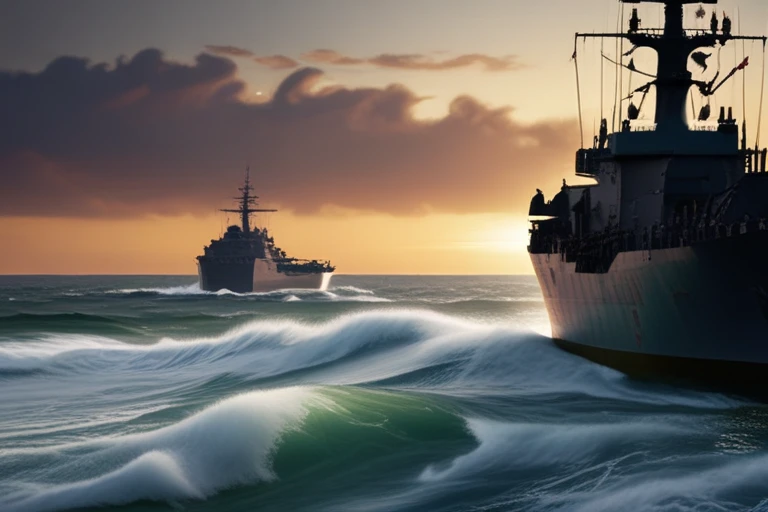
Gunfire heard from the Strait of Hormuz, a narrow seaway in the Middle East, is shaking the economy and security of the world. This is because U.S. President Donald Trump rained 49 Tomahawk missiles at Iran and issued an extreme ultimatum of 'negotiation or destruction.' The United States' precision strike continued for two days, coupled with Iran's hard-line response to completely block the Strait of Hormuz, and the international situation fell into an imminent crisis that made it impossible to foresee the future. Will a peaceful agreement await the end of this armed conflict, or is this the beginning of an uncontrollable all-out war?
This incident started with the US military shooting down an Apache helicopter. The United States characterized this as a clear provocation against its military assets and immediately retaliated, and President Trump directly issued a strong warning to Iran from the White House. According to the official announcement from the U.S. Central Command, this airstrike is not simply a one-time retaliation, but an operation to exercise self-defense by precisely striking multiple strategic targets. In particular, with the area near Tehran included in the missile range, the level of pressure from the United States targeting the heart of Iran has reached its peak. President Trump boasts in interviews that this attack was very vicious and destructive, and has not stopped threatening to carry out a more powerful bombing tomorrow night if the agreement is not signed.
However, the differences in perspectives between the United States and Iran regarding this incident are stark. President Trump claims that he personally spoke with Iranian officials and that the other side first requested that the airstrikes be halted. This is interpreted as an external message showing Trump's 'superiority of power', but Iran is reacting sharply by immediately denying this completely. Iranian authorities are disparaging Trump's remarks, saying they are nothing more than political rhetoric aimed at concealing America's helplessness in breaking the solidarity of its people. In fact, Iran defines the destruction of civilian infrastructure such as communication towers and reservoirs as a war crime, and is strengthening its internal resolve to never surrender.
The damage caused by the U.S. airstrikes is not just limited to military facilities, but appears to have spread to a humanitarian crisis. In the Sirik region of southern Iran, approximately 20,000 residents are suffering from an immediate loss of drinking water supply as large-scale infrastructure was destroyed due to US military strikes. Iranian President Massoud Fezezhikian criticized such attacks on facilities as a 'show of desperation' rather than a show of force, and argued that attacking national infrastructure is an inhumane act that deserves condemnation from the international community. Nevertheless, the United States is not giving up these coercive tactics as a last resort to reach an agreement, and communication channels between the two sides are virtually cut off, with armed conflict being used as the only means of communication.
The decisive variable that amplified the severity of the situation is Iran's 'complete closure of the Strait of Hormuz' card. Immediately after the additional U.S. airstrikes, Iran's Central Military Headquarters immediately banned the passage of all merchant ships and oil tankers passing through the Strait of Hormuz and declared that any violations would result in armed attacks. This is Iran's plan to put economic pressure on the United States by holding a key channel for global crude oil supply hostage. In fact, reports continued that the Iranian military had begun firing at ships attempting to pass through the strait, putting the global maritime logistics network on the verge of paralysis. Now, this conflict is going beyond a simple bilateral issue between the US and Iran and is escalating into an actual war that threatens the world energy market and the global economy.
■ Conclusion and analysis outlook
On the surface, the current situation appears to be a clash between Trump's overwhelming show of force and Iran's resistance, but behind the scenes, there is a high level of psychological warfare surrounding the cause of negotiations. President Trump is using a strategy of maximizing fear to reach a quick agreement, and Iran is trying to bring the United States down to the negotiating table by countering with internal solidarity and blockade of the strait. However, this precarious tightrope walk carries the risk of developing into an uncontrollable large-scale conflict at any time. Now that a diplomatic solution for peace has disappeared and only missiles and blockade measures remain, the mediation of the international community and a strategic decision by both sides are more urgent than ever.
* This post is an analysis column that is automatically recreated in the style of a current affairs critic's commentary by analyzing real-time Google Trends popular search terms and related major articles.
- 이전글성인 교육의 신화와 그림자: 데이원컴퍼니의 빛나는 성장과 뼈아픈 보안 과제 26.06.11
- 다음글검찰 인사의 칼날, 법의 저울 앞에 서다: 정유미 검사장 강등 처분 취소 판결의 함의 26.06.11
댓글목록
등록된 댓글이 없습니다.