
Brightness and future of the livestock industry: Structural challenges…
페이지 정보
작성자 playbbs 작성일 26-06-11 21:14 조회 72 댓글 0본문
The brightness and future of the livestock industry: Structural challenges hidden behind 1 trillion won in external growth
Created date: June 11, 2026 | IT/media specialist current affairs critic column
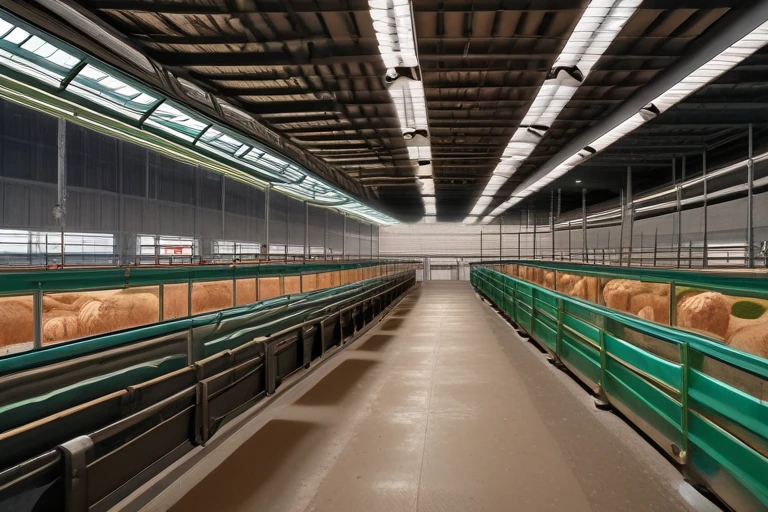
Modern livestock farming is evolving beyond simple food production into a key driver of the local economy and a huge industrial landscape where the environment and technology are intertwined. The recent news that Jeju Island has opened an era of livestock industry income of 1.4 trillion won is encouraging, but if we look inside, a cool-headed analysis is needed to see whether it is temporary growth dependent on external factors such as price increases. At the same time, discussions on expanding basic income for rural and fishing communities and attempts to convert livestock waste into energy resources reflect the intense concerns about sustainability facing the agricultural and livestock industry in Korea. Now is the time to not simply be satisfied with numerical growth, but to take a deeper look into how environmental regulations, social values, and future-oriented policies should be harmonized.
The 1.4 trillion won in annual income recorded by Jeju's livestock industry is the result of the rise in prices of major items such as pigs and Korean beef, and is more a reflection of the imbalance in market supply and demand than an increase in production. The pig farming industry still plays a central role in the local economy, accounting for 35% of total raw fish income, but the number of pigs shipped is on the decline, raising concerns about the stability of the production base. For Korean beef, the surge in price due to a decrease in slaughter volume only led to an increase in sales, but it is difficult to view it as a structural stability that guarantees long-term consumption demand and farm profitability. Behind this external growth, there are risks such as the burden of feed costs, changes in distribution structure, and instability in forage supply and demand due to climate change, so there are clear limitations in judging the health of the industry simply by increasing or decreasing sales.
As the scale of livestock farming grows, the environmental responsibility and social acceptability required by local communities also become more stringent. In particular, odor and river pollution caused by livestock waste are chronic problems that cause conflict between farms and residents, and technological innovations are being attempted in various ways to solve this problem. The cow dung solid fuel project being promoted in Wanju and Gimje, Jeollabuk-do is a groundbreaking turning point in transforming cow dung from simple waste into an energy source for thermal power generation. This is an alternative that can simultaneously achieve the environmental goals of improving Saemangeum water quality and reducing greenhouse gases, and is evaluated as a future-oriented model that can expect an annual import substitution effect of 150 billion won once production facilities are built in five cities and counties in the future.
Odor reduction research using microbial technology and general agricultural and fishing village development projects that expand living infrastructure in fishing villages are also part of efforts to improve the constitution of livestock farming and farming and fishing villages. Daegu Gunwi-gun's empirical research on introducing patented microorganisms is attracting attention in that it attempts a fundamental biological approach to the problem of odor, which had its limitations through facility improvement alone. In addition, Yeongdeok-gun's fishing village development contest selection case shows a comprehensive strategy to respond to the crisis of regional extinction by going beyond simple production activities and improving settlement conditions by combining culture and welfare infrastructure. These innovative attempts by individual local governments provide a clue for the livestock industry to move beyond a simple primary industry and move toward a high value-added industry that combines cutting-edge technology and welfare.
Policy support to increase the economic vitality of rural areas is also in line with changes in the livestock industry. Basic income for rural and fishing communities, a key agricultural policy task of the Lee Jae-myung administration, is directly improving the quality of life of residents by significantly expanding the pilot project area, and this is contributing to creating a virtuous cycle structure in the local economy through the use of local currency. However, in order for this income support policy to become permanently established, sophisticated design and financial resources must be developed based on the results proven through pilot projects. In addition, measures such as mandatory quarantine of livestock products when importing beekeeping honey and pollen, which will be implemented starting in November, demonstrate the government's will to create a safe livestock ecosystem by protecting the domestic production base and blocking the introduction of diseases.
■ Conclusion and analysis outlook
In conclusion, Korea's livestock industry is now at an inflection point, moving from 'quantitative expansion' to 'qualitative advancement'. In order to overcome the unstable profit structure influenced by market prices, environmentally friendly energy resource technology must be quickly established in the field, while reducing odor and improving the residential environment for coexistence with residents. Additionally, only when policy safety nets such as basic income for rural areas are supported will our livestock industry be able to overcome the strong waves of climate crisis and environmental regulations and establish itself as a sustainable future industry. Ultimately, a successful future livestock industry can only be completed when technological innovation, social inclusion, and policy consistency become the holy trinity and the voices of rural communities are captured.
* This post is an analysis column that is automatically recreated in the style of a current affairs critic's commentary by analyzing real-time Google Trends popular search terms and related major articles.
- 이전글 홈런으로 쓴 4위 전쟁의 서사시, 한화의 집념과 KIA의 고전이 교차하다
- 다음글 데이터로 엮는 K-팝의 미래와 명품 과일의 가치: 오늘 우리가 주목해야 할 '멜론'의 두 얼굴
댓글목록 0
등록된 댓글이 없습니다.