
Tesla and the China Wave: A huge tectonic shift in the Korean automobi…
페이지 정보

본문
Tesla and the China Wave: A huge tectonic shift in the Korean automobile market
Written on: June 13, 2026 | Column by current affairs critic specializing in IT/media
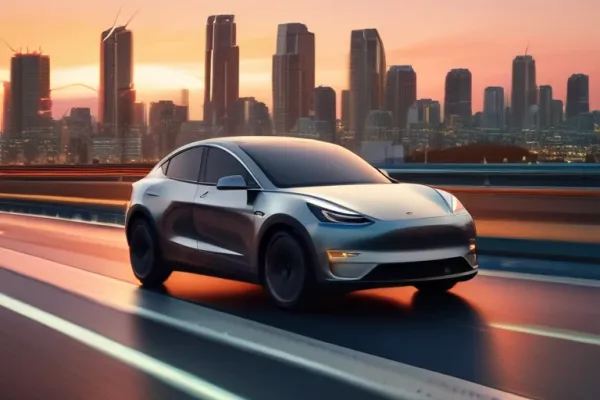
Recently, the scenery on the roads in Korea has been changing unusually. This is because the Tesla Model Y, a stranger, has proudly ascended to the best-selling car throne that has been firmly held by domestic brands for decades. The domestic market is currently being swept by a huge wave of electrification and price destruction, to the extent that Elon Musk himself praised “Korea is amazing” with a Taegeukgi emoticon on his SNS. Let's go beyond the popularity of certain models and dispassionately analyze how the full-scale entry of Chinese electric vehicles and the price war that determines the survival of the automobile industry are shaking up our automobile consumption landscape.
The incident in which Tesla Model Y recorded an astonishing sales volume of 8,762 units in Korea last May and ranked first in overall sales, beating Kia Sorento and Hyundai Grandeur, the pride of domestic cars, is a memorable inflection point in Korean automobile history. This is the first time that a single imported car model has reached the top in the entire market, including internal combustion engine vehicles, and this proves that electric vehicles are no longer an ‘alternative’ threatening the mainstream, but have become a ‘trend’. Tesla's run is not simply due to brand power. Starting with the Model Y RWD model produced at the Shanghai factory in China, the strategy of aggressively lowering the price to below 50 million won and engaging in direct price competition with domestically produced electric vehicles played a decisive role in opening consumers' wallets.
Behind Tesla's success lies the fierce pursuit of Chinese premium electric vehicle brands. Recently, Zeekr introduced the mid-sized electric SUV '7X' in Korea, targeting the premium market, and BYD is also knocking on the door of the Korean market with reasonably priced models such as 'Sea Lion 7'. In order to shed the stigma of being a 'low-priced Chinese car' in the past, they maximized their marketability by putting the 800V ultra-fast charging system, the latest digital interface, and high-performance battery technology to the fore. In order to respond to this 'China Wave', existing automakers, including Hyundai Motor Company and Kia Motors, are continuing a fierce game of survival even at the risk of worsening profitability by adjusting prices by changing model years or strengthening financial promotions.
As the electric vehicle market is rapidly moving from a focus on ‘brand loyalty’ to a focus on ‘price and specification competition,’ consumers’ purchasing criteria have also become more detailed. In the past, driving range and brand recognition were key factors, but now software update (OTA) functionality, convenience of the charging ecosystem, and utilization of interior space have become key criteria for purchase. Tesla has succeeded in establishing an unrivaled field in terms of user experience (UX) and instilling the image of cars as 'high-tech electronic devices' to the younger generation. On the other hand, Hyundai Motor Group is hastening to prepare a counterattack to block Tesla's software dominance by internalizing autonomous driving and robot technology through alliances with global AI companies such as NVIDIA.
However, amidst these rapid changes, there are still unsolved problems. In the case of Tesla, frequent changes in pricing policy, unclear delivery schedule, and controversy over FSD (Full Self-Driving) features are causing consumer dissatisfaction, and domestic consumers' trust in Chinese electric vehicles still poses a high barrier to establishing itself as a premium brand. Nevertheless, Tesla's explosive growth in the Korean market sends a strong warning message to automakers that they may be left out if they do not switch to a completely new paradigm of mobility rather than simply an 'extension of the internal combustion engine' electric vehicles.
■ Conclusion and analysis outlook
The Korean automobile market is currently in the midst of an unprecedented vortex of price disruption and technological competition. The signal of price competition launched by Tesla has accelerated the entry of Chinese brands such as Zike and BYD, which is demanding higher technology and efficient cost structures from existing automakers, including Hyundai Motor Company and Kia. There are certainly positive aspects to consumers, such as a wider range of choices, but in order to survive this fierce '50 million won war', it has become more important to build differentiated value and a sustainable service ecosystem beyond simple price cuts. The Korean market has now become a testing ground for global electric vehicle technology and pricing strategies, and the winner of this competition will take the lead in the future mobility market.
* This post is an analysis column that is automatically recreated in the style of a current affairs critic's commentary by analyzing real-time Google Trends popular search terms and related major articles.
- 이전글AI 대전환과 로봇 밸류체인의 시대, 대한민국 재계의 명암과 과제 26.06.13
- 다음글AI 혁명의 숨은 주역, 가온전선이 쏘아 올린 '전력 인프라'의 판도 변화 26.06.13
댓글목록
등록된 댓글이 없습니다.