
The Spectacular Return of the Korean Economy: A Sprint Toward the $40,…
페이지 정보

본문
The Spectacular Return of the Korean Economy: A Sprint Toward the $40,000 Era Beyond Semiconductors
Date: June 09, 2026 | Column by IT/Media Current Affairs Critic
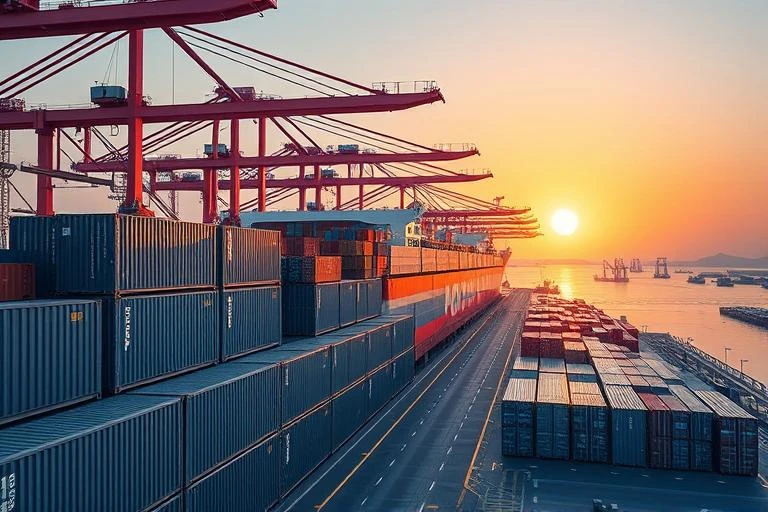
The Korean economy, which had been struggling in the quagmire of 0% growth for some time, has begun a relentless sprint like a beast waking from a long hibernation. The 1.8% real GDP growth rate for the first quarter of this year, announced by the Bank of Korea, is more than just a numerical rebound; it is a powerful signal that the fundamental constitution of our economy is improving. This performance, the highest in five years and six months, is being evaluated as a surprising result that exceeds market expectations. We intend to take an in-depth look at what is heating up the Korean economy again and how close we are to the new horizon of a "$40,000 per capita national income."
The primary driver of this first-quarter economic growth is undoubtedly the strong exports in the IT industry, led by semiconductors, and the explosive increase in facility investment. The background to the real GDP growth rate being revised upward by 0.1 percentage point from the preliminary estimate to 1.8% is that semiconductor exports, which saw a surge in demand in the global market, jumped by 5.9%, driving the overall performance. In particular, production in the ICT manufacturing sector recorded a phenomenal figure of 15.4%, proving that the core engine of our industry is operating properly. Furthermore, the fact that companies carried out 6.6% in facility investments for machinery and transportation equipment to secure future competitiveness clearly demonstrates their confidence in the sustained economic growth to come.
It is not just an increase in production volume, but the fact that it is accompanied by a substantial improvement in corporate profitability that enhances the quality of this growth. The nominal GDP growth rate for the first quarter reached 10.5%, the highest in 50 years since 1976, which is a very encouraging phenomenon. This is not merely a bubble caused by inflation, but signifies that export companies are creating high added value in the global market and significantly expanding their operating profits. This increase in corporate profits is expected to lead to higher corporate tax revenue, strengthening fiscal soundness while creating a virtuous cycle of R&D and facility investment expansion, acting as a powerful force to boost potential growth rates.
The improvement in macroeconomic indicators is leading to an increase in individual income levels and savings rates, strengthening the fundamental health of the economy. The fact that real Gross National Income (GNI) surged by 9.2% from the previous quarter to reach a record high is due to improved terms of trade and a significant increase in net factor income from abroad. In particular, the total savings rate reaching 41.7%, the highest in 37 years, suggests that households and businesses are turning their income increases toward future preparations—savings and reinvestment—rather than consumption. Although government consumption decreased slightly due to a reduction in health insurance benefit expenditures, private consumption is showing signs of recovery, centered on clothing and services, meaning the spark for domestic demand stimulation has not been extinguished.
This dynamism of the Korean economy is becoming even more vibrant as the active overseas market exploration efforts of small and medium-sized enterprises (SMEs) align with the government's systematic support policies, not just those of large corporations. Recently, SMEs in Yongin City achieved tens of millions of dollars in export consultation results in Southeast Asian markets such as Thailand and Vietnam, and the Korea Rural Community Corporation promoted the excellence of K-agricultural machinery at agricultural expos in Australia and Vietnam, expanding their sales channels—all of which are very encouraging. This shows that in the shadow of the massive semiconductor industry, our SMEs are utilizing their respective strengths to target niches in the global market. The customized support policies of the government and local municipalities are producing tangible results in expanding the export territory of companies.
Meanwhile, the United States, the center of the global economy, is also finding its own breakthroughs amidst volatility by reducing its trade deficit. The fact that the U.S. trade deficit in April decreased slightly due to a surge in oil exports proves that energy hegemony remains an important variable in the global economy. Despite uncertainties such as geopolitical risks like the Iran war and tariff policies, U.S. companies continue to import capital goods for data center construction, never stopping their investments in future industries. This global trend has significant implications for our economy as well. For Korea, which has a high dependence on foreign trade, closely observing changes in the U.S. trade environment and the flow of global energy demand, and establishing flexible export strategies, will be the key to maintaining future growth.
■ Conclusion and Analytical Outlook
The Korean economy is currently marching powerfully toward the era of $40,000 per capita national income, alongside a record nominal GDP growth rate not seen in 50 years. It is very hopeful that the timing of reaching $40,000, which was expected to be around 2028 as of March, is now increasingly likely to be moved up much earlier. Of course, there are still mountains to climb, such as exchange rate volatility and the trend of corporate performance. However, the competitiveness of core industries like semiconductors, the willingness of SMEs to enter the global market, and the high savings rate of households show that we have the stamina to leap to even greater heights. Now is the time for continued government policy support and corporate innovation so that current growth does not end as a temporary rebound but becomes a stepping stone for a structural leap forward.
* This post is an analytical column automatically regenerated in the style of a current affairs critic by analyzing real-time Google Trends popular search terms and related major articles.
- 이전글56세의 나이가 무색한 엄정화의 자기관리와 진심 어린 우정의 온도 26.06.09
- 다음글벼랑 끝에 선 노동의 존엄, 구조적 불평등을 넘어 정의로운 전환을 향하여 26.06.09
댓글목록
등록된 댓글이 없습니다.