
The Shadow of Housing Insecurity and the Paradox of Policy: The Bright…
페이지 정보

본문
The Shadows of Housing Insecurity and the Paradox of Policy: The Light and Dark Sides of South Korea's Real Estate Market
Date: June 09, 2026 | Column by IT/Media Current Affairs Critic
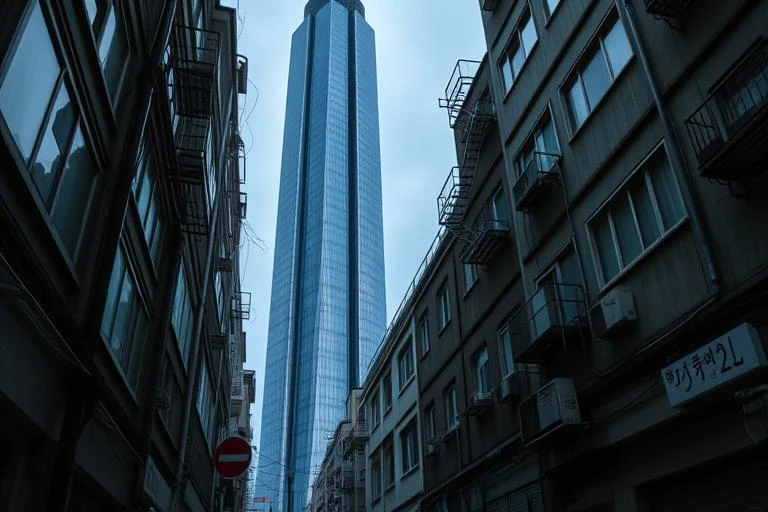
A home, which should be a sanctuary for everyone, has transformed into a site of fierce survival struggles and the epicenter of policy conflict in South Korea today. The recent home invasion incident involving a famous celebrity highlights just how precarious our society's residential safety net has become, while *jeonse* fraud and soaring housing costs are pushing ordinary citizens to the brink. While the government is pouring out various incentives to resolve the "marriage penalty," the reality on the ground is marked by criticism that the housing ladder has been broken and head-on collisions over differing policy perspectives. Is our society's housing policy truly lost, or is it merely experiencing the growing pains of a massive transformation?
The recent home invasion of actress Nana goes beyond a simple criminal case, signaling that the absolute peace of one's residence is crumbling. The court sentenced the defendant to seven years in prison, clearly demonstrating a will to strictly punish residential intrusion crimes. The court weighed heavily the extreme mental distress the victim must have felt and the violation of the sanctity of the home, regardless of whether the crime was attempted or completed. In particular, the recognition of the victim's actions to protect herself as legitimate self-defense reaffirms that a resident's right to self-preservation is a minimum right that must be legally protected. It is also a bitter reflection of the widespread anxiety that private spaces are no longer safe.
Just as serious as residential safety are *jeonse* fraud and the structural flaws of the rental market. Although the government is designating more victims of *jeonse* fraud and accelerating purchase-rental projects, the pain on the ground remains an ongoing reality. Despite the Ministry of Land, Infrastructure and Transport's support measures, *jeonse* listings have plummeted, and the shift toward monthly rent and semi-monthly rent (*ban-jeonse*) is accelerating, pushing tenants' housing cost burdens beyond their limits. Experts do not view this as a simple market trend, but as a result of supply shortages and supply-demand imbalances across the entire rental market. As the double whammy of rising deposits and monthly rents hits tenants in the space where *jeonse* has disappeared, there is even talk that the housing ladder has lost its function.
To overcome this housing crisis, the government has played the card of resolving the "marriage penalty." To correct the distorted structure where marriage registration actually becomes a disadvantage, they announced plans to significantly raise income thresholds for newlywed couples to move into public rental housing and to lower interest rate surcharges on loans. By easing income requirements to twice the level of unmarried youth and creating special housing supplies for households with newborns, the government intends to secure a "golden time" to overcome low birth rates through unconventional incentives. This is the government's blueprint to induce a natural increase in marriage rates by providing economic benefits to young people who have been delaying marriage.

However, evaluations of the government's housing welfare policies remain divided. Civic groups like the People's Solidarity for Participatory Democracy criticize that while the government's supply measures might be effective for short-term market management, they are insufficient for fundamentally alleviating asset inequality or normalizing real estate taxation. In particular, they point out that without structural reforms such as property taxes or improvements to the *jeonse* loan structure, current measures will inevitably remain half-baked prescriptions. The concern that the direction of policy is disconnected from the voices on the ground is not just the view of civic groups, and it is a point where a more long-term housing vision and blueprint are urgently required.
Eventually, Seoul Mayor Oh Se-hoon defined the *jeonse* crisis as a "policy disaster," directly rebelling against the President's perception. The criticism is that government regulations have cut off the source of *jeonse* supply, pushing ordinary citizens off the housing ladder. In contrast, President Lee Jae-myung views the shift of *jeonse* to monthly rent and the decrease in listings as a process of market normalization, bringing the difference in perspective between the central government and local government regarding housing policy to a peak. The difference in fundamental philosophy regarding the market is fueling confusion in policy implementation, and the biggest concern is that this is leading directly to harm for homeless citizens.
■ Conclusion and Analytical Outlook
The South Korean real estate market is currently facing three challenges simultaneously: safety, welfare, and market autonomy. Housing stability is not a problem that can be solved simply by supply figures; it is a complex task intertwined with individual survival rights and the nation's future, the low birth rate. For the government's marriage incentive policy to have a practical effect, it must be preceded by not only lowering the burden of housing costs but also creating a predictable market environment and restoring a fair housing ladder that ordinary citizens can accept. Ultimately, the answer lies in listening to the cries from the field hidden behind policy statistics and refining practical, systematic housing policies that transcend political logic.
* This post is an analytical column automatically regenerated in the style of a current affairs critic by analyzing real-time Google Trends search terms and related major articles.
- 이전글영원한 퀸의 시간은 거꾸로 흐른다: 김연아가 증명하는 '지속 가능한 우아함'의 미학 26.06.09
- 다음글2000억 달러의 무게: 대미 투자의 냉철한 셈법과 사금융의 잔혹한 덫 26.06.09
댓글목록
등록된 댓글이 없습니다.