
Forging the Shield of the Sky Anew: The Rise of the ROK Air Force and …
페이지 정보
작성자 playbbs 작성일 26-06-10 03:35 조회 297 댓글 0본문
Forging the Shield of the Sky Anew: The Rise and Challenges of the ROK Air Force
Date: June 10, 2026 | Column by IT/Media Current Affairs Critic
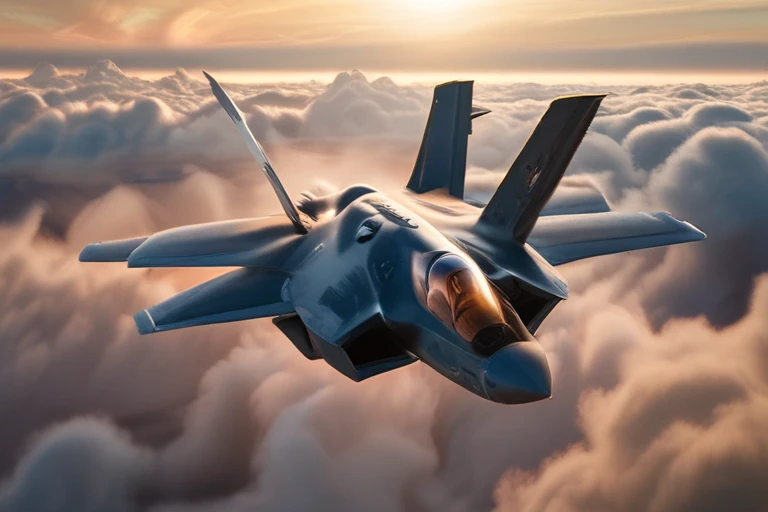
It is an immutable truth in modern warfare that whoever dominates the skies dictates the flow of the battlefield. The security environment surrounding South Korea's airspace is more severe than ever, making the strengthening of air power an essential choice for national survival. Next-generation fighter projects, which previously drifted between political controversy and strategic judgment, have recently regained momentum, reshaping the backbone of the Republic of Korea Air Force (ROKAF). From the additional acquisition of stealth aircraft to the evolution of domestically produced fighters and the performance upgrades of core assets, our Air Force is now preparing for a giant leap toward the goal of a "strong national defense."
The project to acquire additional F-35A stealth fighters, the core asset of the ROKAF, is a strategic decision to maximize "Kill Chain" capabilities in response to North Korea's nuclear and missile threats. This project, which was delayed under the previous administration, has regained momentum under the Yoon Suk Yeol administration under the justification of minimizing power vacuums. The aircraft to be introduced are known to be the latest "Block 4" specifications, which feature significantly improved electronic warfare capabilities, weapons payload, and navigation systems compared to the existing Block 3 models. This goes beyond simply increasing the number of fighters; it serves as an opportunity to further elevate the Air Force's inherent strategic deterrence, capable of neutralizing enemy radar networks and conducting covert strikes.
One of the greatest achievements in the F-35A acquisition process is the agreement to perform depot-level maintenance domestically. In the past, the U.S. intended to have F-35A maintenance for the Asia region handled exclusively by a hub to be established in Japan, citing confidentiality. However, this raised serious security concerns that our Air Force's operational information and flight data could be exposed to the Japanese side. Fortunately, South Korea and the U.S. recently agreed to establish a domestic maintenance depot at Cheongju Air Base, thereby protecting core military secrets and securing self-reliance in maintenance. This is a highly significant step, as it represents more than just a technical agreement; it signifies that South Korea has established an independent aviation power sustainment system.
The KF-21 Boramae, currently being developed with our own technology, is also rapidly evolving into a core asset that will shoulder a pillar of next-generation fighter power. In particular, the "KF-21EX," equipped with an internal weapons bay, is focusing on securing the ability to infiltrate enemy territory covertly by significantly enhancing stealth performance. Foreign media are taking note, describing this as an evolution approaching the level of the U.S. F-35. With the addition of AI-based sensor fusion systems and manned-unmanned teaming (MUM-T) capabilities, the KF-21 is expected to establish itself as the mainstay of South Korean airspace defense and a competitive platform in the global market.
If the F-35A is the vanguard of precision strikes like a "spear," the F-15K will serve as the "hammer" that devastates the enemy with overwhelming firepower, remaining a core axis of airspace defense until the mid-2050s. Military authorities have launched a performance improvement project, investing approximately 4.5 trillion KRW to modernize the F-15K's avionics. By replacing the mechanical radar with the latest Active Electronically Scanned Array (AESA) radar and upgrading the mission computer, the F-15K will be transformed into a new fighter dubbed the "Super Eagle," rather than just a replacement for aging airframes. This is the result of the military's meticulous calculation to maximize the efficiency of air power according to a "High-Low" mix strategy.
Of course, this process of strengthening military power has not been entirely smooth. There were critical views regarding technology transfer issues or price increases during the initial acquisition, and some elements were even caught engaging in espionage activities to oppose the F-35A introduction under orders from North Korea. Such cases suggest that attempts to shake the foundations of our security still lurk within various corners of society. However, despite these obstructions and concerns, our military has proven its unwavering readiness by demonstrating precision strike capabilities through joint ROK-U.S. live-fire exercises. We must not forget that national security is not a matter of ideology, but strictly a matter of capability and preparation.
■ Conclusion and Analysis
The series of power-strengthening projects being pursued by the ROK Air Force go beyond the mere act of purchasing weapons; they are a process of balancing power that allows South Korea to defend itself in the rapidly changing security landscape of Northeast Asia. Only when the stealth of the F-35, the independent technological prowess of domestic fighters, and the powerful firepower of existing mainstays are organically combined can South Korean airspace be safe from any threat. Now is the time to focus all efforts on efficiently operating the acquired assets and completing the tasks of maintenance and technological self-reliance to establish true "aviation sovereignty." The simple truth that peace can only be maintained when backed by a robust Air Force is being proven once again.
* This post is an analysis column automatically regenerated in the style of a current affairs critic by analyzing real-time Google Trends popular search terms and related major articles.
댓글목록 0
등록된 댓글이 없습니다.