
The ballot shortage crisis that shook the foundations of democracy: 'P…
페이지 정보
작성자 playbbs 작성일 26-06-10 06:06 조회 336 댓글 0본문
The Ballot Shortage Crisis That Shook the Foundations of Democracy: 'Administrative Failure' or 'Systemic Crisis'?
Date: June 10, 2026 | Column by IT/Media Affairs Critic
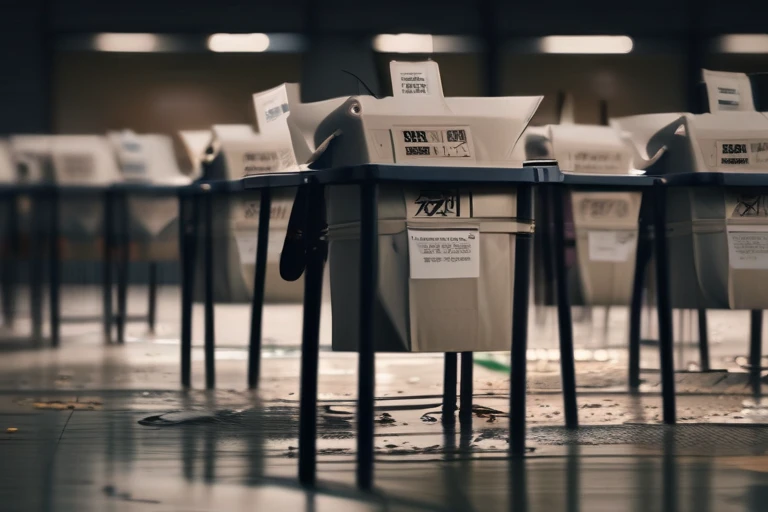
If a voter walks into a polling station only to be told, "There are no ballots," can we truly accept that as a mere administrative error? The unprecedented ballot shortage that occurred at 91 polling stations nationwide immediately following the June 3 local elections has left a deep scar on the heart of South Korean democracy. Beyond the simple fact that a few sheets of paper were missing, this incident—which undermined the constitutional value of the right to vote—has sparked public outrage across political, academic, and civic circles. The strong response from political figures, including Ulsan Mayor Kim Doo-kyum, and the flood of condemnation statements from university campuses prove that this incident is escalating from a simple technical error into a crisis of trust in the entire national system.
The prevailing criticism is that the core of this crisis lies in the National Election Commission's (NEC) complacency and lack of transparency. Ulsan Mayor Kim Doo-kyum fiercely criticized the NEC, calling it an unacceptable act for a 30-year administrative expert, noting that despite the NEC securing a budget sufficient for 110% of the total electorate, they only printed 50% of the ballots for the main election day. In particular, the fact that exit polls announcing a landslide victory for a specific candidate were reported while voting was suspended due to a lack of ballots has raised serious doubts about the fairness of the election. Mayor Kim has raised fundamental questions about whether proper procedures were followed, citing the series of transportation and distribution processes where no appropriate response was made despite requests for additional supplies around 2:00 PM on election day.
Mayor Kim Doo-kyum is focusing on the regional characteristics of where this incident occurred, strongly raising suspicions of political foul play. He points out that it is difficult to dismiss as a coincidence that the ballot shortages were concentrated in regions where conservative parties, specifically the People Power Party, hold power. Mentioning similar delays at polling stations in Ok-dong and Hyomun-dong within Ulsan, Mayor Kim does not rule out the possibility that this is not a mere regional coincidence, but an organized issue undermining the fairness of election management. However, the Ulsan City Election Commission counters this, stating that while it is true that additional ballots were distributed to some polling stations, there were no cases where voting was delayed due to a complete exhaustion of ballots, highlighting the stark difference in positions between the two sides.
As the situation spiraled out of control, criticism of the Lee Jae-myung administration's response has also intensified. Mayor Kim Doo-kyum criticized the government for attempting to downplay the incident as the sole responsibility of the NEC and trying to quell public anger with a stopgap measure like a joint investigation by the prosecution and police. He pointed out that demands to disclose the NEC's servers, which have been raised since the last general election, have been repeatedly ignored, emphasizing that if the servers were made transparent now, unnecessary suspicions could be resolved at once. The consistent stance of Mayor Kim and the opposition is that it is not the attitude of a government of national sovereignty to hide behind the NEC's exclusive authority and neglect the grave issue of infringing upon the right to vote.
This distrust has spread to university campuses and the younger generation, evolving into a crisis of democracy. Student councils from universities across the country, including the University of Ulsan and UNIST, issued statements in unison, condemning the democracy that came to a halt in front of polling stations and calling for a strict investigation into the truth. The students defined this incident not as a simple administrative error, but as a dereliction of duty where a constitutional institution stripped citizens of their precious right to vote on the spot. In particular, emphasizing that the NEC, which prided itself on its expertise in election management, has inflicted an indelible wound on public trust, there is a loud call for the punishment of those responsible and a review of specific manuals to prevent recurrence.
The alternative proposed by Mayor Kim Doo-kyum to resolve the situation is both unconventional and concrete. To fundamentally block suspicions of election fraud and restore public trust, he proposed a bold improvement plan: "abolishing the early voting system" and "extending the main election day to two days." His judgment is that rather than trying to compensate for the management vulnerabilities inherent in the early voting system, it would be far more effective to simply increase the main voting period to two days to enhance management focus. Along with this, he emphasizes that the full scope of this incident must be uncovered through a parliamentary investigation and a special prosecutor, and the results must be transparently disclosed to the public to restore the tarnished values of democracy.
■ Conclusion and Outlook
The ballot shortage crisis is a tragic event that has laid bare the chronic distrust and administrative loopholes inherent in South Korea's election system. The strong demands of Mayor Kim Doo-kyum and the voluntary condemnation by university students serve as a powerful warning that the public will no longer show patience for an opaque election management system. The government and the NEC must not downplay the situation or evade responsibility, but rather correct the foundations of democracy through a thorough investigation that the public can accept and effective institutional improvements. A nation that takes the weight of a single ballot lightly has no future, and it is hoped that this incident will serve as an opportunity to establish fundamental measures that can perfectly guarantee the transparency of elections.
* This post is an analysis column automatically regenerated in the style of a current affairs critic by analyzing real-time Google Trends popular search terms and related major articles.
댓글목록 0
등록된 댓글이 없습니다.