
The Light and Shadow of National Development Reflected in the Mirror o…
페이지 정보

본문
The Light and Shadow of National Development Through the Mirror of the Past: The Divergent Trajectories of Nepal and South Korea
Date: June 10, 2026 | Column by IT/Media Current Affairs Critic
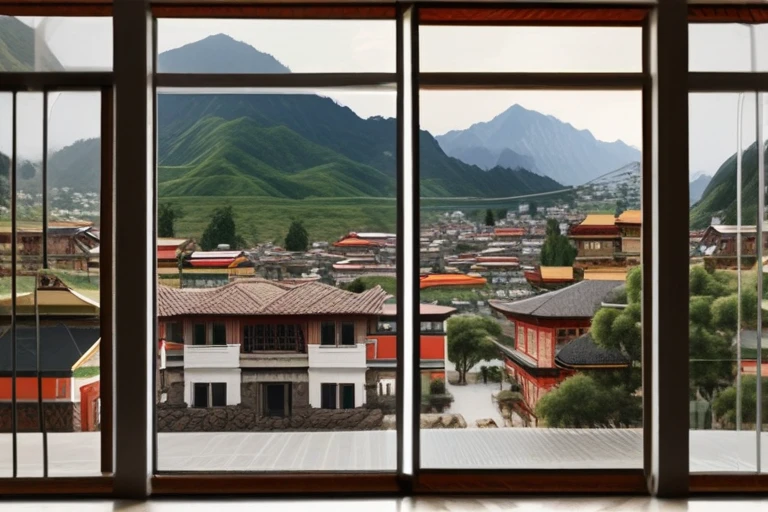
In the 1960s, two Asian nations stood side-by-side at the starting line. At the time, Nepal and South Korea shared the common challenge of economic poverty and were viewed as neighboring countries with similar development potential. However, half a century later, the points reached by the two nations have diverged sharply. One has leaped forward to become the world's 13th-largest economy and an OECD member, while the other continues to struggle at the threshold of development. This gap is not merely a matter of luck; it is like a grand experiment demonstrating how leadership and policy choices can forever alter a nation's destiny.
The era of former President Park Chung-hee is both a turning point in South Korean economic history and a moment for painful reflection. Having seized power in a 1961 coup, he faced the critical weakness of lacking legitimacy; paradoxically, this deficiency became the driving force that made him obsessed solely with "economic performance." Experts analyze that he exercised a pragmatic leadership style, personally visiting sites to meticulously oversee everything from planning and execution to follow-up management. His drive, unconstrained by ideology, to strategically foster national core industries such as steel, chemicals, and shipbuilding, served as the decisive catalyst for South Korea's transformation from an aid-recipient nation to an aid-donor nation.
Conversely, during the period when South Korea was achieving rapid development, Nepal remained stagnant, unable to catch the momentum. Of course, Nepal has also consistently attempted to attract investment and build infrastructure for national development, and even expressed its will for change to the world through international events like the 2019 Nepal Investment Summit. However, instability in leadership and social unrest have become chronic obstacles hindering economic takeoff. Unlike the past, when South Korea concentrated national resources based on the strong drive of Park Chung-hee, Nepal has wasted more time attempting to resolve the challenges of political consensus and building an efficient national system.
The history of national development does not simply mean the improvement of economic indicators. As can be confirmed through news reports, the world from the late 2000s to the early 2020s was a vast, interconnected network where climate change, pandemics, political upheaval, and cultural exchange through sports and arts were complexly intertwined. While Nepal possesses unique cultural assets like the Indra Jatra or Madhav Narayan festivals, it has struggled to translate this potential into economic growth. Meanwhile, the world has observed Nepal's potential through visits by the British royal family or international investment forums, while simultaneously coldly contemplating the reality of isolation and stagnation the country faces.
Even if the South Korean success equation is not a universal truth applicable to every nation, the Park Chung-hee model of "securing legitimacy through performance" remains a powerful temptation for leaders of developing countries. However, modern society is different from the 1960s. Today's development is not achieved solely through coercive leadership; sustainable prosperity is only possible when supported by human rights, the environment, democratic processes, and transparent administration. The various protests and political demands that have occurred worldwide since the 2010s suggest that modern nations face a new homework assignment: how to encompass the quality of life and values of citizens beyond mere economic growth.
Ultimately, the cases of Nepal and South Korea prove that how one uses "time" is a key variable in determining a nation's future. South Korea poured its national capacity into industrialization for 18 years, and the result returned as the fruit of being a pillar of the global economy. Despite having excellent resources like traditional culture and a natural environment, Nepal failed to solve the puzzle of agile strategies to convert these into economic engines and political stability. As the various events in the articles show, the world does not stop and continues to change, and the cold reality is that nations that ride the waves of change survive, while those that do not are left behind.
■ Conclusion and Outlook
The compressed growth shown by South Korea in the past is like a textbook for developing countries, but the social costs and side effects contained within are also historical lessons we must not forget. The path Nepal must take forward is not to replicate the past Korean method, but to find how to achieve modern efficiency within its own unique cultural environment. The rise and fall of a nation is ultimately determined by how wisely the leadership of the era makes choices and how deeply the people empathize with the direction of that change. History continues to flow today, and for both Nepal and South Korea, current choices will become another history of the future.
* This post is an analytical column automatically regenerated in the style of a current affairs critic by analyzing real-time Google Trends popular search terms and related major articles.
- 이전글군복에 담긴 숭고한 무게, 세대를 잇는 헌신과 변화의 기록 26.06.10
- 다음글인구 절벽이 쏘아 올린 국방의 대전환: '이등병'의 퇴장과 AI 정예군으로의 재편 26.06.10
댓글목록
등록된 댓글이 없습니다.