
A Future Without Digital Exclusion: How Technology Became Warm Learnin…
페이지 정보
작성자 playbbs 작성일 26-06-09 11:01 조회 471 댓글 0본문
A Future Without Digital Exclusion: How Technology Has Become Warm Learning by Our Side in the AI Era
Date: June 09, 2026 | Column by IT/Media Current Affairs Critic
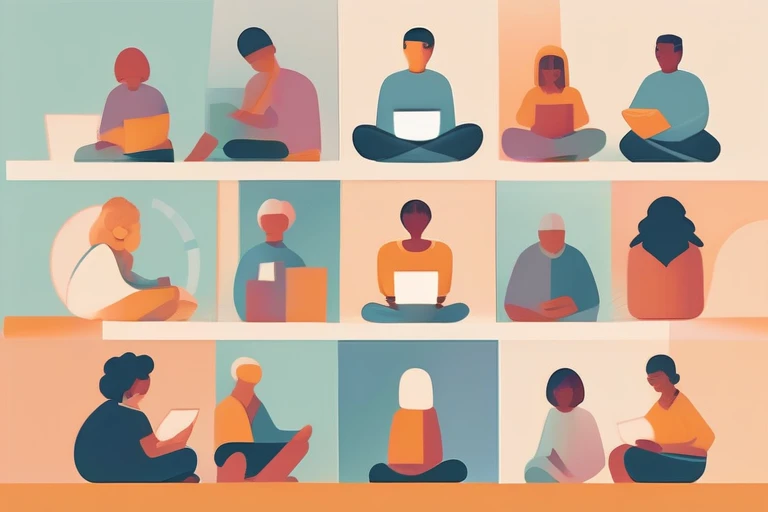
Today, artificial intelligence (AI) and digital technology have completely rewritten the grammar of our lives. The digital transformation we face today is a double-edged sword: for some, it is a convenient daily tool, while for others, it presents a massive barrier to entry. Recently, across the country, the "Digital Learning Center" movement has been actively unfolding to bridge this technological gap and help everyone enjoy the benefits of the digital age. I have analyzed the current field trends, which are focusing on practical capacity building—going beyond simple device usage to incorporating AI into daily tasks and protecting oneself from financial crimes.
"AI Digital Learning Centers," operated primarily by local governments in regions such as Jeju, Daegu, Busan, and Iksan, have now established themselves as essential learning platforms for local communities. Here, citizens from all walks of life—from public sector workers to the elderly—gather to improve productivity using AI. In Jeju, in particular, there are notable cases where members of local resident autonomy committees use generative AI to analyze local issues and draft business proposals, thereby refining their practical workflows. This suggests that digital education is moving beyond basic information literacy and leading to concrete outcomes such as administrative efficiency and local problem-solving.
Another core pillar of digital education is the establishment of a "digital financial safety net." Programs like Daegu City's Senior Financial Academy and Shinhan Bank's student-participatory education programs highlight the value of "protection," which is just as important as technological advancement. In a situation where financial fraud like voice phishing is becoming more sophisticated, learning how to safely use mobile banking and protect the rights of financial consumers is not a choice, but a matter of survival. Trainees are acquiring practical, life-oriented information—from how to operate kiosks to how to respond to digital financial fraud—turning their vague fear of technology into confidence.
To maximize the effectiveness of education, local governments and institutions are actively introducing "outreach services" and "experiential infrastructure." As seen in the case of Iksan City, they are not stopping at building hub centers but are also conducting matching education that visits senior centers or welfare facilities, dramatically increasing accessibility. Furthermore, by providing spaces within hub centers where people can directly experience cutting-edge devices like AI Go, robot dogs, and drones, these centers are acting as "digital community hubs" that foster intergenerational communication. These efforts contribute to helping the digitally marginalized perceive technology not as something difficult or distant, but as a familiar and enjoyable tool.
Synergy through public-private cooperation is also a key driver of this educational boom. Shinhan Bank's operation of "Digital Financial Education Assistants" with students from Incheon National University is an excellent model of intergenerational mutual growth. University students return their digital skills to the local community in the form of talent donations, while the elderly adapt to the rapidly changing digital environment with the help of the younger generation. This organic network goes beyond simple budget support from public institutions, creating a healthy ecosystem where the local community builds a culture of digital inclusion together.
The enthusiasm for self-development among office workers is also broadening the base of digital education. As seen in the "After-Work Learning Center" in Chungju, there is an explosive increase in demand from workers wanting to learn the latest trends, such as how to use ChatGPT. This proves that digital competency is no longer an auxiliary tool for a specific class, but is recognized as a core competitive edge that all members of modern society must possess. Moving away from standardized education, flexible program structures that combine hobbies and practicality—such as Pilates or calligraphy—have become key elements in eliciting voluntary participation from citizens.
■ Conclusion and Outlook
The fervor for digital learning centers spreading across the country provides a clear answer to how our society should ride the wave of technology. Artificial intelligence and digital technology only truly demonstrate their value when taught in an inclusive environment that excludes no one. The task ahead is to expand this practical educational infrastructure more densely and establish a sustainable learning model that encompasses all generations and classes. When technology ceases to be just technology and becomes a warm link connecting people to people, we will be able to move toward a safer and smarter digital society.
* This post is an analytical column automatically regenerated in the style of a current affairs critic by analyzing real-time Google Trends popular search terms and related major articles.
댓글목록 0
등록된 댓글이 없습니다.