
A series of factory fires and economic red lights: A cross-section of …
페이지 정보
작성자 playbbs 작성일 26-06-08 07:27 조회 441 댓글 0본문
Successive factory fires and economic red lights: A cross-section of the complex crises facing the Republic of Korea
Created date: June 08, 2026 | IT/media specialist current affairs critic column
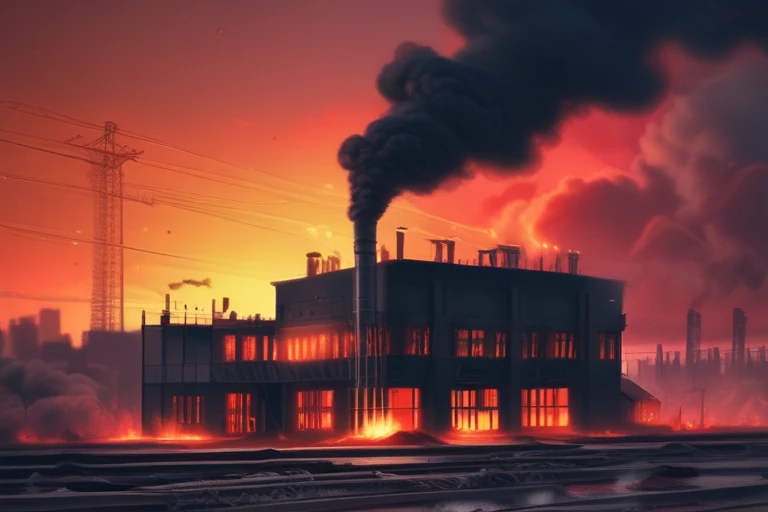
The red-hot flames rising through the pitch-black darkness mean more than just a disaster engulfing a factory. The recent factory fires that have occurred across the country, including Ansan, Gyeonggi Province, simultaneously reflect the insensitivity to safety in our industrial sites and the economic anxiety lurking behind them. Add to this the precarious tightrope walk of the household economy surviving on debt amidst a wave of high interest rates, and the Republic of Korea is now standing in the midst of a turbulent turbulence in which the two axes of safety and economy are shaking at the same time. Indeed, it is a time when we need to look deeply into the truth indicated by voices and indicators from the field and how to diagnose and prepare for these crises.
On the night of the 7th, the industrial complex in Seonggok-dong, Danwon-gu, Ansan was engulfed in fear of fire. The fire, which started at a lighting equipment manufacturing plant, spread uncontrollably to nearby packaging factories and paper box manufacturing plants, creating an urgent situation. Firefighting authorities issued a first-level response immediately after the fire broke out, but judged that there was a high risk of the combustion expanding, so they upgraded the response to a second level and went all out. As many as 11 factory buildings were damaged in this accident, and nearby residents were left anxious all night amid concerns about the spread of toxic gases and fire. Fortunately, no casualties were reported, but this fire remained as an example that clearly revealed the structural vulnerability of dense manufacturing plant areas.
The aftermath of the fire did not stop at Ansan. A fire broke out at a synthetic resin manufacturing plant in Jeongeup, Jeollabuk-do, causing property damage worth tens of millions of won, and at a resource recycling facility in Paju, Gyeonggi-do, a fire broke out centered around a waste wood storage yard. In particular, in the case of the Jeongeup fire, the odor caused by hazardous substances threatened residents, and the Paju fire also required attention from nearby residents due to large-scale smoke. These series of factory fires once again remind us how safety management in industrial sites is an area that requires constant monitoring and prevention. When aging facilities and hazardous materials management systems are combined with simple carelessness, the social costs that the local community must bear are beyond imagination.
If fire threatens the safety of physical space, the foundation of our economy is crumbling behind the scenes. As the Bank of Korea's policy of raising the base interest rate became visible, the top mortgage loan interest rate of commercial banks exceeded 7.3%, reaching the highest level in three years and eight months. This directly leads to an unbearable interest burden for borrowers using fixed-rate loans, leading to a sharp erosion of the household's available income. In a situation where macroeconomic indicators are sounding warnings, such as the inflation rate exceeding the 3% level and even the exchange rate threatening the 1,550 won range, an interest rate hike is becoming a detonator that will deal a fatal blow to the economy of the common people.
What is even more worrisome is the fact that the ‘debt investment’ craze is not cooling down, but rather expanding, despite the negative news of interest rate hikes. The credit loan balance of the five major commercial banks surged by trillions of won in a short period of time, reaching the largest increase in several years. This means that many people are continuing to make risky bets based on the volatility of the stock market, and if stock prices are adjusted or interest rates are further raised, it is likely to lead to large-scale non-performing loans. The fact that credit loans are increasing at a much faster rate than home loans is conclusive evidence that households have become vulnerable to short-term liquidity crises.
Meanwhile, uncertainty in the international situation is also raising questions about national risk management. U.S. Secretary of Defense Pete Hegseth's behavior during an overseas business trip accompanied by his family sparked considerable controversy in terms of ethics and security costs in the public sphere. It is difficult to avoid criticism that it was inappropriate for a person in charge of national security to disperse security resources by accompanying his family to an area where terrorist threats exist. This is an incident that goes beyond the moral hazard of an individual and requires fundamental reflection on how high-ranking public officials should act in a national crisis.
■ Conclusion and analysis outlook
Currently, our society is facing overlapping crises that overlap both inside and outside. Frequent fire accidents at industrial sites show how much we are neglecting basic safety rules, and reckless debt investment amidst high interest rates warns us that we are making a dangerous gamble with the future of our economy as collateral. Now, as much as quickly extinguishing fires, we need wisdom to create a buffer that can help households and businesses survive in times of economic crisis. In order to catch the two birds with one stone, safety and economy, social consensus and policy decisions to curb excessive lending and build a solid economic structure are urgently needed, along with thorough preventive inspections on site.
* This post is an analysis column that is automatically recreated in the style of a current affairs critic's commentary by analyzing real-time Google Trends popular search terms and related major articles.
댓글목록 0
등록된 댓글이 없습니다.