
The Bright and Dark Sides of K-Offshore Wind: The Light of 'Expanding …
페이지 정보
작성자 playbbs 작성일 26-06-09 18:21 조회 392 댓글 0본문
The Bright and Dark Sides of K-Offshore Wind: The Light of 'Expanding Energy Territory' vs. The Shadow of 'Technological and Security Dependency'
Date: June 09, 2026 | IT/Media Current Affairs Critic Column
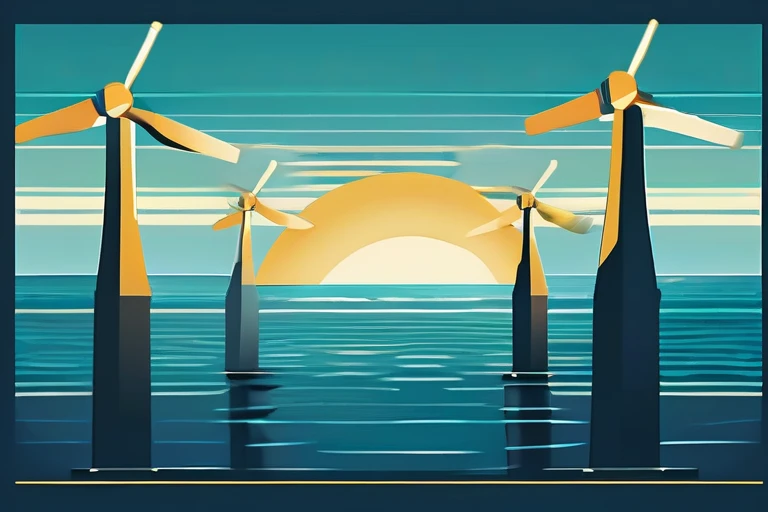
The waters off the coast of South Korea are transforming into a massive testing ground for energy transition. To fulfill the epochal task of carbon neutrality, large-scale offshore wind power projects are gaining momentum, particularly in the waters off Yeonggwang, Jeollanam-do, and Jeju. However, hidden behind the glamorous blueprints lies a harsh reality. Amid the spectacular sight of hundreds of turbines rising above the sea, our self-portrait is being revealed: one where we must rely on foreign countries for core infrastructure and technology. Is this massive energy transition we are pursuing truly leading us toward self-reliance, or are we inviting another form of dependency?
The Nakwol Offshore Wind Farm in Yeonggwang, Jeollanam-do, boasts an unprecedented scale in the history of domestic offshore wind power, setting a new milestone for South Korea's renewable energy territory. This project, with a total capacity of 364.8MW, is a massive undertaking involving the installation of 64 5.7MW turbines at sea. It has currently exceeded 80% completion and is on track for commercial operation within the year. With the construction of onshore substations and transmission grids already finished, the installation of monopile foundations is nearing completion, and the assembly of the upper turbines is progressing smoothly. Once fully operational, this farm is expected to produce 900GWh of clean electricity annually, supplying power to approximately 250,000 households and reducing greenhouse gas emissions by 430,000 tons per year. This is clearly a groundbreaking achievement that more than doubles the existing domestic offshore wind power capacity.
However, behind this brilliant achievement lies the painful reality of the domestic offshore wind ecosystem. Unable to secure a Wind Turbine Installation Vessel (WTIV), the construction team had to take the drastic measure of deploying Chinese vessels and technical staff. Beyond installation vessels, a significant portion of core equipment—including tugboats and cable-laying vessels—relies on Chinese infrastructure, and dozens of Chinese technicians are stationed on-site to lead key processes. Industry experts warn that this high dependency on China could lead to a serious management vacuum in national energy security. In particular, the possibility of sensitive data, such as seabed topography information, being leaked cannot be ruled out, and critics argue that the lack of domestic professional personnel and equipment is ultimately shaking our security sovereignty.
The technological gap is also a massive barrier we must overcome. According to a recent survey by the Korea Institute of Energy Technology Evaluation and Planning, domestic wind power technology is up to four years behind that of Europe, the global leader. In key areas such as operation and control, blade design, and system integration, we remain at 70–80% of European levels, unable to break free from the limitations of a "follower." The gap with China in solar power has also widened to around two years, leading to a rapid decline in export competitiveness. While the renewable energy market is growing explosively, our companies are trapped in a vicious cycle of enduring high-cost structures or being tied to foreign supply chains because they cannot procure core components.
Jeju Island is also facing difficulties in offshore wind development, causing setbacks in its energy transition plans. Offshore wind projects in Chujado and the western sea have been repeatedly canceled as private developers turned away due to high profit-sharing requirements for residents and the burden of grid connection. Conversely, Tamra Offshore Wind, the first commercial farm in the country, is attempting to expand its 30MW capacity to 102MW. However, even in this process, there are many hurdles to overcome, including environmental impact assessments, issues with resident acceptance, and ecological changes and noise pollution caused by the installation of massive 230m-tall turbines—taller than Jeju's highest building. This is why critics argue that public-led energy transition policies are merely slogans without practical investment attraction and technological support.
Ultimately, the Nakwol offshore wind case demonstrates the dangers of a "hasty speed race without infrastructure." While borrowing Chinese infrastructure was unavoidable to complete the project, this could lead to long-term consequences such as eroding growth opportunities for domestic companies and solidifying supply chain bottlenecks. Experts agree that instead of a series of one-off projects, we must secure a continuous project pipeline to create an environment where domestic companies can invest in facilities and technology development. Furthermore, to overcome the reality of relying on Chinese equipment, policies to support the construction of domestic installation vessels and the training of professional personnel must be urgently implemented. Otherwise, our energy transition risks becoming a "castle on the sand," built with other countries' equipment and technology.
■ Conclusion and Analytical Outlook
South Korea's offshore wind power is currently at a major turning point. The successful completion of the Nakwol project provides us with valuable experience on how to supplement our lacking supply chain infrastructure, but it also leaves us with the heavy homework of technological self-reliance and security sovereignty. We must not be obsessed solely with the numbers of achieving carbon neutrality goals; it is essential to improve our policy fundamentals so that the technology accumulated in the process becomes an asset to our industry. Energy self-reliance is not just about producing electricity; it is only truly complete when we can handle the equipment and technology that produce that electricity with our own hands. Now is the time for a meticulous strategy to move toward becoming a true "energy-independent nation" through speed control and internal strengthening.
* This post is an analytical column automatically regenerated in the style of a current affairs critic by analyzing real-time Google Trends popular search terms and related major articles.
댓글목록 0
등록된 댓글이 없습니다.