
The frontier of finance where boundaries are collapsing: The inside st…
페이지 정보

본문
The frontier of finance where boundaries are collapsing: The inside story of Binance's aggressive expansion and recruitment of AI talent
Created date: June 07, 2026 | IT/media specialist current affairs critic column
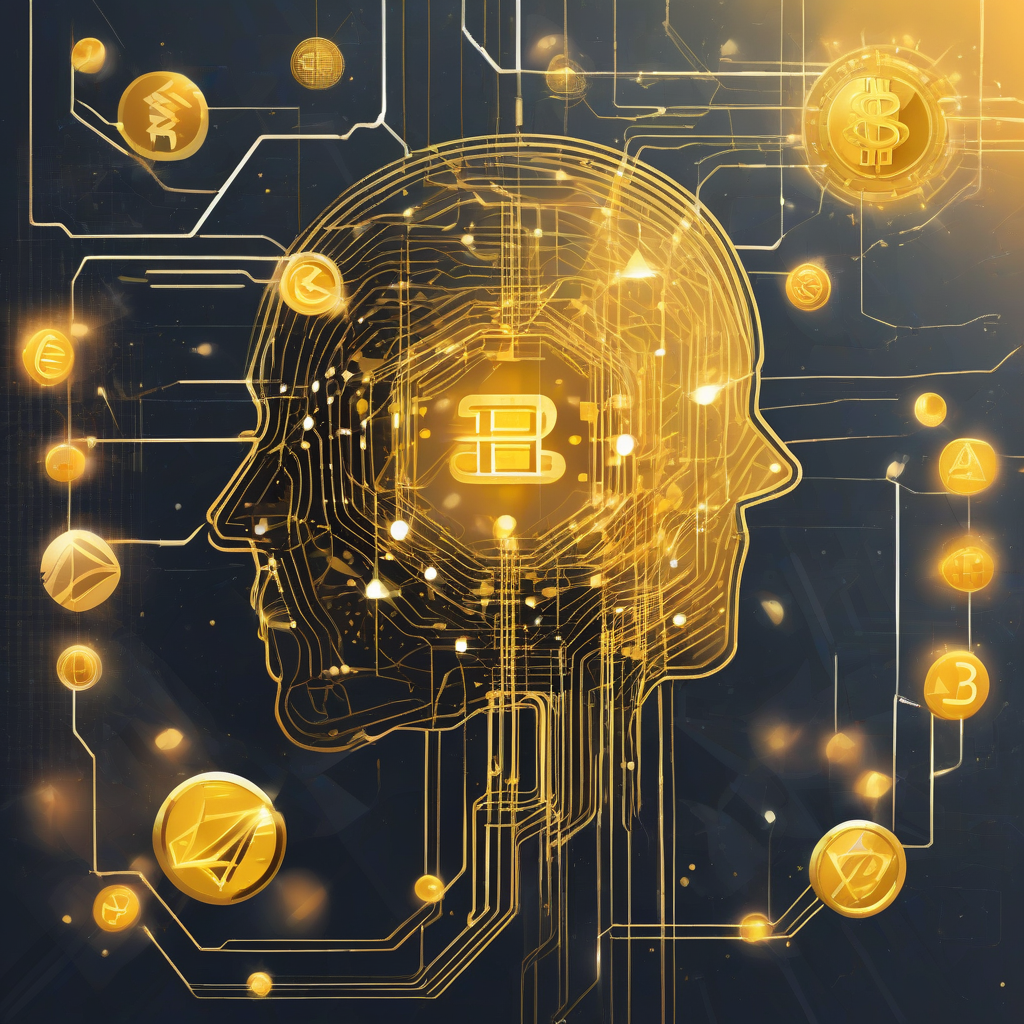
Recently, the line between virtual assets and traditional finance is blurring like a mirage. Beyond simply being an exchange for buying and selling coins, we have now come to an era where stock prices of large domestic companies such as Samsung Electronics and Hyundai Motors are traded using Tether (USDT). The unconventional actions shown by Binance, the world's largest virtual asset exchange, are a huge experiment and challenge that shakes up the existing order of the financial market. Meanwhile, despite the fierce wind of layoffs sweeping across the technology industry, Binance is putting its utmost efforts to improve its structure by recruiting a large number of AI talents. Let's take an in-depth analysis of the complex trends and what the new financial map drawn by this huge platform means to us.
Binance's recent moves are very aggressive in terms of converging traditional and virtual assets. They attracted the market's attention by launching perpetual futures products using the stock prices of leading Korean companies such as Samsung Electronics, SK Hynix, and Hyundai Motor Company as the underlying assets. Investors can now use Tether to bet on stock price fluctuations with up to 20x leverage without owning actual stocks, which can be interpreted as an attempt by a virtual asset platform to absorb the traditional stock market. Binance is already announcing tokenized securities services, starting with US stock and ETF trading services. These changes dramatically increase the accessibility of financial products, while also clearly showing where the role played by existing financial infrastructure and the role of virtual asset platforms clash.
However, this unconventional move leaves behind a serious problem: the possibility of legal friction with domestic financial authorities. Some in the legal community point out that Binance's stock tracking product is a derivative product under the Capital Markets Act in terms of economic substance. The prevailing view is that the trading and brokerage of derivatives based on stocks of key Korean companies by overseas exchanges that are not approved for domestic financial investment business is likely to be illegal under the current law. The financial authorities' position is that they will judge whether or not regulations will be applied based on the business activities targeting Koreans rather than the name of the product, but the controversy is expected to intensify further as there is no clear precedent. This will be a typical example of how digital platforms will clash and compromise with each country's regulatory system in the process of realizing borderless finance.
Along with the expansion of financial products, another axis that Binance is focusing on is strengthening company-wide AI capabilities. Even as the entire technology industry underwent large-scale restructuring due to the introduction of AI, Binance chose a contradictory strategy of hiring more than 380 positions and filling 20% of new hires with AI-related talent. This is a strategy to define AI as a tool to increase work efficiency, not as a replacement for human resources, and to maximize the organization's productivity by equipping employees with self-made AI tools. In fact, Binance is making significant progress in transplanting AI into the organization's DNA, with the adoption rate of ‘Clobot’, an in-house work automation solution, and ‘Hexa’, a no-code platform, exceeding half.
Binance's AI strategy goes beyond simple introduction of tools and is completed through systematic education and establishment of governance. Prompt engineering training and practice-oriented ‘micro-learning’ content for executives and employees recorded a high participation rate, establishing a culture of AI use within the organization. What is more noteworthy is the proactive introduction of AI governance. Obtaining the international standard ‘ISO/IEC 42001’ certification and applying the ‘Privacy by Design’ principle from the design stage is proof that we consider data security and ethical risk management as important as technological innovation. This presents a standard model for how technology companies should systematically defend against data leaks and ethical issues that may arise when AI is indiscriminately introduced.
Meanwhile, amid these dynamic changes in the market, the domestic market is experiencing a somewhat strange phenomenon. The ‘reverse kimchi premium’ phenomenon, in which Bitcoin prices are traded cheaper than on overseas exchanges, is intensifying, which suggests that domestic investors are moving towards the booming KOSPI market rather than virtual assets. As liquidity in the domestic market thins and regulatory uncertainty persists, many investors are moving their funds to overseas exchanges or taking a wait-and-see approach to the market. Experts agree that institutional improvements, such as allowing corporations to invest in virtual assets, are urgently needed. While the global market is designing a new financial future through AI and tokenization, the domestic market is experiencing the double whammy of institutional stagnation and shrinking investment sentiment and is at risk of being left out of the global trend.
■ Conclusion and analysis outlook
We are now at a huge inflection point where financial platforms are breaking down the boundaries between technology and capital and entering a new era. Binance's aggressive launch of stock-linked products and company-wide investment in AI talent clearly reveals its ambition to dominate the infrastructure of future finance beyond simple exchanges. However, for this innovation to be sustainable, the challenges of harmonization with each country's regulatory framework and responsible operation of the technology must be addressed. The domestic market also desperately needs bold regulatory innovation and resolution of institutional uncertainty in order to keep up with global trends. Ultimately, the future of finance will be completed only when technological code innovation and responsible human supervision are in harmony.
* This post is an analysis column that is automatically recreated in the style of a current affairs critic's commentary by analyzing real-time Google Trends popular search terms and related major articles.
- 이전글2026 북중미 월드컵의 두 얼굴: 광화문의 열광과 LA의 냉기 사이 26.06.07
- 다음글AI와 수소로 재편되는 산업 지도: 한국 기업들의 대전환과 도전 26.06.07
댓글목록
등록된 댓글이 없습니다.