
The Dignity of Labor on the Brink: Beyond Structural Inequality Toward…
페이지 정보

본문
The Dignity of Labor on the Brink: Beyond Structural Inequality Toward a Just Transition
Date: June 09, 2026 | IT/Media Current Affairs Critic Column
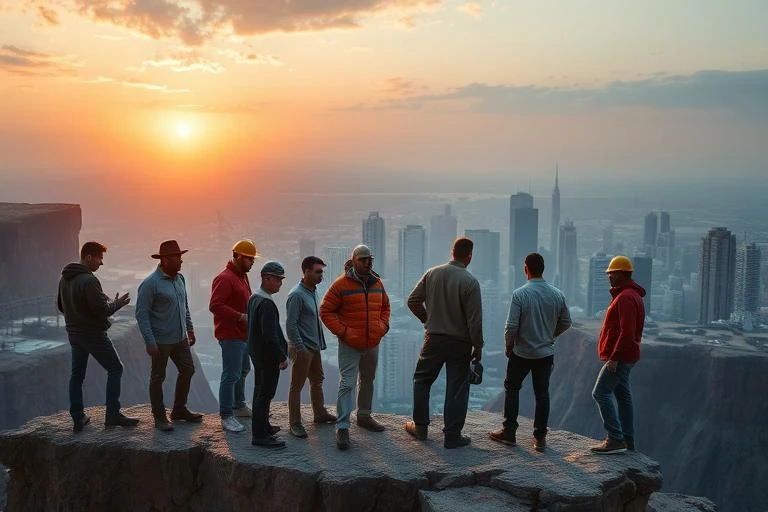
In 2024, the South Korean labor landscape faces threats to survival more severe than the scorching summer heat. News of corporate sales and restructuring casts a shadow of employment insecurity over workers, while the climate crisis and industrial accidents strike the most vulnerable first. The simple dream of a "company with a labor union," as voiced by the late Kim Kyung-sook of YH Trading, remains an unfinished task for our society. Today’s labor field has become a site of desperate struggle—moving beyond simple wage negotiations to dismantling the unequal structure between prime contractors and subcontractors and protecting the fundamental right to life for workers. We are now at a golden time to end the practice of treating labor as a mere cost and to contemplate a new industrial ecosystem that places human dignity at its center.
The practice of excluding workers' voices during corporate sales has become a chronic seed of anxiety. As companies like SK Siltron or Chungho Nais pursue the sale of management rights, workers are left in a position where they must worry about employment succession while being completely cut off from information. Management often avoids negotiations citing security reasons, but for workers, this is a matter of life and death. The recent demand by the SK Siltron union for a job security guarantee, regardless of the sale, is a powerful message that enhancing corporate value at the expense of its members is no longer acceptable. Such demands are more than just job protection; they are a self-rescue measure and a minimum safety net to ensure that the value of labor, which contributed to the company's growth, is justly recognized.
Safety in industrial sites has been elevated from a matter of choice to a matter of survival. As seen in the Hanwha Aerospace Daejeon plant explosion or the Seosomun overpass collapse, negligence in safety management leads to major disasters that claim workers' lives. While the government is scrambling to set up heatwave countermeasures and strengthen welfare checks for high-risk groups, the reality is that workers on the ground are often too pressed for time to even use designated rest areas. For mobile workers like delivery drivers and platform workers, climate disasters like heatwaves have become daily threats. Workers desire not just more rest areas, but the actual time to rest and improvements in their working environment. This requires active administrative intervention to ensure that companies' obligations to secure safety and health are thoroughly implemented on-site.
The importance of prime-subcontractor negotiations to break down the dual structure of the labor market is more emphasized than ever. As seen in the cases of SK Intelix or Chungho Nais, the attempt by subcontracted and special employment workers to negotiate directly with the prime contractor—who holds actual control—is a significant shift. Existing contract-based workers have been left in the blind spots of the Labor Standards Act, suffering from unreasonable treatment where they are not even guaranteed the minimum wage. The labor sector's willingness to go as far as sit-in protests to demand minimum wage application for these workers stems from the fact that the structure of exploitation in the shadow of the platform economy can no longer be ignored. Only when a structure is established where the prime contractor takes responsibility as the "real boss" can we bridge the gap in the labor market and enable fair competition.
In the public sector as well, the value of labor faces challenges of structural limitations and personnel shortages. The confession by National Election Commission officials regarding their grueling labor conditions—hidden behind the pride of being a constitutional institution—following the ballot paper shortage incident, is highly significant. In murderous working environments like 29-hour overnight shifts, system failures inevitably lead to on-site accidents. Simply blaming individual attendance or imposing legal sanctions will never prevent recurrence. Considering the vast entrusted management tasks and essential administrative demands such as political fund management performed by the commission, the expansion of permanent staff and the modernization of on-site issuance systems must be recognized as minimum infrastructure investments to guarantee the people's right to vote.
In a rapidly changing industrial environment, the role of local governments is becoming increasingly important. To fill the blind spots that central government policies cannot reach, "practical labor pledges" such as the expansion of injury and sickness benefits and support for workplaces with fewer than 5 employees are being attempted at the local level. In particular, the move to establish a Life and Safety Committee directly under the mayor is a strong expression of the local government's will to directly look after workers' health rights and safety. Furthermore, discussions on a "just transition" to resolve employment insecurity for power industry workers during the energy transition process are a core part of designing future industrial structures, going beyond simple conversion to regular status. When these local policy experiments drive central government policy, South Korea's labor rights will be able to mature to the next level.
■ Conclusion and Analytical Outlook
Labor is not merely a tool of production but the foundation that sustains society. Before us now are the massive waves of anxiety from corporate sales, the fear of the climate crisis, and inequality between prime and subcontractors. However, the solution to overcome this crisis also begins with listening to the voices of the labor field. Companies must guarantee employment stability through transparent communication, and the government must protect the dignity of labor through dense safety nets and institutional improvements. To ensure the tragedy of YH Trading is not repeated, we need social consensus that respects the rights of labor unions and embraces workers in blind spots into the institutional fold. The only way for our society to move toward a sustainable future is to create a society where workers can smile and a South Korea where working people are safe.
* This post is an analytical column automatically regenerated in the style of a current affairs critic by analyzing real-time Google Trends popular search terms and related major articles.
- 이전글한국 경제의 화려한 귀환, 반도체 너머 4만 달러 시대를 향한 질주 26.06.09
- 다음글반도체 거점의 대전환인가, 무리한 정치 논리인가: 호남 투자설과 건설 현장의 그림자 26.06.09
댓글목록
등록된 댓글이 없습니다.