
Revisiting the Value of Democracy in the June Plaza: The Homework Left…
페이지 정보
작성자 playbbs 작성일 26-06-10 00:21 조회 371 댓글 0본문
Revisiting the Value of Democracy in the June Square: The Homework Left Behind by the Ballot Shortage Crisis
Date: June 10, 2026 | Column by IT/Media Current Affairs Critic
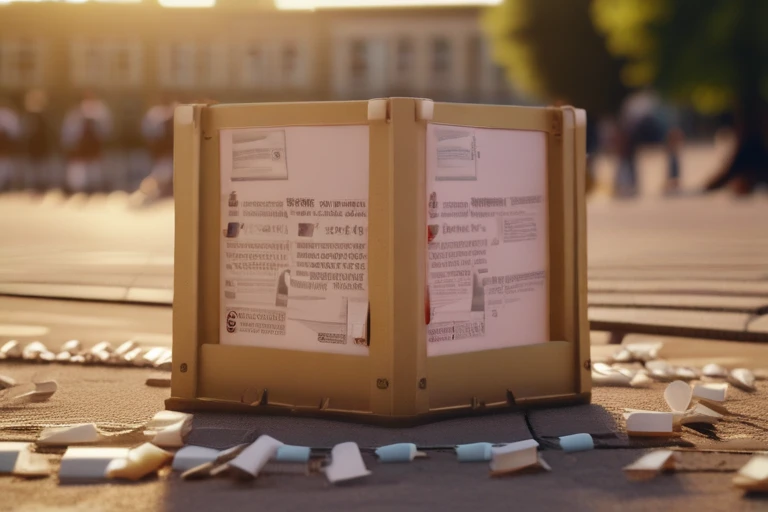
In June 1987, the cries for "direct presidential elections" echoed from the heated asphalt, and 39 years later, that same roar is shaking university campuses once again. If the yearning for democratization back then tore down the massive wall of dictatorship, today's youth have taken to the streets because the constitutional value of "one person, one vote"—so painstakingly won—has been undermined by the incompetence of state institutions. The ballot shortage crisis that occurred during the June 3 local elections is being recorded not merely as an administrative error, but as a grave incident that has shaken the very foundation of South Korean democracy: trust in the right to vote. Now, student councils at major universities across the country are signaling simultaneous declarations of the state of affairs, starting on the anniversary of the June 10 Democratic Struggle, demanding accountability and fundamental reform from the state.
The essence of this crisis lies in the revelation of serious administrative failure, as the authorities failed to secure even the most basic requirement of election management: ballots. The actual shortage was calculated at 7,194 ballots—more than 1.5 times the figure initially announced by the National Election Commission (NEC)—meaning that the precious votes of citizens were physically blocked at 91 polling stations nationwide. This administrative flaw is being interpreted as an indicator of structural incompetence within the entire election management system, rather than a simple mistake by a staff member. In response, student councils from 16 universities across the country, including Yonsei, Seoul National, and Korea University, have raised a collective voice, defining this incident as a grave infringement on democracy and expressing outrage that state institutions have undermined, rather than guaranteed, the people's right to vote.
This movement on university campuses shows signs of being more than just a one-time protest. Through their declarations, students are strongly urging for a thorough investigation without sanctuary through parliamentary probes and the appointment of a special prosecutor. Their resolve is that the full truth must be revealed—not just acknowledging administrative negligence, but uncovering why this happened and how the decision-making process within the NEC functioned during the process. Furthermore, they are demanding not only the punishment of those responsible but also the establishment of effective relief measures for the infringement of basic rights by the state. This is an expression of the strong will of the future generation to directly monitor and correct the corruption and lethargy of the systems built by the older generation to safeguard the principles of democracy.
The actions of the judiciary and investigative agencies also reflect the gravity of this incident. The Seoul Eastern District Court has partially granted applications for the preservation of evidence, including ballot storage boxes, CCTV footage, and communication records between NEC staff, initiating a full-scale legal verification process. This will serve as key evidence in future election litigation and demonstrates the judiciary's intent to objectively reconstruct the situation that occurred at the polling stations. Simultaneously, the joint investigation headquarters established at the Seoul Central District Prosecutors' Office plans to deploy experts in election and public security to intensively investigate the circumstances of the ballot shortage and the internal communication system of the NEC. Investigative authorities have signaled a thorough probe into whether this incident was a simple oversight or involved organized dereliction of duty or illegal acts.
On the ground, protests by citizens raising suspicions of a fraudulent election are intensifying. Near the Handball Gymnasium in Songpa-gu, citizens refusing to accept the election results have gathered, raising their voices daily to demand a re-election. Some protests have seen various claims, including allegations of preferential treatment for foreigners in the election, adding to the confusion on the ground. These social repercussions suggest that the ballot shortage crisis is leading to national distrust in the overall management of elections, beyond a mere technical error. While the police have stated they will guarantee peaceful expression of opinion to the fullest extent, they have also announced a policy of strict response to any illegal acts occurring during protests, creating a tense atmosphere.
The structural reform of the National Election Commission demanded by university students is expected to gain further momentum in the wake of this incident. Students have proposed the establishment of an independent reform monitoring body, with direct participation from citizens, including youth and university students, as a concrete alternative. This reflects the demand of the times that the NEC must move away from its closed organizational operations and operate transparently from the perspective of the people. The declaration of the youth to inherit the spirit of their predecessors who won democratization 39 years ago emphasizes that securing the independence and fairness of the election management system is the true path to completing democracy. These voices of change are expected to become a core agenda in future discussions on improving the election system and reorganizing the NEC.
■ Conclusion and Analytical Outlook
The ballot shortage crisis is a wake-up call to the complacency with which our society has taken the values of democracy for granted. If the 1987 Democratic Struggle was a result won on the streets, the voices of the university students in 2026 remind us that we all share the responsibility to protect and refine those results. A thorough investigation, punishment of those responsible, and fundamental reform of the system are the minimum conditions for restoring the damaged trust. Whether South Korea moves toward a mature stage of democracy or falls into a quagmire of administrative incompetence through this incident now depends on the process of investigation and institutional improvement that will follow. The voices of the youth who have taken to the streets should serve as an opportunity for our society to reflect once again on the essence of democracy and establish a transparent and fair election culture.
* This post is an analytical column automatically regenerated in the style of a current affairs critic by analyzing real-time Google Trends popular search terms and related major articles.
댓글목록 0
등록된 댓글이 없습니다.