
The Revival of Shipbuilding Opens a New Course for the Furniture Indus…
페이지 정보
작성자 playbbs 작성일 26-06-09 08:00 조회 406 댓글 0본문
The Revival of Shipbuilding Opens a New Course for the Furniture Industry: The Challenges of Hyundai Livart and HJ Shipbuilding & Construction
Date: June 09, 2026 | IT/Media Current Affairs Columnist
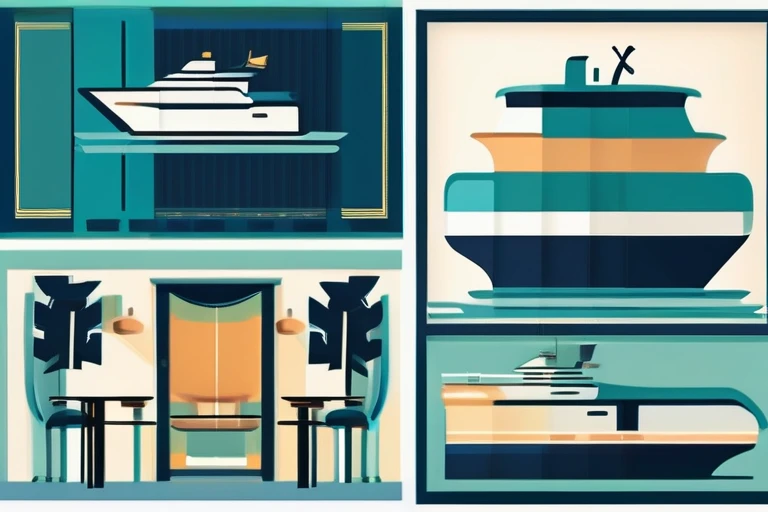
When we think of furniture, we usually imagine beds in bedrooms or sofas in living rooms, but a fierce new business arena is unfolding before our eyes, set inside massive container ships and passenger vessels. As the domestic shipbuilding industry recently passed through a long tunnel of recession and entered a super-cycle, the interior market for "moving spaces" that traverse the seas is gaining attention. Hyundai Livart doubling its revenue in the ship furniture market in just three years to secure a dominant position, and HJ Shipbuilding & Construction accelerating the adoption of autonomous ship technology, are symbolic examples of how the Korean industrial sector is turning crises into opportunities. Beyond simply launching ships, the technical evolution of living and operating efficiently within them is currently reshaping the new order of the shipbuilding industry.
The explosive growth of the ship furniture business demonstrated by Hyundai Livart offers an excellent solution to overcome the chronic adversity of the furniture industry: the construction market slump. Having pioneered the ship furniture market since 2000—the only one among domestic furniture companies to do so—Hyundai Livart achieved its highest-ever performance last year with 30 billion KRW in revenue. Moving beyond the simple supply of individual furniture pieces, the key driver for this revenue surge was the bold increase in "turn-key" projects, which encompass design, manufacturing, installation, and after-sales management. In particular, the large-scale order for 13 container ships signed this year proves that community spaces and welfare facilities on ships now require interior capabilities on par with hotels, moving beyond mere functional spaces.
It is important to note that ship furniture is a specialized field requiring a level of technical precision far beyond that of ordinary household furniture. The extreme environment at sea, characterized by high humidity, salinity, and constant vibration, necessitates advanced durability and material technology to withstand these conditions. Hyundai Livart perfectly implements "sea-fastening" technology, which secures chairs and beds so they do not shift during navigation, as well as flame-retardant performance that complies with international maritime safety regulations. These technical barriers to entry are the primary reason Hyundai Livart has secured market dominance that other companies cannot easily challenge, and can be evaluated as the result of the know-how accumulated in the hotel interior business blossoming on the unique stage of ships.
Optimization of production infrastructure is also a strategic stronghold that has allowed Hyundai Livart to satisfy the demanding requirements of clients and capture the market. The Gyeongju and Mokpo plants, located near Ulsan and Mokpo, serve as key hubs that shorten the physical distance to shipyards, allowing for flexible responses to the fast-paced schedules of the shipbuilding industry. This geographical advantage has reduced logistics costs and established a system capable of responding immediately to design changes or urgent requests from clients. Consequently, Hyundai Livart has evolved beyond a mere furniture manufacturer into a comprehensive company providing interior solutions as a partner to shipyards, successfully diversifying its company-wide portfolio to reduce reliance on construction sector revenue.
Meanwhile, on another axis of the shipbuilding industry, HJ Shipbuilding & Construction is accelerating technological innovation aimed at the future market. HJ Shipbuilding & Construction recently decided to partner with HD Hyundai Avikus to introduce "HiNAS Control," an autonomous navigation solution, to the ships it builds. This is the core of smart ship technology, which combines Artificial Intelligence (AI) and the Internet of Things (IoT) to allow ships to analyze their surroundings and find optimal routes on their own. As the global shipping industry accelerates efforts to reduce labor and fuel costs, autonomous navigation technology is becoming an essential requirement for securing the next-generation high-value ship market.
This move by HJ Shipbuilding & Construction is a strategic response that goes beyond simply introducing technology, aiming to change the paradigm of the future maritime industry. In a shipbuilding market where automation and digitalization are progressing rapidly, preemptively securing a track record in autonomous navigation technology will be a major turning point that determines the company's long-term competitiveness. As this agreement was made at a global exhibition like Posidonia in Greece, it will serve as an opportunity to promote the excellence of domestic shipbuilding technology to the global market. Modern ships, which combine technical sophistication with the emotional and convenient values of interiors, are now evolving beyond simple means of transport into highly intelligent and comfortable maritime living spaces.
■ Conclusion and Analysis Outlook
In conclusion, Hyundai Livart's ship interior business and HJ Shipbuilding & Construction's adoption of autonomous navigation technology clearly demonstrate how the Korean shipbuilding industry is strengthening its global competitiveness in terms of technology, emotion, and efficiency. The way they are finding breakthroughs by expanding their core competencies into the new market of the "sea," rather than being swayed by external variables like the construction market slump, carries significant implications for other industrial sectors. Moving forward, the convergence of interiors and smart ship technology, centered on the shipbuilding industry, will become a solid foundation for the Korean industry to lead the future high-value market, beyond simple revenue growth. Their voyage to pioneer a new blue ocean by combining technology and creativity in a changing market environment has just reached its full stride.
* This post is an analysis column automatically regenerated in the style of a current affairs commentary by analyzing real-time Google Trends popular search terms and related major articles.
댓글목록 0
등록된 댓글이 없습니다.