
Pyeongtaek at a New Crossroads: Strategic Tasks for an ‘Era of Coexist…
페이지 정보
작성자 playbbs 작성일 26-06-09 20:50 조회 388 댓글 0본문
Pyeongtaek at a New Crossroads: Strategic Tasks for an 'Era of Symbiosis' with U.S. Forces in Korea
Date: June 09, 2026 | Column by IT/Media Current Affairs Critic
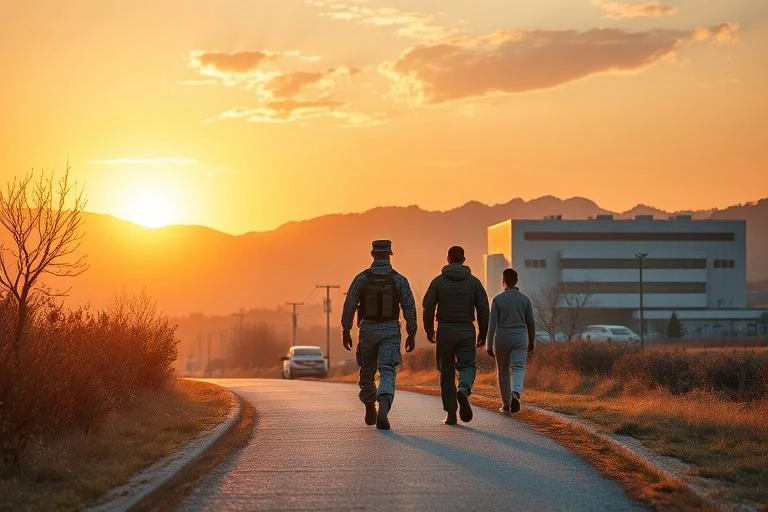
Pyeongtaek, the heart of South Korea's national security and the center of a massive whirlwind of change, is once again facing a critical turning point. As the large-scale relocation of U.S. Forces Korea (USFK) nears completion, Pyeongtaek is being redefined beyond a mere "military base city" into a symbolic hub of the ROK-U.S. alliance. However, recent personnel shifts involving U.S. military generals, unfortunate local incidents, and the subsequent moves to establish legal and institutional frameworks clearly demonstrate how complex the challenge of balancing national security and public livelihood has become for Pyeongtaek. It is now time for us to move beyond past temporary support systems and cool-headedly analyze how Pyeongtaek, which has endured sacrifices for national security, can be reborn as a sustainable global international city.
Recently, a series of high-level command reassignments has become visible within USFK as part of Pacific regional strategy. In particular, the promotion of Lt. Gen. David Iverson, Deputy Commander of USFK and Commander of the 7th Air Force, to Deputy Commander of Pacific Air Forces, symbolically illustrates how the status and role of air power on the Korean Peninsula are transforming within the Indo-Pacific strategy. His designated successor, David G. Shoemaker, is expected to further strengthen the integrated defense posture of ROK-U.S. air power based on his past experience serving in Korea. This leadership change is interpreted not just as a personnel refresh, but as a commitment to securing the flexible and rapid response capabilities that the U.S. military seeks in the rapidly changing security landscape of Northeast Asia.
Along with changes in the command structure, Pyeongtaek's physical environment is also facing a new phase. The government has decided to extend the "Special Act on Support for Pyeongtaek City, etc. Following the Relocation of U.S. Military Bases," originally set to expire in 2026, by four more years until 2030. This is a strategic choice to enhance the final completion of the Yongsan Garrison relocation, the cleanup of returned land, and the integrity of regional development projects. Having been extended three times, this act has served as a key legal safety net supporting the stable development of the Pyeongtaek region. Through this extension, the government has expressed a strong will to "finish well" the base relocation project, securing the momentum needed to smoothly proceed with remaining administrative procedures.
However, behind security cooperation, there exist issues of public livelihood and order that must be addressed. The recent incident in Itaewon involving the assault of citizens by USFK soldiers served as a reminder of how the institutional framework of the Status of Forces Agreement (SOFA) can clash with public legal sentiment. The reality that suspects are immediately handed over to the U.S. military under current regulations leaves behind the task of easing local residents' anxieties and ensuring fairness in law enforcement. These incidents suggest that the ROK-U.S. alliance carries the challenge of cultural and social coexistence within the local community, beyond just the military dimension. As important as a strong security posture is the establishment of a mature community culture that builds mutual respect and trust between stationed troops and local residents.
Against this backdrop, the political moves based in Pyeongtaek are offering more concrete alternatives. The decision by Rep. Yoo Eui-dong, upon his return to the 22nd National Assembly, to re-promote the "Bill on Support for Areas Hosting U.S. Forces" as his first legislative priority is a highly symbolic move. While the existing special act was buried in temporary and administrative support for base "relocation," the new bill focuses on improving the overall quality of public services such as transportation, education, and healthcare, reflecting the reality that U.S. forces are permanently stationed in Pyeongtaek. This contains a blueprint to grow Pyeongtaek into a representative international city of South Korea that maximizes the value of the ROK-U.S. alliance, rather than a city of sacrifice for national security.
For Pyeongtaek to maintain its pride as a security city while ensuring the quality of life for its citizens, a more long-term and systematic roadmap at the national level is essential. Building infrastructure around U.S. military bases is more than just budget support; it is a social integration process that allows allied soldiers and their families to naturally blend into the local community. Furthermore, the cleanup work after the return of land and the efficient utilization of sites will be key factors in determining Pyeongtaek's future economic value. Maintaining close communication channels between local politics, the central government, and USFK to build Pyeongtaek into a "model where security and economy harmoniously coexist" is the true path to realizing the value of the alliance.
■ Conclusion and Outlook
Pyeongtaek is evolving beyond a mere military stronghold into a symbolic space that tests the future of the ROK-U.S. alliance. The three axes of leadership change, extension of the legal foundation, and the establishment of mature order in the local community are gateways that Pyeongtaek must pass through to leap into a global city. Only when the national task of security and the livelihood task of residents move toward a complementary relationship rather than a conflicting one will Pyeongtaek be able to solidify its identity as a sturdy pillar of South Korean security and an international city. We hope that the new support system toward 2030 will provide practical benefits to Pyeongtaek citizens and serve as a sustainable milestone for deeper trust between the two nations.
* This post is an analytical column automatically regenerated in the style of a current affairs critic by analyzing real-time Google Trends popular search terms and related major articles.
댓글목록 0
등록된 댓글이 없습니다.