
Xi Jinping's Strategic Choice: Closer Ties with Pyongyang After 7 Year…
페이지 정보

본문
Closer Ties with Pyongyang After 7 Years: Xi Jinping’s Strategic Choice to Erase 'Denuclearization'
Date: June 10, 2026 | Column by IT/Media Current Affairs Critic
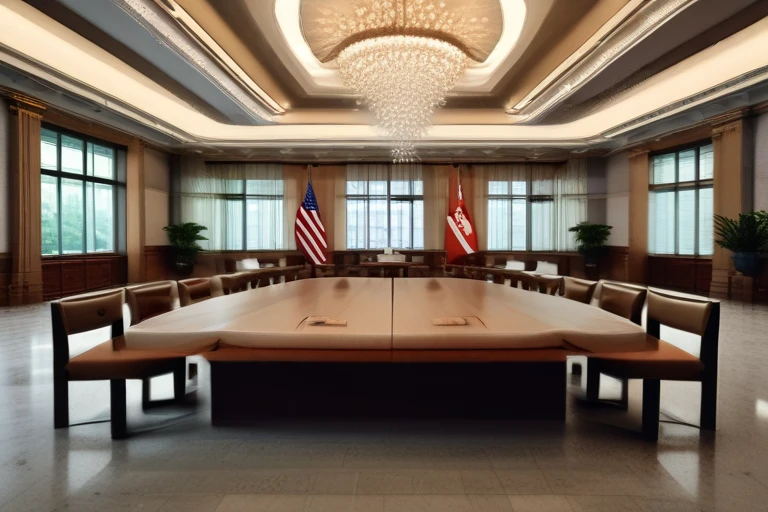
In June 2026, a massive diplomatic shift was detected once again under the skies of Pyongyang. Exchanges between the top leaders of North Korea and China, which had been at a standstill for seven long years since 2019, were abruptly resumed through Chinese President Xi Jinping’s state visit to Pyongyang. This meeting was more than just a display of friendship; it was an event that clearly demonstrated how North Korea and China intend to utilize each other's existence amidst a rapidly changing international landscape. In particular, the fact that "denuclearization"—a core agenda item for the international community—has completely vanished from the official dialogue table makes the political implications of this visit even more complex.
President Xi’s visit took place amidst the highest level of protocol North Korea could provide. General Secretary Kim Jong Un and his wife personally oversaw every part of the schedule, from airport arrival to departure, focusing on demonstrating that their relationship as "blood allies" remains intact. Flags of both nations were hung side-by-side throughout Pyongyang, and large crowds and various slogans filled the streets, proclaiming the North Korea-China closeness to both domestic and international audiences. President Xi also visited the Workers' Party School and paid respects at the Friendship Tower, a symbol of bilateral ties, expressing a strong commitment to carrying on the traditional bond between the two nations to future generations.
The most notable change in this summit is the complete disappearance of the words "denuclearization" and "Korean Peninsula." Denuclearization discussions, which were essential in past summits, were not mentioned at all in public, suggesting that China’s North Korea policy has reached a fundamental turning point. Experts analyze this as China effectively tolerating North Korea’s nuclear possession, while intending to use the country as a strategic asset to keep the U.S. and its allies in check. In other words, China has redefined North Korea not as a target for denuclearization, but as a frontline partner in the front against the U.S.
For North Korea, this visit was a golden opportunity to increase its "leverage." Through his closeness with President Xi, Kim Jong Un has solidified the stability of his regime and created a breakthrough to escape international isolation. In particular, the two leaders promised to strengthen exchanges in diplomacy, law enforcement, and military affairs, beginning to activate a practical cooperation system. The plan to expand economic exchanges, including the full reopening of border trade zones, is expected to provide breathing room for the North Korean economy, which has been struggling under long-term sanctions. North Korea is touting this as a new milestone in their strategic cooperative relationship.
Meanwhile, it is also an interesting observation that Kim Jong Un’s daughter, Ju Ae, did not appear at all during this visit. Some had speculated that North Korea, in its attempt to formalize a fourth-generation succession, would try to gain international recognition for it through this meeting with President Xi, but such staging was excluded. This is interpreted as a consensus between the two countries that they did not want sensitive issues like succession to cloud the core essence of this diplomacy. It is highly likely that China also wanted to distance itself from the succession issue to avoid international criticism, and the prevailing analysis is that for North Korea, obtaining practical support from China was a more urgent task than forcing a display of succession.
As President Xi returned to Beijing after his short two-day trip, the diplomatic landscape of Northeast Asia has entered a new phase. Through this visit, China has shown the U.S. that its influence on the Korean Peninsula remains intact, while firmly securing North Korea as a strategic card. On the other hand, the international community, including South Korea and the U.S., is now carefully watching the security repercussions of this rapid North Korea-China alignment and struggling to prepare countermeasures. It seems clear that this visit is more than just an event to strengthen past friendships; it is a signal that will reshape the future military and diplomatic conflict structure in Northeast Asia.
■ Conclusion and Outlook
In conclusion, President Xi’s visit is a diplomatic result where North Korea and China have perfectly aligned their interests under the common goal of "strategic closeness." It is a convergence of interests between China, which chose practical gains over the pretext of denuclearization, and North Korea, which needed China’s full-scale support for regime stability. How the new blueprint for cooperation that the two countries will draw up affects peace on the Korean Peninsula, and how the international community responds to this "new starting point," will be the key factors in the future of Northeast Asian affairs.
* This post is an analysis column automatically regenerated in the style of a current affairs critic by analyzing real-time Google Trends popular search terms and related major articles.
- 이전글디지털 금융의 대전환: 스테이블코인과 AI 에이전트가 그리는 새로운 경제 지도 26.06.10
- 다음글철도의 시대, 연결의 확장과 안전의 시험대에 서다 26.06.10
댓글목록
등록된 댓글이 없습니다.