
A life returned from the brink of death, and a paradoxical funeral ann…
페이지 정보
작성자 playbbs 작성일 26-06-09 17:36 조회 381 댓글 0본문
Life Returned from the Brink of Death, and a Paradoxical Funeral Proclaiming the Death of Democracy
Date: June 09, 2026 | Column by IT/Media Current Affairs Critic
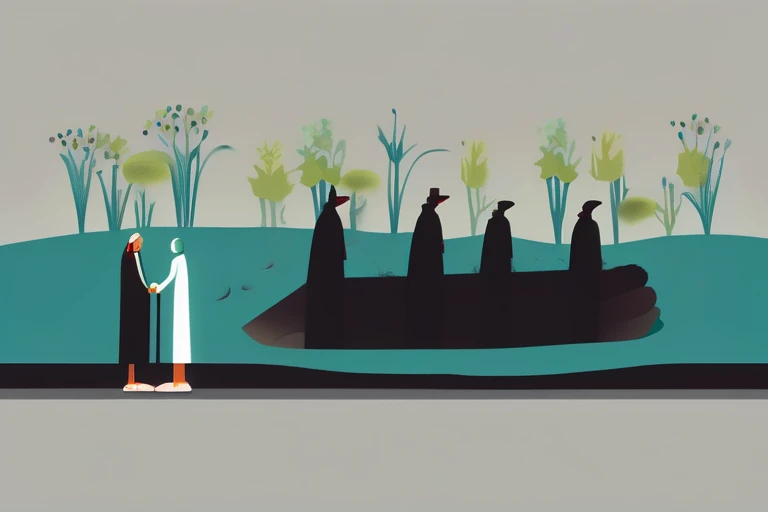
There are two types of funerals in this world. One is a ceremony to share grief while bidding farewell to someone who has reached the end of their life; the other is a desperate cry of a ceremony held by oneself to inform the world that living values have been violated. Recently, the miraculous return of a mountaineer who had been declared dead on the harsh, snowy peaks of Everest proved just how thin the line between life and death can be. Meanwhile, in Daegu, people held a funeral performance, condemning poor election management and shouting that democracy had died. This point where the human will to defy death overlaps with the tragedy of a democracy that had to be declared dead in the face of systemic failure highlights both the values our society should pursue and the limitations of our institutions.
The survival of Sherpa Dawa, who went missing at an altitude of 7,200m in what is known as Everest's "Death Zone," is a miraculous case that truly tested the limits of human survival. With his oxygen tank empty and isolated within a crevasse, he survived for six days in a desperate situation facing death, subsisting on chocolate scraps and ice. While his family held a funeral ceremony in Kathmandu to honor his death, he displayed superhuman vitality, rising from the snow piled up by an avalanche and making a desperate descent. Experts agreed that his survival at an altitude where it would be impossible under normal circumstances would never have been possible without the unique, robust physical strength and mental fortitude of a Sherpa.
However, in contrast to the moving news of survival that reminds us of the dignity of life, our society's institutional funerals remain lost and wandering. Blood-centric funeral culture is failing to keep pace with the changing times, characterized by the rise of single-person households and the birth of diverse communities. The reality that those who are not blood relatives must resort to extreme legal measures like adoption or marriage registration just to watch over each other's final moments starkly shows how much our legal system restricts an individual's right to self-determination after death. The administrative process of waiting a month to confirm an unclaimed death just to be recognized as a funeral organizer is a facet of a failed system that inflicts further pain on the bereaved who must let their loved ones go.
Meanwhile, in Daegu, a symbolic performance called a "Democracy Funeral" was held to condemn poor election management. The controversy over mismanagement, including a shortage of ballots and the simultaneous conduct of voting and counting during the June 3 local elections, became the fuse that drove even the winners to the streets. Claiming that this went beyond simple administrative error and that the voting rights of the electorate were fundamentally infringed, they declared the death of democracy while wearing black clothes and funeral armbands. The sight of winners, not losers, demanding a re-election and laying flowers suggests how deep the anger is over the violation of the procedural sublimity of democracy, rather than just the election results themselves.
The democracy funeral protest site also exhibited complex aspects, with some political extremism and election distrust mixed in. The claims of those who went beyond distrusting the election commission to using the vote counts of specific candidates as evidence of a rigged election prove how deep and fragmented our society's conflict structure is. As controversial political figures from the past attended the protest and some citizens raised baseless suspicions, the essential purpose of the rally—the "restoration of procedural fairness"—tended to fade somewhat. This remains a case study showing how legitimate criticism of institutional flaws can combine with political agitation to exacerbate social chaos.
Ultimately, the miracle on Everest and the funeral in Daegu ask us about the "value of things unseen." A person returning from what was thought to be death is a miracle of physical life, but the democracy funeral symbolizes the mental death a community experiences when its institutional system loses trust. Just as the isolated mountaineer held onto a rope to descend, our society also needs a new order to escape the crevasses of old blood-centric customs and technical errors in election management. Unless we secure "fixed ropes"—such as inclusive laws that guarantee post-mortem self-determination and a transparent election system that anyone can trust—we will have no choice but to wander endlessly in the death zone.
■ Conclusion and Analysis Outlook
The story of the Sherpa who returned alive from the snowy peaks of Everest awakened us to the wonder of survival. However, in places where that light of life does not reach, the lonely funerals of those trapped in institutional blind spots and the sorrowful funerals for a society where fairness has collapsed coexist. We must now discard the old yardstick of blood relations and establish a funeral culture that prioritizes human dignity, and we must devote our full efforts to restoring trust in the election system, which is the foundation of democracy. Since a funeral should be a ceremony for a new beginning, not an end, the real funeral we must hold now should be a ceremony of hope that buries old customs and broken systems to build a better tomorrow in their place.
* This post is an analysis column automatically regenerated in the style of a current affairs critic by analyzing real-time Google Trends popular search terms and related major articles.
댓글목록 0
등록된 댓글이 없습니다.