
The Presidential Clock Summoned to Court: Former President Yoon Suk Ye…
페이지 정보
작성자 playbbs 작성일 26-06-10 07:30 조회 358 댓글 0본문
The Presidential Election Clock Summoned to Court: Former President Yoon Suk Yeol’s Witness Appearance and the Surge of Judicial Risks
Date: June 10, 2026 | Column by IT/Media Affairs Critic
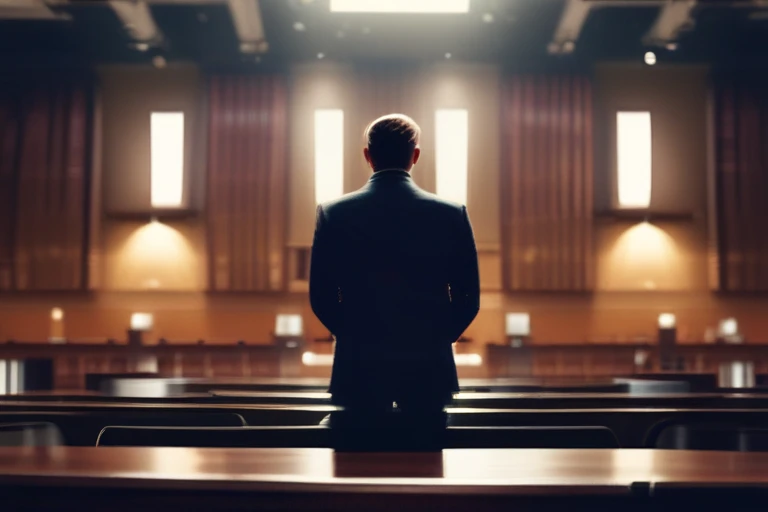
A figure who was once the highest authority in state affairs now finds themselves in a position where they must defend their past, moving between the defendant's seat and the witness stand. Recently, at the Seoul Central District Court, former President Yoon Suk Yeol emerged as a hot topic in the political landscape once again by appearing as a witness in the trial of journalists charged with defaming him. The allegations from the presidential election process and the judicial judgments surrounding him are causing heavy ripples in the South Korean political landscape, going beyond the mere settling of past history. The battle unfolding within the narrow confines of the courtroom is not just an effort to restore individual honor, but a site where constitutional values—such as the legitimacy of the past election, freedom of the press, and the responsibilities of public officials—are colliding.
The core of this trial is whether the so-called "Busan Savings Bank investigation cover-up suspicion" article, reported just before the 2022 presidential election, was indeed malicious false information. Appearing in court, former President Yoon strongly criticized the report as organized black propaganda aimed at causing his defeat, and clearly expressed his desire for the punishment of the relevant journalists. As defamation is a crime subject to the victim's complaint (an offense that cannot be prosecuted against the victim's will), his testimony has become a decisive variable in determining the direction of the trial. While prefacing that he did not know the specific details of the report, former President Yoon emphasized that he had received reports from party officials during the election period that the coverage had a serious negative impact on the race. He argued that freedom of the press can only be guaranteed under the premise of reporting the truth, asserting that this incident is a criminal act that falls outside the realm of press freedom.
On the other hand, the defense team for the accused strongly rebutted that former President Yoon's testimony was inconsistent, leading to a sharp confrontation. They pointed out that it is difficult to accept, both legally and logically, that he would demand punishment for all involved without having checked the content of the reports at all. In particular, the defense team emphasized the democratic principle that verification reports on public figures must be broadly protected, maintaining the frame that this is a case of excessive prosecution by the prosecution. In this process, the investigative practices of the Supreme Prosecutors' Office's Central Investigation Department in 2011 were also brought back under scrutiny. Regarding why broker Jo Woo-hyung of the Daejang-dong scandal was not booked as a suspect, former President Yoon attempted to defend himself by explaining the differences in investigative focus and the situation of the team handling thousands of loans at the time, but the defense team did not let go of the suspicion, citing the gap in investigative capability.
The judicial shackles surrounding former President Yoon are not limited to the defamation trial. A separate ongoing case regarding violations of the Public Official Election Act poses a much more direct and fatal threat to him. The special prosecutor's team recently demanded a two-year prison sentence for him on charges of publishing false information regarding his relationship with former Yongsan Tax Office Chief Yoon Woo-jin and his ties to the shaman known as "Geonjin Beopsa" (Jeon Seong-bae) during his time as a presidential candidate. The prosecution viewed the act of concealing shamanism controversies and misconduct—which are directly linked to the candidate's identity—as a serious crime that hindered voters' correct judgment, and one that cannot be taken lightly. His tendency to change his statements or arguments during the trial process has acted as a factor undermining the judiciary's trust, providing justification for the special prosecutor's demand for severe punishment.
If a sentence of a fine of 1 million won or more is finalized in the Public Official Election Act violation case, it would go beyond individual punishment and deal a massive economic blow to the People Power Party as a whole. This is because if a sentence equivalent to the invalidation of an election is finalized under election law, an unprecedented situation could occur where the party would have to return approximately 39.7 billion won in election expenses that were reimbursed at the time. This is a powerful judicial pressure that could shake the very foundation of the party's political existence, beyond simple financial loss. The special prosecutor strongly argues that since he was elected by the smallest margin in constitutional history, the dissemination of false information during the election process likely had a profound impact on the results. While former President Yoon's side claims these were defensive remarks and maintains his innocence, the court's judgment is increasingly turning toward a cold, legalistic standard.
These judicial risks pouring in from inside and outside the courtroom prove that former President Yoon's past actions are becoming a liability rather than a political asset. While the defamation trial and the election law trial each contain different values—freedom of the press and the voters' right to know—the truth battle from the presidential election lies at the center of both. The court is scheduled to deliver consecutive sentencing rulings next month, and these results are expected to become triggers that will shake the future landscape of South Korean politics. The sight of a former president standing on the judgment seat of the law reminds our society once again of how important the morality of public officials and a transparent election system are. As these trials proceed under the principles of the rule of law, the public's gaze is focused on the Seoul Central District Court to see what conclusions will be reached.
■ Conclusion and Analytical Outlook
In conclusion, the series of trials facing former President Yoon Suk Yeol clearly demonstrate the reality of the judicial risks he is experiencing. His expression of a desire for punishment in the defamation trial and the demand for a heavy sentence in the election law violation case suggest that he is not free from the responsibilities of his past. The judiciary must make a strict judgment according to the law and principles, and the truths revealed in this process will serve as an important benchmark for future historical evaluation. Ultimately, in a democratic society, all those in power must take infinite responsibility for their words and actions, and the courtroom must be the fairest and strictest stage to hold them accountable. It is a time when attention is focused on whether this situation will serve as an opportunity for South Korean politics to mature to the next level, or if it will deepen the rifts of conflict even further.
* This post is an analytical column automatically regenerated in the style of a current affairs critic by analyzing real-time Google Trends popular search terms and related major articles.
댓글목록 0
등록된 댓글이 없습니다.